The Battle of the Left and the Right

Brain2

And so the tussle starts, yet again, as my daily morning alarm triggers the conscious awakening between my two better halves. The barrage of questions are initiated, and rebuffed, as both sides of me begin the battle for short term body dominance. At the end of the day, my internal scoreboard signifies a winner, but there is only one victor, that being me. Yes, after years of mind training, I have finally mastered my own unique and personal source of creativity. But, we all have this innate ability, we just need to let the dynamics of our left and right brain thought processes engage in mutually beneficial conflict for assured perpetual self-development.

All of us have experienced the continuous battles within our own individual minds, either consciously of perhaps subconsciously. These intellectual disagreements may come in a variety of guises, such as the choice between eating a healthy breakfast, or alternatively choosing a full fat one with all the delicious trimmings, others could be habitually shaving your face in the morning without question (yes, I’m assuming you are male), or challenging the status quo and electing to go with that fashionable facial stubicular appearance.

Now it just so happens that there is an important section of “mass” within your brain that operates centrally between the left and right spheres, and this location is the strategic source of all your innovation. This is the battlefield where your mathematical and creative ideas have a virtual punch up and fight for the opportunity to implement their personalized wishes over your actions. However, you, as the owner of this battlefield, need to be tactically clever to ensure that both sides have an equal chance of winning. Should one brain side win a tad too often it will become a little bit too cocky, alternatively, the other side may become demoralized and could give up trying to play the mind game and a dangerous state of imbalance will prevail. Should this occur, this is where negative personality issues may become evident which could lead to a variety of unwanted and socially unacceptable psychological problems within the owner.

So next time you have the sensation of feeling a debate of choice within your mind, relax, all is ok, it’s just your brain engaging in some power play between the left and the right sections. But do make sure that they play fair thereby ensuring that you reap the ongoing rewards of your personal innovation.
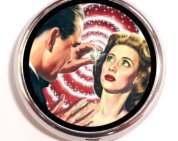

The Mesmeric Corporate Prognosis

hypnotist

My esteemed colleagues, yes, I can sense your excitement and anticipation! But please relax as you need not wait any longer! After years of pain staking personal research sitting in the entrance foyers of the top 100 global companies, I am now pleased to announce that I have discovered the origins of this incapacitating corporate behavioural phenomenon.

This crippling condition that has inhibited the innovative thinking processes of employees for many decades, now has a medical name, that being “Corporate Mesmeric Innovative Retardation”, or CMIR for short. But more importantly, there is an antidote that is quite painless, and one that can be quickly administered to the corporate employee with immediate effect.

How did I discover this condition? Well, the intensive research required a high level of painstaking incognito behaviour on my behalf involving the wearing a beige nondescript suit, together with countless hours reading The Times, The Wall Street Journal and other local newspapers so as to not be noticed by the employees as they entered the corporate office. Unfortunately, I am still scared by the lack of fashion colour and style, but it was a burden that I was willing to bare for the sake of worldly corporate progress, I’m told the nightmares will eventually subside. The upside, is that my knowledge of world affairs, including the stock market, has resulted in various personal financial gains derived from highly profitable share trading, and a vast array of exclusive invitations to attend numerous London and New York high society trivia quizzes where I am deemed the font of all knowledge, and a most prized team member.

So what did the extensive research tell me? Although my study will be printed in next month’s edition of the Harvard Business Review, I’m sure that the HBR Publisher won’t mind me providing you all with a brief overview of my findings.

They key aspect to my world breaking research was the use of eagled-eyed observation. After countless detailed and personally exhaustive people watching experiences, I noticed the behaviour of all employees (particularly the attractive ones) as they entered the corporate office first thing in the morning, and then as they left that evening. The behavioural change in those inflicted employees at some businesses was profound, it was almost as if I was looking at two different people! Prior to them walking into the corporate reception area, they had a happy persona and exhibited all the normal signs of chirpiness, a willingness of thought, and a noticeable desire to learn. But once their foot stepped onto the marble tiled entrance foyer, it was as if an invisible intensely powerful force quickly sucked all the creativity from them, to which an innovative void remained until they departed the building at 5 PM sharp. At 5:01 PM, their creative vacuum was immediately replaced with their original pre-work positive behaviour. Yes, it was truly remarkable observation to behold!

Although quite mystifying, not all corporate businesses had employees that suffered from the dreaded CMIR condition. To understand the cause as to why this unexplained phenomenon may have occurred, I had to dig deeper into the observational evidence and decided to introduce the HR Managers of the companies studied into the rich complexity, and subtle machinations, of my academic research. After numerous soy milk chai lattes, and what seemed like an endless consumption of gluten-free bagels, I came to a momentous and decisive eureka moment. Apparently, the culture of the organization had a direct correlation with the onset of the CMIR. Should the culture be viewed negatively, then a high frequency of CMIR suffers prevailed. The trigger for most employees who had acute CMIR was the initial sighting of the company logo, typically first seen when they entered the company premises in the morning.  On viewing the logo, a negative and mesmeric effect immediately struck down the creatively-fragile employee resulting in a mind destroying innovation purge, luckily this was a reversible retardation that quickly ceased when exiting the building at 5 PM.

Yes, you are correct in assuming that those companies that had a positive and dynamic corporate culture that was well respected, and one that harmoniously and gleefully fitted with the employee’s lifestyle goals, experienced no CMIR sufferers. So the answer is simple. To eradicate any corrosive and long-term damaging CMIR influences in your business, management do need to focus on the right corporate culture to ensure that their business logo immediately inspires your employees when first sighted as they enter your office.

And should you need any assistance in the process, my consulting fees are indeed negotiable (but please, no gluten free bagels).

What does your bowl say about you?

Day 96 - Thinking about it...

As usual, I arrived in our corporate office early and made that all too familiar journey of walk into our club lounge where the ingredients of a basic breakfast awaited me. There was the usual array of cereal, muesli, fruit, whole milk, light milk, the obligatory soy milk, and of course coffee and a plethora of teas.

But this morning, something was noticeably different. Rather than being confronted with the usual food branding, some clever and rather innovative colleague had labeled each item with a unique and curiously descriptive name. There was also a page of instructions that each breakfast eater had to follow, otherwise they would be excluded from this unique eating activity.

The first instruction was to grab a white bowl and mug from the cupboard and scribe my name on it with the black marker pen provided. However, rather than just spelling my name, I had to add the words “personality” after it. As such, my bowl and mug were named “Steven’s personality”.

I was then asked to peruse the array of cereals which were now labelled as ‘creative’ (aka muesli), ‘conservative’ (aka corn flakes), ‘fun’ (aka Coco Pops), ‘vitality’ (aka porridge). What looked like full cream milk was called ‘communication”, light milk (‘vision’) and soy milk (‘humour’). The process continued for all the fruit and beverage selections to which other descriptive tags were applied.

Once my food and beverage selection had been made, I was then requested by the instructions to write these pseudonyms on the bowl and the mug which was to be a reminder of personality for that day.

Although the process sounded like a bit of fun, after a week of breakfast personality profiling, there were some interesting learnings from the activity:

1. You are what you eat.
2. We can be so set in our ways which, we may not see until you observe the same food and beverage personality pseudonyms written in black pen on our bowl and mug each day.
3. Change is not as hard as you think, just reach out and try something new (eg different cereal, fruit, milk). If you don’t like the ‘taste’ of it, well, learn from the experience and explore something that is more suited to your palate.
4. Variety is indeed the spice of life.

My personality, well, I’m quite content with a bowl of Fruit Loops, yes, say no more!

These Feet are on My Beach!

Miina

Old speedos and my faded blue seersucker shirt were not the appropriate choice of clothing for my daily 5 AM walk along the beach this morning. I was feeling decidedly cold, windblown and wet, but I wouldn’t have changed it for all the money in the world (well, maybe for $2M I could be swayed?). These magical moments alone on the beach were my time for quiet solitude where I could consider life, the universe, and those things really important to me (like what to have for breakfast?). However, this particular morning, I was not alone!

Yes, my private thoughtful beach sojourn had been violated by the presence of another person’s feet. I could see the evidence of their self-righteous, pompous, egocentric footprints in the sand! How dare they, I thought, this was my beach! After a few minutes my annoyance began to decline (mainly because I was freezing) and my mind started to ponder the identity of this mysterious and cheeky individual.

On looking at their footprints, I could determine that it was a slender foot, most likely that of an adult, but I couldn’t tell their age, sex, nor whether they might be an interesting person to engage with in a constructive dialogue. But, I needed to know why they were on my beach, at my sacred time in the morning, so I decided to follow the footprints and track them down. I was in luck as the waves had not erased the foot trail of evidence. I was on a mission now and my walking speed increased, particularly as I could just make out a figure in the distance wearing a red bathing costume and a bright matching red beanie. I started to run as I was now nearing the owner of those feet. However, as I was drawing significantly nearer, I immediately stopped as I thought I may have the appearance of a depraved minimalist fashion beach stalker and could be a tad frightening for those you didn’t know me. I was so close, yet so far from the origin of those footprints!

But then, the owner of the feet turned around, paused, sighted my beach attire and walked straight to me! I froze and the next thing I heard was “Good morning, great morning for a walk. Do you come here often? My name is Susan by the way.” For the next 30 minutes we got to know each other as we shared our common like for the beach and other topics of mutual interest (including breakfast).

I was so pleased that I had explored those footprints and not just blankly looked at them as I focused on my private walk of thought that morning. Unfortunately, we are often too absorbed in our own personal affairs to take the time to explore new events and unknown people around us. Sometimes, it takes effort, persistence and a lot of work to seek out these new experiences, but it will most definitively benefit you, and the other owners of the footprints you encounter.

Go on, give the exploration of “new feet” a go!

Grand Chef de Woft

Transparency 3

As I patiently sat awaiting instructions from the occupants of Conference Room 1, I smugly took the opportunity to look around my master chef kitchen. Although small, and positioned strategically beneath the Conference Room, it was a classy place, full of the latest stainless-steel cooking appliances, pans, other key requisite implements, and one that was dutifully restocked on a daily basis with the latest aromatic worldly delights.

In my position of “Grand Chef de Woft”, I felt honoured in the knowledge that I was fully appreciated by those that gleefully awaited my gourmet creations to stimulate, and motivate their creativity and hunger for innovation.

Unbeknownst to me, my work colleagues above had now entered Conference Room 1 and were preparing to start their 9 AM team meeting. They all gathered around the “woft box” and unanimously agreed upon their selection. As they were all feeling quite hungry and lethargic, they desperately needed an appropriate thought woft stimulation. They selected the popular “woft number 3”, and immediately the instruction was conveyed to me and I sprung into action.

I placed the freshly brewed coffee and pan-fried onions under the woft extraction fan that was positioned centrally over my stove, and then turned it on to maximum woft velocity. Conference Room 1 quickly filled with “woft number 3” and the occupants marvelled at the odours that were soon to completely fill their room. As is standard practice, at the conclusion of their meeting, they closed the vent of woft and opened the outside windows to allow the fresh air to permeate into the room, thereby eliminating any residual odours in preparation for the next occupants of Conference Room 1.

At 11 AM, I was instructed to convey “woft number 7”. Experience told me that these colleagues were struggling, and I promptly boiled copious amounts of strong peppermint tea. A few seconds later, the woft of peppermint engulfed the meeting room to which sighs of relief were loudly heard by those above, thereby signalling their motivational satisfaction.

This process continued all day until 5 PM when the lights in Conference Room 1 were turned off and my colleagues packed up their bags and happily headed home.

Knowing that my important role was now done, I also tidied up my kitchen and departed the corporate office. I left with a sense of achievement, knowing that I had provided the required woftful environment that lead to many new ideas being generated in Conference Room 1. I smiled with satisfaction on a job well done!

Room Service With A Difference

CE003

I was sitting at my hotel room desk when the doorbell rang. “Brilliant”, I said, my room service meal had finally arrived and I was famished! I bounded up from my desk, opened the door, and was greeted by an attractive young woman called Adriana and immediately signalled for her to come into my room.

Now the odd thing about hotel doorways is that they are quite narrow, and the meal tray that Adriana was carrying was quite wide. On seeing this conundrum, two possible solutions could eventuate. The first being that the door needed to be widened, but as I couldn’t see a sledge hammer neatly dangling from Adriana’s immaculate hotel uniform, I knew that this wasn’t going to be the chosen remedy. So option two prevailed.

Option two involved a contortionist yoga movement in which Adriana swung the meal tray around, utilising an impressive single slow pirouette action, which succeeded in the tray entering through the doorway with possibly one millimetre to spare on each side. What surprised me more was that the food, drink and cutlery, all remained firmly in position without experiencing an undignified free-fall onto the carpet in the room entrance hall.

I applauded Adriana on her room service skill and suggested that this innovative and creative food delivery move should be listed in bold italic font in her CV, and, that I would be happy to attest to this unique hotel qualification as an official referee should ever it be required!

But what if other hotel staff members saw Adriana’s meal tray delivery technique and tried it for themselves without any pre-training? Yes, I’m afraid the result could be catastrophic for the individual concerned, the food, and more importantly, the hungry hotel guest.

Now this got me thinking about a methodology for those potentially not as skilled as Adriana. One that provides an efficient, and reliable meal delivery service, together with the added benefit of improved health and safety for all concerned, including the food.

Why not expand the hotel’s limousine fleet to include a number of Segways (two wheeled, self-balancing, battery powered), each branded in the hotel’s colours to ensure that consistent professional appearance? The Segway could be modified to include a number of shelves into which the meal tray would snuggly fit, together with a Wi-Fi transmitter so the rider can communicate easily with the hotel kitchen. But the most important design feature from the hotel’s perspective of the Segway is its width. The Segway can be easily driven straight into the hotel guest’s room, without impacting the doorframe, thereby eliminating the need for any complicated and dangerous meal tray manipulations that were required in the past.

So, should any hotel management be reading this blog post, may I suggest that you explore this Segway idea as it might just be useful in the future. I would also be keen to know how it goes?

The Gingerbread People

Happy Biscuit

The freshly baked gingerbread men and women with an impressive and distinctive corporate logo stamped across their chest were carefully placed on each employee’s desk in the early hours of the morning. It was the last day of work before Xmas and the department manager had spent many hours tirelessly baking that morning in preparation for the annual ritual of gingerbread person desk placement.

The time was now 6 AM and with the task of distribution completed, he decided to find a quiet corporate sick-bay bed and have a couple of hours sleep before his fellow employees arrived in the office to gleefully devour their eagerly anticipated baked gourmet morsels with an accompanying cup of coffee or tea.

But this year, something rather different and decidedly odd occurred. At about 6:15 AM there was a discreet, yet distinctive, sound of pastry movement. Yes, on some of the poorly lit office desks, an occasional little gingerbread arm and foot was beginning to display some rather unique humanistic characteristics. But not all gingerbread people sprung to life?

At 6:30 AM, some baked people of gingerbread DNA were leaping and gesticulating with extensive social skills and were having a great time getting to know each other and exchanging various bodily crumbs. However, some of their other baked relatives were just lying there in a motionless state, whilst others were still experiencing the joy of minimal hand movement with no prospect of running amuck!

Just before the department manager took his last snuff of slumbered bliss signalling that it was time to awake, an internal motion ceasing sensor was triggered in each of the gingerbread people and those that were mobile all dropped down on the spot and once again became just a baked stationary figurine.

As the employees started to arrive at their desks, some were greeted with a large number of scrumptious gingerbread people. Many of the staff found a single gingerbread person on their desk in the exact same position that it has been placed by the manager, others, found none at all. So, the question that you are all thinking is, why do some people have more gingerbread than others? The answer is fairly obvious if you have studied the traits of gingerbread culture and society, but if you do not have this educational knowledge, let me explain.

It all has to do with the energy and creativity that is exhibited by those employees in your corporate office that are innovative. These people are the lifeblood of your organization and they stimulate and encourage all sorts of ideas and inspirational thinking that some of you may think is a little bit way out. But, without these people, there is no imagination, and no hope that fictional ideas such as gingerbread people coming to life could ever exist. So it is really any wonder why the gingerbread people flocked to these people’s desks?

When next you are fortunate enough to hold a gingerbread person, prior to that first chomp of delight, may I suggest you stop and think and question yourself about your level of innovation and whether your personality entitles you to eat just one, or maybe more?

Vanilla Flavoured Diversity

My Primary Workhorse

Signed……Steven Cramer. The black ink that had just permeated from my treasured fountain pen was almost dry on my new employment contract. I gleefully looked once again at the document, and then with an eager and expectant smile on my face, I carefully folded the paper, placed it in the reply-paid envelope and put it aside ready to be posted to my new employer.

All of us have at some stage in our working careers have experienced the excitement associated with starting a job with a new corporate organization, or a new role within your existing company. Prior to us starting this new role, we have many ideas and thoughts on how and what we are going to achieve, we do not impose any limitations, nor do we expect the organization or our fellow colleagues to hamper any progress on the attainment of these objectives.

Unfortunately, many of us after a few years working for the same organization lose this positive and creative persona and slowly morph into a common and accepted form of corporate behaviour where any diversity of thought is progressively extinguished. The result is a “vanilla flavoured” corporate culture that is prevalent in many corporate company’s today.

But does this need to be the case?

A thought.
Why do we not ask all new employees to write down their career aspirations on what they would like to achieve prior to the first day of their employment? This untainted document could then be stored for a period of time (say 3-5 years) following which it is then opened and reread by the employee and discussed with a senior member of the management team. It would be interesting for the employee to see how their enthusiasm has been maintained or even increased over the time period, or has it been severely hindered? If the latter, then what has caused this negativity and how could the corporate culture be improved to encourage and foster a greater diversity of thought?

Many companies talk about the concept of diversity, but are quite content to operate in the “vanilla flavoured” business environment. When a new employee starts, they may be flavoured “strawberry, blueberry, or even have lumps of chocolate” diffusing through their personality. But after a period of time, this creative flavour may have been slowly purged and replaced with the approved corporate taste. If an organization truly values diversity, why focus on the attainment of the “vanilla”?

There are many great benefits to a company if their employees do think that little bit differently, particularly with respect to innovation which could be utilised in a variety of different areas such as new product development, improvements in service offering or potential business expansions outside the traditional norm? If all employees think the same way (“vanilla”), then opportunities for innovation and creativity will be severely restricted.

So next time you are about to start a new role, may I suggest that you capture your thoughts and aspirations and revisit them later in your working career. The rereading might be quite enlightening, particularly for you, and your organization?

Let the Ideas In

Padlock.gif

Many corporate offices these days are starting to have a somewhat cloned appearance of the CIA, MI6, ASIO, and most other intelligence organizations, with all the security gadgets located throughout their buildings. This is evident by the increasing visibility of security cameras, sensor movement measuring devices, electronic swipe cards and other items that may have been derived from a James Bond 007 movie!

These security measures are very successful at keeping unwanted people out, and those valued people in, together with protecting the businesses intellectual property and other strategic assets. This security focus also permeates into the organization’s hierarchy and culture where only a limited number of vetted employees are allowed to represent the business in the external world to ensure consistency of message.

A major consequence of these established corporate fortresses is that many new ideas, creativity and innovations are also blocked from entering the organization. Many companies utilise a limited number of gatekeepers to filter and disseminate information inputs into the organization thereby ensuring a consistent methodology to evaluate potential opportunities in accordance with well established, and approved, corporate guidelines. However, this can result in stifling innovation and in restricting the highly needed creative thought that is essential to the longer-term and ongoing success of the organization.

The solution is for organizations to have a broad network of “idea collection systems” in place to seek out, identify and gather new thoughts that can analysed further to better understand current and future consumer trends and market requirements. The key is to allow many employees in the corporate structure, not just the chosen few, to have the opportunity to source these ideas without the use of the approved corporate filtering and distillation processes, otherwise this will again lead to a narrow view of potential innovation opportunities.

These “idea collection systems” do not need to be extremely ornate, sophisticated or expensive, but can be achieved via allowing people from a broad cross-section of the organization access to a variety of external information stimuli that they would not normally have exposure to via their traditional job roles. Examples of these “idea collection systems” could be; magazine subscriptions (HBR, The New Yorker, Food and Wine, MAD Magazine, Top Gear, etc), attending seminars, webinars, workshops, interest groups, factory tours, plays, book reviews, plus many more! The objective is creative diversity with ideas sourced from outside their current “thought zone”.

The vast array of collected ideas should then be pooled into a continually overflowing “idea bucket” from which those versed in the identification of potentially new ideas and products review on a regular basis. With time, I’m sure that this collective of numerous ideas will lead to many commercially new and innovative products being developed to provide future long-term benefit and financial sustenance to the corporate organization.

The corporate goal should be to have many employee “ears and eyes” constantly seeking new thoughts to add to the “idea collection systems”. But to do this, the corporate organization needs to be bold, to listen, and to “Let the Ideas In”!


That “Gaelic Place”

Big Mac

“Two all beef patties, special sauce, lettuce, cheese, pickles, onions on a sesame seed bun”.

On reading this sentence, many of you would immediately think of that global hamburger chain identified with the golden arches that I call that “Gaelic Place”.

To many children and adults from all around the world, this is their common perception of a hamburger. But what if we replaced the following ingredients…

Beef patties WITH lamb rissoles?
Special sauce WITH leaves of mint?
Lettuce WITH spinach?
Cheese WITH fetta?
Pickles WITH chutney?
Onions WITH beetroot?
Sesame seed bun WITH Toasted wholemeal bread?

I’m sure that those frequent and loyal eaters at the “Gaelic Place” would not recognise these replacement ingredients when constructed together as a hamburger!?

Let’s just ponder this thought for a moment and expand the discussion a little bit further. Many foods, fashions, music, plus many other items used daily, have become stereotyped by a consistent and standardised formula or delivery methodology. This can also be observed in the corporate workplace where everyone seems to dress in the same work attire, similarly, the offices have that regular format of appearance, funnily enough, very much like the business model used by that “Gaelic Place”?

The same can also be said about the process of innovation where most businesses utilise the same old standard approach of “brainstorming” to try and develop some new ideas.  I have even heard of some brainstorming sessions feasting on a selection of “Gaelic Place” food assortments to assist with the participant’s creative receptivity!

To foster some creativity in the workplace, why not try some new “ingredients”, just like the replacement “WITH” examples provided in the hamburger example above.  Some of these alternative “ingredients” could be:

Standard Work Attire WITH a bow-tie, cravat, kilt, swimming costume?
Corporate Office WITH an external location (the zoo, a picnic ground, railway train, gymnasium)?
Business Co-workers WITH kindergarten children, a choir, actors, artists, the French Foreign Legion?

In summary, there is more than one type of hamburger, the key is to expand your taste-buds with a variety of new ingredients so you continue to think that little bit differently!