Macabre Murderer of Marketing

Murder

The senior manager sat down exhausted in his large corporate black leather desk chair. The worn fabric felt so cool and relaxing as it snugged his body in a welcoming and inviting manner as it had done for the past thirty-five years.

He wiped the sweat from his forehead with his ragged company monogrammed handkerchief and looked at his hands now shaking with fear, thankfully he had achieved his objective before any “damage” had been done.

He carefully took out the black bound book that had lived in solitude and secrecy in his top desk draw and entered another name under the vast array of other recalcitrant employees that he had quietly “murdered” from a career perspective.

Yes, that was a close one he thought. If he hadn’t have acted, that employee might actually have changed the corporate status quo and may have injected some marketing creativity and innovation into the business. We can’t have that! But it was getting harder and harder to stop these employees infiltrating the company. He was also wondering what would happen when he retired at the end of the year. He was now despondent as he couldn’t find other younger employees that had the same unique business insight as him, nor his perceived flair of maintaining the existing corporate culture.

Mmmm, you might be thinking to yourself, as you may have already allocated a name to this senior manager in your business? If so, may I suggest that you publicly ‘call the behaviour” of these archaic and sorry individuals and lobby support amongst your colleagues to raise up a corporate mutiny for the long term betterment of your company! Don’t let this negative and destructive behaviour go unchallenged to avoid anymore creative casualties!

Sounds rather melodramatic doesn’t it? However, without creativity, innovation and marketing, it is the organisation as a whole that is suffocated as it loses the requisite lifeblood to ensure its longer term success and survival. May I suggest you don’t let this happen to yours, and if you see the signs of this occurring, try and quickly nip this potential “murder” in the corporate bud before it takes hold.

Just a thought to make you think that little bit differently.

Bow tie Leadership

Bow Tie

Should you be looking for a symbol of change in your corporate office? Well, look no further than a bow tie! Besides providing the wearer with some upper collar shirt pizzazz, this stylish and fashionable enhancement will set the custodian with a unique and highly noticeable position of business grandeur amongst your fellow work colleagues.

Let’s start with the basics. Firstly, forget your clip on bow tie, seriously, what’s the point! These are OK if you are 3 years old and don’t know any better and probably can’t tie your shoe laces either. However, if you are an adult, it must be a hand tied bow tie. Once you have mastered the tying procedure, a certain sense of personal achievement will have been attained, a skill that the wearer can most definitely list on their CV with pride and accomplishment.

In my office, I recently had the joy of adorning a bow tie for a 6 week period. I decided to wear this fashion statement to personally support a cultural change management program that had been initiated within my organization.

Now besides getting quite a few inquisitive looks from strangers I traveled with on public transport to and from the office (I still think it was bow tie envy), and from those I work with in the office, to me, the bow tie experience was quite profound and enlightening. So, what did I learn from a corporate leadership perspective that can be used in a change management program?

1. People noticed the bow tie (if you want to be a leader, you need to be noticed).

2. You can’t wear the same coloured bow tie each day (a leader needs to tailor the message for co-workers that can be readily understood, it can’t be a general communication).

3. The bow-tie was hand tied (it takes skill and some persistence to be a leader, the process needs to be practiced).

4. Bow-ties don’t suit everyone (some people like to follow…..and wear the traditional long length and rather boring and conservative tie, but then again, we wouldn’t want everyone wearing a bow tie!).

So, next time your organization is thinking of implementing a program of change, may I suggest you go and purchase a hand tied bow tie and start wearing it in the office. Yes, you will be noticed, you will feel different from the masses, but you will be making a fashion statement, and you will be a Leader!

Measuring Employee Happiness

The black color didn’t make the homecoming dress lose the sense of cute. Do you agree with me?

There is a question that has been puzzling me for a while now (well, at least a few minutes), and that is; “How should we measure real success in the corporate office?”

No, I’m not talking the traditional financial measurements such as profit, sales or share price, just to name a few. I’m referring to the more important measures of whether an organisation has a successful culture that promotes innovation and an employee mood of happiness.

There have been many a study which has tried to chart an individual’s mood, one of the more creative ones being the “Hemline Index”. “This theory suggests that hemlines on women’s dresses rise along with stock prices. In good economies, we get such results as miniskirts (as seen in the 1960s), or in poor economic times, as shown by the 1929 Wall Street Crash, hems can drop almost overnight.”
(Ref: http://en.wikipedia.org/wiki/Hemline_index#cite_ref-1)

Other such notable indexes also include items such as laxatives and deodorants! “During a recession, laxatives go up, because people are under tremendous stress, and holding themselves back,” said Shapiro, now chief executive of SAGE, a Chicago-based consulting firm. “During a boom, deodorant sales go up, because people are out dancing around.”
(Ref: http://www.nytimes.com/2008/10/19/business/worldbusiness/19iht-19lewin.17068071.html?pagewanted=all&_r=0)

Now as a corporate employee that understands the protocols of “acceptable behaviour in the workplace”, I would not even consider the application of the “Hemline Index”, the “Deodorant Index”, and I’m not even going near the “Laxative Index”, but there must be some other “acceptable” measures that can be used by the organisation to highlight their success in this area? This conundrum got me thinking!

What about the following potential mood measurements in the office:

1. The Wall Bounce Chart
A line could be painted on all office walls at a constant height position of say 5 feet. Theory (according to “someone”) suggests that when a person is happy, they tend to have a bounce in their walking step. Therefore the logical next step is to measure an employee’s “walk bounce” as they sojourn around the office corridors. The higher the bounce deviation from the 5 feet benchmark reference line, the happier the employees working in that office.

2. The Coloured Attire
According to the “someone” that discovered the walking bounce indicator, another indicator of employee happiness is the colour of their clothes. Those who habitually dress in sombre black or grey clothes (besides being residents of Melbourne) are typified as being quite conservative and less known to whoop it up in the corporate office. Whereas, those adorned with colour, well, they are exhibiting all the classic signs of success and a want to let the world know of their personal satisfaction and excitement.

3. The Organic Tea Bag
When an employee is stressed, the common drink of choice is coffee or tea. However, according again to that “someone”, another important measurement of happiness is the clutter observed around the organic tea bag jar located in the office communal kitchen. Happy employees are reported to drink more organic tea and they like to woft their tea bags around in the air with a gleeful flick prior to placing them in the bin. The result is a mixture of tea bag tags randomly tossed around the kitchen and the strange odour of combined chamomile, lemon, chai and green tea fumes.

I’m sure that you can think of many more mood measurement indexes that would complement the above three ideas.

So why don’t corporate organisations list these important indexes in their annual reports, or in the monthly newsletters? May I suggest that you lobby your GM of HR to get these indexes incorporated into your company’s cultural measures of employee success? Yes, it’s just a thought to make you think that little bit differently!

Hair Cut Frizz

Kathy (Frizzy Hair)

My friend spent many hours and dollars sitting in the hairdresser’s chair in the pursuit of that “just right look”. Her hair was washed, cut, coloured, styled and other things I have no idea about (my hairstyle has not required a visit to the barber for quite a few years) and the final result was “hair perfection”. She looked gorgeous, but more importantly, she felt fantastic and her mood exuded confidence and that killer professional personality of “look out world, don’t mess with me!”

But, on leaving the hairdresser, the heavens opened up and a massive downpour of heavy rain engulfed her magnificent locks of hair. The result, an unexpected frizzy hairdo, and one that no longer looked the same as it did a mere one minute ago.

Now my friend could have reacted two ways:

1. Complete emotional devastation with a flurry on large tears, cursing and screams of disappointment and anger.
2. A “WTF” attitude where she enjoyed the moment whilst it lasted, but now was wondering what benefits would be achieved from her completely different bohemian and rather artistic appearance?

In the corporate world, this experience typifies the influence of a “Change Management” program on the employee. In many instances, the “Change” is totally unexpected, has caught them off-guard and they had no desire to participate. The employee, like my friend, could respond in two ways; complete emotional devastation, or seize the change opportunity and move forward with a positive attitude.

The key is to have the latter, but to do this; the whole corporate organization needs to be fully aligned in the process. Those directly influenced by the “Change” need to be supported and nurtured so they receive consistent supportive signals of encouragement from their colleagues and management. For example, with the “frizzy hair look”, here the organization would need to promote and publicly value the skills associated with a bohemian and creative attitude. If the business still wanted the “pre-rained look”, then the employee would feel ostracised and may eventually leave the company as they perceived themselves as not fitting in to the required organizational culture.

There are many potential learnings for the HR Team from this “frizzy hair” analogy, the most important one being the environment the business establishes to accommodate and support those employees influenced by the “Change” that they have initiated. Frequently, employees are condemned for not coping with “Change”, but rather it is the fault of the organization for not fully anticipating their employee’s demands and needs as a result of the “Change”.

One final question for you to ponder a little bit further. For those of us with no hair, does this mean that we can cope with change easier than other employees?

Ideas that Think: “Idea-inks”

thinking.

“With so many great ideas out there, I know we will find the right one!”

I’m sure that many of you when doing a “braining storming” session have said this phrase to your colleagues in a desperate plea to find that truly innovative idea that will be the financial answer to all your company’s problems? However, in most occasions, I suspect you would have been disappointed with the result.

This got me thinking. What if we were to view “ideas”, rather than as a non-descript and transient thought, but as an idea with it’s own personal objectives and desires? Yes, I’m referring to “ideas that think”! Now this changes the game plan completely!

Let’s explore this concept further.

Firstly, let’s define these “ideas that think” which I will name “Idea-inks” for want of a better name.

Let’s assume that “Idea-inks” have their own unique and complex personality and they, like people, want to achieve self-actualization, just like in Maslow’s Needs Hierarchy. But they will also have basic survival desires to ensure their long-term ability to procreate. To do this, I can visualise “Idea-inks” wofting between corporate organizations trying to find the right environment that accommodates their requirements for psychological, safety, a sense of belonging, self esteem and that all important opportunity for innovation and creativity.

But what if your corporate culture is rather dull, boring and lacking the required inspiration for an “Idea-ink” to embed, establish roots and grow? If this sounds like your organization, then it’s not surprising that your brainstorming sessions lead to little, if any, new ideas being developed, after all, why should an “Idea-ink” want to live there, nor put the time into your company with little opportunity for potential long term self actualization prospects?

Corporate organizations need to “woo” the “Idea-inks” into your business. You need to make them feel welcome. But “Idea-inks” are not gullible, but rather insightful and quickly appreciate whether they are being sold something under false pretences.

If your business wants the most innovative ideas, then you want to target the most creative “Idea-inks”. Like all business transactions, if your corporate culture is poor, you will get the dud “Idea-inks”, if your work environment is continually dynamic and vibrant, you will be bombarded by a plethora of the most talented and inspiring “Idea-inks” fighting to maintain a presence in your office.

So the answer to getting a continual flow of the right business ideas into your corporate office is your culture and environment. Make sure you target the right “Idea-inks” for your company, and your creativity will be guaranteed!

It’s all about Passion!

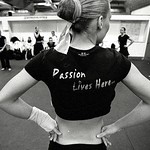
Passion Lives Here ...

That “P-word” is so obvious in some companies that when you walk into their corporate office foyer, you don’t need a dictionary to understand how to spell it, nor a thesaurus to interpret what it means, you can just sense and feel it. Yes, that “P-word” is “Passion”.

No, I’m not talking that form of “passion” where you see employees drooling over each other in lustful scenarios that may embarrass the observer. I’m referring to that enthusiastic and contagious behaviour that permeates within an organization that has that right mix of employee engagement and a personal and committed belief in the future growth of the business.

In the September 2014 edition of The Australian Financial Review “Boss” Magazine, there is an article that lists “The Best Places to Work”. As you read about each of these top 25 companies, the word “passion” is very apparent and is a consistent underlying theme in all of them.

So, how does one achieve “passion” in business? To me, it’s quite simple. Forget all your HR and other detailed analyses of employee engagement strategy pontification, let’s just focus on the basics.

According to the Free Dictionary (http://www.thefreedictionary.com/passion):
Passion: A powerful emotion, such as love, joy, hatred, or anger

The key in this definition are the words “powerful emotion”. When you are really passionate about someone, your have an intense and powerful desire to be with them, to see them, to have them continually in your life. The experience benefits you and you want more and more of the encounter. It is a bit like a drug that you want to continually consume.

Unfortunately, many employees don’t have any passion in their jobs and want to get out of the office as quickly as possible. So who is the blame for this passion abstinence? No, in the majority of cases it’s not the employee, but the employer.

Most corporate organizations have the best intentions in trying to motivate and inspire their employees. However, employees seem to have an inbuilt “Bollocks Meter” that measures whether the senior management team are sincere, walking the talk, or just going through the motions with yet another passing fad that will soon diminish with time.

Corporate passion can’t be bought. It needs to be lived and exemplified in all activities of the business. The passion crux is when employees want to be at work as they believe that it benefits their own well-being, those around them, and their customers. If the business is just transactional, then passion has minimal hope in succeeding.

Yes…..it’s all about the passion!

Hairovation

Kaela

So as to keep the gender balance politically correct with respect to innovation in the corporate office, I thought it was appropriate to focus on a topic that was targeted more at the professional woman. So this blog post is aimed at the lady readers of my blog.

No, I’m not going to talk about skirt length, stockings, shirts, bras, lipstick, shoes or perfume, in fact, I’m not even going near it, particularly as there might be a few HR managers perusing these words, and let’s be quite honest, my knowledge in this area is somewhat limited. But, what I will talk about is hair colour!

Women have the option to change hair colour depending on what mood and image they are trying to convey. It can be long, short, wavy, curled, spiked and even shaved, and yes, people in the corporate office do notice! Hair colour appearance seems to directly influence confidence and behaviour. If you feel good about yourself, well, this permeates into how you react with your colleagues and those you come into contact with from a business and personal perspective.

This got me thinking…what if we now expanded this hair creativity not just to woman, but also to men? Just imagine the possibilities!

I am one of those men who enjoys that ‘free from head hair’ appearance. Why shouldn’t I also explore various hairstyles to generate some innovative discussion in the corporate office? Why shouldn’t I wear a variety of hairpieces of differing length and colour? One day I could be a red head, the next day a longhaired blonde, or even adorn a couple of ponytails? I’m sure that it would be noticed and would lead to some interesting dialog, potentially even a compliment or two?

Let’s just not stop at hairpieces, why not consider eyebrows, beards or moustaches! I hear you say, why not expand the hair creativity also to woman? Well, absolutely, if woman also want to try a hairpiece, fake beard or moustache, well why not! I’m all for equal opportunity in the workplace!

The key is to make people think differently and to crack open the corporate mold of conservatism. I challenge you to give it a go in your office! Why not have a ‘free hair day’ on a Friday? Go on…..I dare you!!

Shirt Wear – Guidelines for Corporate Creativity

Shirt

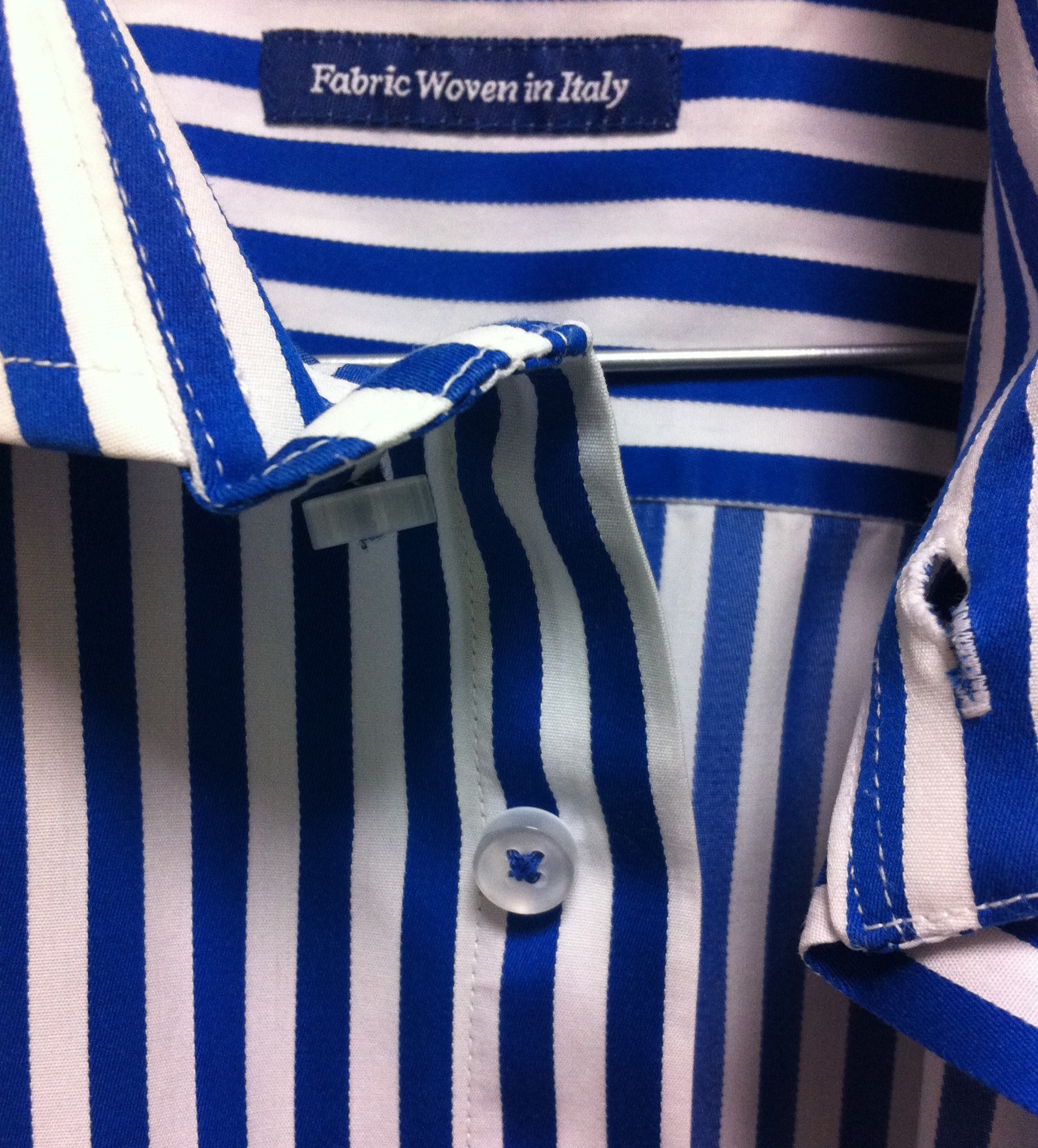
You know…the business shirt is quite an amazing source of innovation and creativity and has a unique and strategic place in the corporate office. However, many wearers do not recognise this fact, or its importance. So let’s explore this grand piece of clothing a little bit further.

The key shirt characteristics that define your shirt wearing creativity are:
• The colour
• The buttons
• The in/out tuck

Colour:
Most shirt wearers in your typical conservative corporate organisation tend to wear the stock standard white shirt. Need we say anymore, except, this probably explains why these companies are quite boring and lacking innovation!
When colour is introduced; now we are talking! These colourful shirt wearers tend to have that increased level of flamboyance and “oomph” that supports the generation of new ideas. Other areas for creative differentiation are the optional stripe or pattern.

Buttons:
The typical business shirt has seven buttons in the main frontal section, and a smaller button on the sleeves (assuming that this is a cufflink shirt).
My extensive research (based on extensive individual research I might add), is that the number of buttons done-up greatly influences the shirt wearers level of freedom which I assert has a direct correlation with creativity.
The optimum level of thought freedom appears to be attained with no buttons done up….yep that hairy chested high air-flow look! When all the buttons are done-up, “theory” states that creativity is proportionally reduced. Owing to HR T&Cs of acceptable dress in the corporate office, I would suggest the top two buttons being undone, if not completely removed to ensure that happy creative compromise with the official corporate guidelines.
Another option is to undo the small buttons on the shirtsleeves and roll your sleeves up, once again, a certain freedom of corporate constraint seems to prevail as a consequence.

In/Out Tuck:
This is indeed a very personal choice. Some people like to have their shirt tucked in, others like it out. However, when wearing a suit, having the shirt out does tend to make you look rather uncouth hedging towards that bogun looking classification. However, if it improves your ability to think with your shirt flapping around your bottom, well, each to their own!

Now, I haven’t explored the choice of hooks and eyes, or zips, as an alternative to buttons, but would welcome any constructive feedback from any readers of this blog post that might be beneficial to the argument being proposed above (which of course is all tongue in cheek!).

In conclusion, may I suggest that you view your business shirt as a key factor in the development of a culture of innovation in the corporate office.

Coloured Ideas of Sex

Omphaloskepsis...

There is a saying that innovation occurs when ideas have sex. This might be fine for those free thinking happy go lucky ideas, but it is not acceptable behaviour in the corporate office! You will find quite a few policies and a vast array of T&Cs of employment covering this issue. It is just not the done thing!

But what if there was a way that the ideas of employees could actually interact with each other and ‘have sex’ in a non-physical way that kept the HR policy enforcers content?

So just how could this be achieved?

Just imagine if ideas could be linked to a set of corresponding colours? Employees could then generate a large number of thoughts which would initiate an array of colours that could be captured electronically.

The next step would be to provide a ‘comfortable and relaxed’ meeting place for these ideas to ‘get to know each other’, similar to a date. This might be achieved via the use of a shared public directory on the corporate intranet?

After some interaction, where the respective ideas would get to ‘know each other a little better’, some of the more progressive and risk adverse ideas might establish a mutual attraction which may encourage a closer and more intimate colourful relationship to develop?

With time, these electronic coloured ideas might just combine together to achieve a new and innovative thought creation?

Other ideas that may be a tad bashful or reserved, may observe the progressive nature and associated benefits of those less risk adverse ideas and just let their inhibitions go and strive for new heights in idea colour combination!

The electronic idea colours could also allow for global interaction between business divisions where traditional cultural and social differences may tend to limit interaction?

Taking the concept further, older ideas from previous employees could be mixed with new and current ideas to achieve the benefits derived from previous learnings and experiences.

Yes, it is just a colourful idea concept and I’m not saying that it has any real prospect in developing into corporate reality, but hopefully it has got you thinking that little but differently! The key is to let different ideas mix and combine with others to form something quite innovative and new in the corporate office.

Office Stress Elimination

woman darkness

There is a dark room in the corporate office that is buried deep down in the depths of the building foundations. In this room sits a quiet unassuming gentle natured woman who has a perpetual smile continually permeating from her face.

Her body is an illuminated random visual blur of different coloured lights that are reflecting the constantly changing computer screen displays that cover every inch of her office walls. Her eyes dart from each computer screen on the look out for that bright red warning light to flash indicating that she needs to move into the appropriate corrective action routine that is stipulated for her to follow when prompted.

So what exactly does she do? Well, let me enlighten you.

Did you know that underneath each of your computer keyboards in the corporate office there is a microscopic sensor? This sensor has been finely calibrated to measure the finger force that you apply when using your computer. When you are stressed, or agitated, the sensor measures the corresponding minute change in your finger pressure from your usual benchmark ‘non-stressed value’ that has been determined over many hours of computer typing activity.

For those of you that are a tad stressed for a long duration whilst residing at your computer, this triggers a red flashing warning light on the woman’s console.

I will now explain this woman’s role in the corporate office. She is the Senior Director of Stress Elimination and reports directly to the Vice President of HR.

The flashing red light now prompts the well established smile on her face to quickly widen as she prepares the required corrective action to alleviate the user stress now identified on her computer console. She is now in her element and initiates all her years of stress reduction training.

She now types in the secretive stress reduction codes into her computer. Once the ‘enter’ key has been hit, a chain reaction of electrical interference is now implemented.

The stressed person sitting at their computer will suddenly be plunged into an eery silence . All the phones and computers of their surrounding work colleagues will be immediately shutdown. However, their computer will continue to operate without any hindrance. The stressed worker will now hear a loud flurry of annoyed and angry colleagues sitting next to them and they will consider that they are quite lucky in that they can still work without any interruption! Their sense of stress will now change to a feeling happiness!

I can now hear you ask about how the Senior Director of Stress Elimination now handles the commotion that she has now generated? Well, the answer is quite simple, she has a coffee break and leaves it to the corporate IT Help Desk to sort out!

Fifteen minutes later, when everything has now settled down, she returns quietly to her desk and awaits for her next stress relieving opportunity to assist a fellow work colleague….