
Vanilla Flavoured Diversity

My Primary Workhorse

Signed……Steven Cramer. The black ink that had just permeated from my treasured fountain pen was almost dry on my new employment contract. I gleefully looked once again at the document, and then with an eager and expectant smile on my face, I carefully folded the paper, placed it in the reply-paid envelope and put it aside ready to be posted to my new employer.

All of us have at some stage in our working careers have experienced the excitement associated with starting a job with a new corporate organization, or a new role within your existing company. Prior to us starting this new role, we have many ideas and thoughts on how and what we are going to achieve, we do not impose any limitations, nor do we expect the organization or our fellow colleagues to hamper any progress on the attainment of these objectives.

Unfortunately, many of us after a few years working for the same organization lose this positive and creative persona and slowly morph into a common and accepted form of corporate behaviour where any diversity of thought is progressively extinguished. The result is a “vanilla flavoured” corporate culture that is prevalent in many corporate company’s today.

But does this need to be the case?

A thought.
Why do we not ask all new employees to write down their career aspirations on what they would like to achieve prior to the first day of their employment? This untainted document could then be stored for a period of time (say 3-5 years) following which it is then opened and reread by the employee and discussed with a senior member of the management team. It would be interesting for the employee to see how their enthusiasm has been maintained or even increased over the time period, or has it been severely hindered? If the latter, then what has caused this negativity and how could the corporate culture be improved to encourage and foster a greater diversity of thought?

Many companies talk about the concept of diversity, but are quite content to operate in the “vanilla flavoured” business environment. When a new employee starts, they may be flavoured “strawberry, blueberry, or even have lumps of chocolate” diffusing through their personality. But after a period of time, this creative flavour may have been slowly purged and replaced with the approved corporate taste. If an organization truly values diversity, why focus on the attainment of the “vanilla”?

There are many great benefits to a company if their employees do think that little bit differently, particularly with respect to innovation which could be utilised in a variety of different areas such as new product development, improvements in service offering or potential business expansions outside the traditional norm? If all employees think the same way (“vanilla”), then opportunities for innovation and creativity will be severely restricted.

So next time you are about to start a new role, may I suggest that you capture your thoughts and aspirations and revisit them later in your working career. The rereading might be quite enlightening, particularly for you, and your organization?

Cultural Transformation to a Tea!

Tea

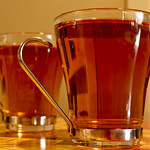
I’m one of those tea drinkers that likes to have my tea in a long tall and transparent glass. There is something quite magical about observing the tealeaves gradually permeate their colour, taste and odour with the boiling clear water. With time, you will observe the tea colour swirling and leaving a distinctive trail in the water, with additional time, the tealeaves will transform the water into a uniform and translucent colour. The degree of tealeaf permeation, or transformation, can be controlled via the immersion duration time in the water.

Let’s take this analogy into the corporate office with respect to cultural transformation.

Many corporate cultures can be viewed like the glass of clear boiling water. To look externally at the glass, it is homogeneous, quite bland, and the only activity appears to be the vapour trail exuding from the top of the glass as a result of the high temperature (100C). However, unless something happens within the glass, the water will cool and the glass will reach a temperature that coincides with the surrounding room temperature. This is the boring corporate culture that is common in so many organizations today.

The key to cultural transformation is the introduction of a catalyst to initiate and drive change. However, prior to its introduction, the business management team need to identify and agree on what their unique and distinctive organizational culture needs to be? Let’s go back to the tea analogy. How will the business culture be defined? What will be its colour, taste, smell and intensity? How long will the process take to be achieved? What catalyst will be used to initiate and drive the cultural transformation? Will the employees, customers and the market like the final taste?

When tealeaves are added to the boiling water, the permeation can be accelerated via movement of the leaves, or the water itself via a stirring action. In other words, some action needs to occur to progress and maintain the transformation.

So when next you are considering the implementation of your next cultural transformation in your office, or if you are currently in the midst of one right now, may I suggest that you consider the following key elements:

1.A transparent glass enables your employees to see the degree of transformation permeation. Don’t hide the process, make it very visible.
2.Is the water hot? Is the corporate environment at the right temperature for the required cultural transformation?
3.What tea will be introduced into the water? What will be the catalyst that you will use to drive the change? What colour, taste, smell do you want to achieve that defines your corporate culture?
4.When should you introduce a spoon into the glass to stir things up a little? What stirring speed is optimum to achieve the desired effect?

Once the desired tea has been achieved, there is no point everyone just looking at it with admiration, make sure that all those involved in the transformation process drink the tea and provide management with feedback so the tea can be tweaked accordingly to maintain the optimum taste and enjoyment!

Don’t relax once you have obtained the targeted cultural transformation, as just like with tea, the organization’s tastes will change over time. Be prepared to continually experiment; maybe add some lemon, some honey, or another tea flavour to add that additional zest!

Corporate Access Code 76806864

I want to share a secret with you! But you need to promise not to tell anyone in your office! If you can’t abide with these T&Cs of confidentiality, then you need to stop reading this blog post right now.

For those of you that have agreed to the prescribed conditions, please move a little closer to your computer screen so I have your full and undivided attention.

OK, so what’s this all about you may ask? Now let me explain.

Have you ever noticed some people in your office that seem to do everything just right? They are the people who never seem to get stressed, always complete their work on time and tend to have the most innovative and creative ideas?
They are typically the career “high flyers” in the corporate organization and seem to exude a disturbingly youthful and ageless appearance.

So what is the secret to their success? Allow me to educate you accordingly.

Come with me on a walk in your office to a room that you may have never noticed. To do so, there needs to be no talking, pushing or shoving as we need to be quite stealthful in our journey. For additional noise reduction, please put these special socks on your feet, which come in two corporate colours – pink and blue. It doesn’t really matter which sock colour you select, and I won’t make any judgement should you choose one in particular! Now that we are all set, let’s proceed.

We are now standing outside a particular door that has a large combination keypad with which we need to provide a certain numeric combination. This code is only provided to those employees who are deemed suitable for this room entry privilege. Let’s enter the code 76806864. As I do so, the door quickly opens.

On entering the room, you will see some wooden chairs, desks, writing pads and an array of fountain pens filled with black ink. The room is completely white, quite cold and has no windows or paintings on the walls. You will notice that there are no electrical power outlets, no computers and more importantly, no noise. The only item adhered to the wall is a clock, but there are only numbers, no hour, minute or second hands, there is also no tick, apart from a warm yellow glow permeating from its circumference.

So what’s so special about this room you may ask? Well, in this room time “just stops”. Those entering the room do not age. Those people sitting at the work desks have quite literally an infinite amount of time to master and perfect any project they are working on. They can brainstorm and develop ideas that may take their fellow colleagues many lifetimes to progress, however in this room, they have all the time they require.

If you had access to this room, you too could be seen by your peers as a genius or a “high flyer”, the only limiting factor that you face is time, unlike those fortunate enough to have access to this secretive room.

So what are the learnings from our visit to this room?
1. Pink or Blue socks are quite comfortable compared to work shoes.
2. The access code is 76806864
3. This is the most important learning – Don’t let the concept of time limit your potential in your work career. You have unlimited time to do what you need to do and if you recognise and appreciate this fact, your stress will be reduced and your life will be rather more spiffy than it currently is at the moment.
4. And yes – unfortunately, this room does not exist in real life, but just imagine the possibilities if it actually did!
5. Just focus on items 1 and 3

The Chief Corporate Wardrobe Selector

The costume wardrobe room for a theatre production is an amazing and vibrant place. It contains a multitude of various clothing props in a range of sizes, colours, designs, accessories, time-periods and fashions; it is almost like entering a “house of fiction” where the options for selection, combination and use are endless!

If you observe those entering the room, they will look quite normal. They will wear the same traditional casual or work attire that most people would adorn. However, on leaving the room, they will have a completely different appearance. It is almost as if the actor discards their normal appearance and personality in the wardrobe room from which they depart with a tantalising and decidedly new modus operandi for their behaviour. This new profile may be assertive, reserved, allusive or seductive; the key requirement is that it is different; their clothes also complement and support their new character.

This got me thinking about how people behave in the corporate office. If you study your colleagues in your workplace, you will see a high frequency of suits, ties, skirts, shirts and jackets. But how often do you see someone adorning a bow tie, stylish tartan shorts, a bright pink fluoro shirt, a beret, or some other unique clothing item? The answer is most rarely, if ever!

An actor uses a range of clothing costumes to enhance their character and to instil and encourage certain qualities that they want to promote during their theatrical performance. If all of your work colleagues are dressed similarly, this may lead so a standardised thought and minimal opportunity for those creative individuals amongst you to fully express themselves in the corporate office? Some people may also receive that additional “spark of motivation” that accompanies the wearing of a costume to break free from their “reserved person label”?

Why not encourage this opportunity for corporate creativity by having an “office costume room” that all employees must walk through as they arrive at work? Each person would be required to select a different costume each day, under the supervision of the “Chief Corporate Wardrobe Selector”, to inspire a different way of thinking in the office. At the conclusion of the working day, employees would once again pass through the “office costume room” and change into their traditional clothing attire.

Just a thought, but maybe it will help people think that little bit differently?

The Achievement of “Mobility Optimization”

Roads these days now cater for a variety of users, all with differing needs and requirements. To do this, many a driver will have observed the ever growing emergence of a number of specialist lanes segmenting the bitumen for motorised vehicles, cyclists, roller skaters, skateboarders, those wanting to travel slowly, and of course pedestrians. Each lane is typically branded with a painted logo and may even enjoy a unique colour and/or road texture to provide additional differentiation.

No longer do roads just exist for the humble automobile, they now facilitate the movement of a many a mode of transport. The result is what I will term “mobility optimization”.

There is another transport corridor which could benefit greatly from the use of “mobility optimization”, and that is in the corporate office.

Most offices have a maze of corridors that link employees between various work stations, meeting rooms, food lounges and of course those dead-end traffic zones known as photocopy rooms. People are all walking at different speeds, some dawdling along in deep thought, others perched up against a wall enjoying some social interchange creating a walking hazard for others, some carefully juggling a number of work items such as computers, folders and a steaming long black coffee cup that is poised for spillage, others just in a hurry to get out of the building!

The solution is obvious! The corporate office needs to establish transit lanes in the workplace corridors to facilitate “mobility optimization”.

For those people in a hurry, their corridor lane could be made from polished floorboards to assist fast walking, running or even the use of corporate approved roller skates (furnishing the company logo) for the achievement of optimum speed around the building.

The slow walking lane would consist of a thick shag pile carpet, together with the occasional table and chair on which a number of drinking glasses would be placed to support and maintain the reduced speed objective.

Like on a freeway, where car breakdown zones exist on the side of the road out of harms way, office corridors would be designed with “dialog zones” where employees could stop and socialise in small out of the way “bunker nooks” that do not hinder those co-workers that are on the move.

Surveillance speed cameras could be mounted above each corridor to ensure the correct use of each lane. Those employees observed not following the “terms and conditions” of their selected lane usage, would receive a “mobility optimization infringement notice” that would be E-mailed to their work computer. Those repeat infringement offenders, would feel the wrath of the corporate wandering wofters! (a wrath that most people do not want to experience!).

So, in order to eliminate your corporate office of all movement hindrance resulting in transport inefficiency, may I suggest that you initiate a program of “mobility optimization” and enjoy a much more pleasant and effective office environment!

E-mail Innovation

E-mail in notes

Wandering surreptitiously with a nonchalant manner throughout the corporate corridors you will find a unique and highly valued employee. This person typically wears work attire that just doesn’t seem to “hang together”, may have a button out of place, odd socks, a belt buckle that is providing a little bit too much pressure around the waistline, and have that distant, rather sheepish look in their eyes.

If you decide to follow these employees, they will quickly lose you and you will wonder where they reside in the office.

Their names are typically Bill, Bob, Brad or Jen, Jill, Jan – their names are never too long, and one that doesn’t leave any chance of a lingering impression.

So what do these valued employees do? These people have a direct reporting line to the organizations Innovation Director and it is their job to continually bombard you with new ideas, even if they are unwelcome, nor appreciated throughout your working day.

These employees have a skill in crafting prose, together with an eye for various font and image selection that is constantly varied to be either particularly exciting, or to be the most dull and uninteresting. Their work rate output is considered to be one of the highest in the corporate office.

Yes, these unique employees are the originators of all your SPAM E-mails. They are the official corporate SPAMMERS and their job is to frequently interrupt your concentration with strange and subtle ideas to entice you into thinking that little bit differently. However, sometimes they can get a little bit too enthusiastic!

So next time you are on E-mail, don’t forget to have a look in your SPAM folder to marvel at the works of your fellow employees. Some of these E-mail masterpieces might just lead to some glimmer of a new innovation?

The Secret Wandering Wofter Xmas Tally

good

At 9:37 PM on the 24th December in all innovative corporate organizations, a dim yellow light can be seen permeating under the door of a room that is hidden to most employees. This room, one that is normally dormant and unregistered in the corporate room-booking directory, is on this occasion full of virtuous activity.

On sneaking into the room, you will see it jam-packed with all the “Wandering Wofters” who have a secret role in the corporate organization, that being to see which employees have been “good” and those who have been “naughty” throughout the year.

The “Wandering Wofters” will all be sitting at a large table eating mince tarts, shortbread, smoked salmon and copious quantities of fresh prawns which are all being swilled down with many large corporate flagons containing the company accredited beverage.

Each “Wofter” will have a complete list of employee names and they will systematically vote on each of their co-workers. Those employees who have been “exceptionally good” receive 3 votes, those who have been “relatively good” get 2 votes, those who have just turned up to the office and logged on to their computer get the mandatory 1 vote.

However, for those employees who have been naughty, look out! Those employees who have:

a) Participated in the office Kris Kringle without providing a present (-3 votes)
b) Attended the office Xmas party without wearing the customary party hat, didn’t dance or play in the games (-2 votes)
c)  Those that have had a perpetual look of boredom and doom on their face throughout the corporate year (-1 vote)

At the conclusion of the Wofter voting process, all the votes are counted and the “Grand Wandering Wofter” (a very esteemed Wofter role with secret corporate privileges) delivers the result to the CEO who now applies their corporate Xmas “spirit and cheer” that becomes effective at midnight.

Those employees with a positive voting outcome receive “certain benefits” in the following year that range from job promotion, improved seating position, better coffee, access to the CEO lunch left-overs, etc, the magnitude being linked to the number of positive votes obtained. Those with the negative votes may find themselves now sitting further away from the cafeteria, nearer the noisy air-conditioning vent or experience that their swipe card to the employee car park occasionally fails leading to many embarrassing honks from frustrated co-workers. For the employee with the most negative score, I would be scared to provide you with the specific details for fear of personal Wofter reprisal! Needless to say, this employee’s working life next year will be intolerable!

So when you are next considering how you should behave in the corporate office, be aware that a Wandering Wofter will be secretly studying your every move and will be quietly observing how your personality influences those around you from a working and an innovative perspective.

As a parting gesture, on behalf of all the Wondering Wofters that frequent your corporate office, may I wish you all a merry Xmas and a happy new year!

Souvenirs of Business Exploration

NLDK_DE10_BrakeLookout.jpg

Centuries ago, the role of the Explorer provided many governments and monarchies in power with a strategic and valued opportunity to learn about new civilizations and philosophies. The Explorer’s discoveries and insights led to the establishment of a variety of new and powerful trading colonies that provided economic opportunities for financial gain and cultural exchange.

History provides much detail about the exploits of these Explorers, and the personal characteristics, traits and resilience required to be successful in this role. But have we considered how their experiences influenced their home life and those that frequented this establishment?

If any of you have travelled overseas, or extensively within your own country, you have most likely gathered a large array of souvenirs to remind you of where you have been. I suspect, that this would be the same situation for the Explorer.

The Explorer’s home would be a kaleidoscope of souvenirs from all around the world which when prompted by the visitor inquiring on the specific artefact, would initiate a masterful story of how it was obtained. I’m sure that many an informative dialog over a most enjoyable dinner party with a group of attentive guests would have prevailed. Those partaking of the experience would propagate this novel information with their family and friends leading to an expanded and continued dissemination of this new worldly knowledge.

Let’s now focus our attention on how this can be applied in the corporate office.

In business, although the official title of “Explorer” does not currently exist, many employees have this activity as part of their work function (eg New Business Development, R&T, Marketing, Finance, etc). However, what is lacking is the opportunity for the “Business Explorer” to furnish their travelling exploits back in the corporate office. There is no dedicated “Explorer’s Room” in which business souvenirs and other impressive booty can be pinned to the wall or placed on a mantelpiece above the fire, just like in the Explorer’s home to prompt further discussion and interest. Some organizations try to do this via visit reports and other office communications, but the impact is quickly lost, particularly with the continual bombarding of daily E-mails.

So why not establish an “Explorer’s Room” (or wall, if space is limited) in the corporate office that is dedicated to the “Business Explorer”? Just like in the Explorer’s home, these souvenirs of external inspiration and travels could then be discussed and shared with other employees in an informal setting, maybe over lunch, to generate interaction and dialog. For those businesses with many offices, why not have a virtual “Explorer’s Room” and schedule employee discussion via webcasts? Who knows what creative and innovative ideas might be developed?

The first step is to recognise the importance of the role of the “Business Explorer” in your organization in seeking out and identifying new ideas that are not currently in operation in your organization.

The second step is to then share these “souvenirs” with the rest of the business. To do this, consider the establishment of the “Explorer’s Room”.

The third step, and most important, is to have business leaders in the organization tasked with actioning the key learnings generated from these “souvenirs”. However, these leaders need to have vision, be bold and progressive, and dare to be different. For the Explorers of yesteryear, these people were typically the King or Queen, once they had made a decision to proceed, no bureaucracy dared to stand in the way of implementation!

Business Basics: Beach, Balls, Bats and Bathers

A family plays beach cricket at Byron Bay

As you stroll along many Australian seaside beaches in summer you are bound to come across a group of people playing cricket on the sand. The official name for this game is “Beach Cricket”.

The customary uniform for Beach Cricket is typically minimal and encompasses a range of different coloured and sized speedos, bikinis, hats, sunglasses and the frequent application of sunblock. The rules will vary depending on beach locality and the skill set of the players, but for that optimum scoring opportunity, a large hit by the batsman into the sea normally provides the best result!

There is usually no participant exclusion to the game as with more people, the easier it is to play, particularly when fielding the ball on the soft hot sand in your bare feet. Those wanting to play do not need a formal invitation. The accepted custom is to simply walk up and ask “Can I join in and play?” The response is unquestionably “Yep, sure thing, just take a fielding position out in the sand, or sea”. I personally like the sea, as it provides the maximum opportunity for extreme laziness, body cooling and water flotation!

The game may last for hours, or until the ball is absconded by a passing dog frolicking on the sand, but the result is a great time for all.

If we look at the game of Beach Cricket from a corporate office perspective there are some important strategic learnings.

In Beach Cricket there are no exclusions, cliques or private groups that filter member participation. Each new player is welcomed regardless of whether their skill set is minimal or vastly experienced. So why not have this same employee involvement philosophy in business? Is it that we are too self conscious to join in, or too scared that we may “drop the ball”, or are we a little too selective about having the “right” people” in our work team?

As with Beach Cricket, when people feel welcome and valued regardless of their ability, they tend to enjoy the team spirit, the sense of belonging and throw themselves into the required objective (which occurs quite literally when fielding the ball on the sand and in the water) with an unrestricted level of enthusiasm. Many of the team participants may discover some hidden talents when provided with the opportunity “to play”, others may watch and learn from the more experienced and skilled members of the team, either way, the result is beneficial to all.

So next time your office work team starts to have that all too familiar “dysfunctional look”, may I suggest you grab a ball, a cricket bat and head for the beach! If your team is located in the cooler climates, you are allowed to swap the swimming bathers for some more suitable and warmer clothing attire, and if the ball is hit deliberately into the cold ocean water, may I suggest the cheeky batsman be ruled as out and they be asked to field the ball themselves!

The Flamboyee

Mondrian dress

If you have ever watched a speedboat cutting through the still water in a large lake, it is a most impressive sight. Besides the monstrous noise catapulting flamboyantly into the surrounding air, in its trail there is a sharp and distinctive series of oscillating waves that permeate from the back of the boat and eventually make their way to the shore. As an observer, you have no option but to take notice and to acknowledge the visual spectacle that is quickly unfolding before your physical senses.

This occurrence got me thinking…..

Corporate innovation needs “The Flamboyant Employee” to act as a catalyst to inspire and to make others in the office think that little bit differently. As a suggestion, let’s call these people the “Flamboyee”.

As the “Flamboyee” wanders through the office, their profile captures the attention of their fellow workers. They may have a flirtatious smile, a wicked glint in their eye, wear a range of unique clothes, or possess some other individual and distinctive mannerisms and attributes. The key requirement is that people take notice of the “Flamboyee”, break their concentration and initiate a spark of innovation in their thinking, or in their subconscious. This “Flamboyee Effect” rippling throughout the office environment can be likened to the waves in the lake generated by the speedboat. Those employees in direct contact with the “Flamboyee” will tend to obtain the greatest innovation benefit.

It is important not to have too many “Flamboyees” meandering the corporate passageways; otherwise there could be a clashing of the innovation waves that may lead to a negative impact and eventual capsizing in creativity. However, a well-planned timetable of “Flamboyee” activity is essential to ensure that a sustained level of innovation buoyancy is maintained throughout the working day, particularly near 5 PM when many a worker’s motivation starts to quickly subside.

The role of the “Flamboyee” should be prized by management, and HR should have a specific position description prescribed with key performance innovation indicators to make sure that the “Flamboyee” is operating effectively and achieving their maximum creative potential.

Just a thought, but one definitely worthwhile exploring further!