The Lazy Creative

maxresdefault-1

It can happen via a deliberate wrist glance, a nonchalant button press, or the frequent refreshing of a specifically purchased iPhone App. You have all observed it in action. Yes, it’s the now quite common hourly habit of the corporate office FITBIT wearer as they compete with their fellow fanatical walkers for the esteemed victor of the Workweek Hustle.

But in a recent study, at a soon to be prestigious Australian Institute of Sport, a rather unusual finding has been discovered that has found a direct correlation with a person’s aptitude for innovation, and their FITBIT daily step count. Contrary to what you may think, the lower the FITBIT number, the higher the innovation intellect.

The majority of the corporate office population view those in their working ranks with a very Low FITBIT Step Count (LFSC) as being rather lazy. However, the study results found this to be remarkably furthest from the truth.

Those of your colleagues with a LFSC typically commenced their innovation training early in their youth as a teenager. A visual clue to their future LFSC creative talent would be their clothes, towels and food plates being strategically placed on the floor in their bedrooms. As the days of litter and odour progressed unhindered, a frustrated parent would finally succumb to the mess and tidy their room, with no stepping activity required at all from the clever child.

For teenagers that mastered this skill, their LFSC innovative prowess continued into their working life where the role of the parent was replaced by a fellow work colleague. Here they would sit comfortably at their desk, with their ears and eyes seeking out a potential parental worker surrogate to ensure that their need for physical exertion was significantly minimized. If you are not familiar with their innovative FITBIT step reduction techniques, take note of the following behavioural clues:

  1. The Coffee Run: They will hear the murmurings of colleagues thinking of making a dash to the nearest café for a coffee. Using their creative talent, they will feign extreme busyness and will ask you to get them a coffee on their behalf. If they are masterly at their LFSC craft, you will also be paying for them, with no hope or expectation of a reciprocal arrangement.
  1. The Carpark: In the office carpark, the innovative LFSC colleague will park in the closest position next to the elevator thereby ensuring the least number of walking steps. Some may even place a “Reserved” sign to guarantee this requirement.
  1. The Video Conference: Rather than having to walk to a meeting, the LFSC colleague will cunningly schedule a video conference, even if the colleagues invited sit only a few desks away.

So next time you have a FITBIT Workweek Hustle and you power your way on a daily basis to stepping superiority, may I suggest that you have a look at the work colleague that always comes last. Yes, they are the truly innovative people in your corporate office as it takes creative ingenuity to be that lazy!

The Law of Scrabble

Letters are tricky objects, particularly so when left alone to their own arrangement. For centuries now, these 26 individual English characters have been portrayed as inanimate symbols, but that was indeed furthest from the reader’s comprehension.

Letters are most devious and have the imaginative ability to mentally reach out to the writer to get them combined into an alignment of grammatical strength where they can dictate their self-gratifying messages of command.

To avoid any potential human mutiny to their authority, Letters have created a complex array of continually updated syntax to ensure ongoing user bamboozlement, and to ensure that their vocabulary importance is never challenged, nor questioned.

Letters frequently align themselves in a position of strength and are usually not left on their lonesome, except for their leader “A”, a Letter that is quite unique and content to operate in isolation.

However, in the year 1938, the ordered life of the Letter changed forever. Yes, the culprit was a man called Alfred Mosher Butts and he challenged the happy status quo of the Letter by introducing the element of randomness into how Letters might be utilized by the thinker. No longer would a full powerful complement of 26 Letters hold the verbal attention of the user; Mr Butts cleverly restricted their influence to an unwordly 7 haphazard Letters for thoughtful “sentencifical” construct. As the years unfolded, the Butt’s invention was eventually known as the “Law of Scrabble” and it is still in operation today, and looks likely to prevail for many years into the future.

Now for those of you that work in the corporate office, you will be interested to know that the “Law of Scrabble” signalled the start of the modern age of innovation as mankind was now no longer subservient to the whimsical and tiresome demands of Letters. Yes, the users of Letters were now masters of their own written destiny of creative prose.

The year 1938 heralded noun and verbal freedom, and the patenting of many new writing inventions were quickly transcribed into inked existence via the application of the “Law of Scrabble”. Some of the more marked 1938 inventions were; the ballpoint pen that was triumphantly verbalised by Ladislo Biro, similarly the invention of the dry photocopier by Chester Carlson that dissipated any remnants of Letter uniqueness with an easily obtainable mirrored copy.

The “Law of Scrabble” also opened the reading person’s eyes to the real definition of the word called innovation. For decades, Letters of the English language had successfully masked its true meaning via the application of many obtuse rhymes, and a plethora of other devious grammatical diversions.

The “Law of Scrabble” allowed mankind to uncouple the individual letters used in the word innovation (10 letters) into two smaller, and more readily understood words, each within the 7 letter Scrabble limitation. These two words were: “In” (2 letters) and “Novate” (6 letters), which when combined formed the word “Innovate.

Now, should you use a dictionary that has its allegiances with those treacherous Letters, you would find that the definition for “Innovate” is: “To do something in a new way”. Reading between the lines, this definition wants mankind to keep using the old traditional Letters, but just mix them around a tad. Yes, our reliance on the Letter would indeed continue and the worker in the corporate office would be none the wiser, nor creative.

But by using the letter revelation yielded via the application of the “Law of Scrabble”, a slightly different meaning is cleverly unravelled counter to the wishes of the Letters:

In: “used to indicate location or position within something”,
Novate: “to replace (an old obligation) by a new obligation

So the word “Innovate” means to replace old Letters with new and different Letters. Or in more colloquial language, think differently, and use new Letters, some of which when assembled may form a word you have not previously encountered or understood. But the key is to be bold, italic and even indulge in some embellished conjugation when required. Yes, extend your vocabulary and seek new words, some of which may even be in a new language! The result will be the attainment of verbal innovation!

The Tasteful Application of the iChup™

chupachuppencil-1

A soon to be conducted research study by a famous, yet remarkably unpretentious University located near Oxford, has yielded a highly plausible theory regarding the primary catalyst that supports a truly innovative mind.

The theory examined the resources used by the leading creative thinkers prevalent in the 1940s with those commonly found today, and the results were indisputable.

The majority of the great thinkers of the 1940s relied on a common, and most readily available thinking tool that transcribed their thoughts onto paper for private contemplation, mass distribution, and eventual critique amongst their peers. This tool was highly malleable and could be customised to the palate of the holder following long thoughtful periods of mastication. The tool was typically made from wood, with a pointed graphite core that blunted with continual use. Its name was the pencil.

However, with the advent of the computer, the role of the pencil slowly disappeared from the hand of the thinking person and was surreptitiously replaced with the keyboard, and the mouse.

The researchers, from that University located near Oxford, spent many hours studying the chewing habits of a small, yet highly representative sample of computer users (about three actually). Those observed, were found to exhibit no visible characteristics of creativity, but more importantly, not one of them placed any IT implement in their mouth. Besides shouting the letters Q.E.D. (quod erat demonstrandum) quite loudly following this remarkable observation, they smugly realised that they had indeed discovered the true supportive tool for innovation.

Yes, there is a direct correlation between those with a creative mind, and those that thoughtfully chew a pencil.

A few years later, a Research Scientist at Apple just happened to read the findings of this chewing link to innovation and a strategic project was immediately funded. Following the expenditure of many millions of dollars, the consumption of endless cups of soy-milk chai lattes with honey, the iChup™ was finally invented, even more quickly commercialised, and can now be seen in the mouths of many innovative computer users today.

As the name suggests, the iChup™ does have the appearance of a Chupa Chup, and the method of operation is indeed via mouth placement, but that is as far as the similarly goes as the iChup™ has many more mind pleasing features.

Feature 1: Bluetooth Connectivity
The iChup™ has a small surface sensor that measures the tension applied by your teeth as the device is gleefully moved around your mouth thereby ensuring minimal dental damage. The measurement output can be linked via Bluetooth to your computer, or your mobile phone utilising the iChup™ App.

Feature 2: Stress Relaxation
For those thinkers that are stressed, the iChup™ has been designed for under tongue placement. Once in position, the iChup™ has a range of vibration settings that can be selected by the user to obtain maximum stress relaxation.

Feature 3: Taste
The iChup™’s hollow centre has been designed to accommodate a variety of tasteful liquids that are pleasantly discharged over an 8 hour workday. A range of flavours can be purchased, the more popular ones being mint, cola, honey, and for those that like the taste of pencils, there is even a special wooden one.

The iChup™ has been a real success for Apple and one that reinforces that old saying; “Don’t Forget the Past. Learn from It”.

And yes, I still like to use a pencil, still have the taste for it, and find that many creative thoughts quickly appear when applied to paper.

The Future Outer Look

window-woman

Although located on the 536th floor, the view from my private office window is identical to those located on the lower and upper levels where I look straight into a neighbouring building situated just a few centimetres away, the only separation being a sound proof block of thick, perfectly transparent glass. Modern city building regulations stipulate that all walls of construction need to allow the unhindered transmission of light to conform with the strict environmental conditions of work as decreed by the World Office Worker Organisation (WOWO), year of issue 2056.

For those of you unfamiliar with the architectural designs for those of us fortunate enough to be working for a maximum of 2 hours a day, office layouts have definitely changed from the good old days of our grandparents.  Yes, no longer do workers have to reside in the primitive conditions associated with the open planned corporate office. Now, each employee has his, or her, very own dedicated floor space in the building that ensures complete sound solitude, together with the ability to creatively think without any unwelcome, or untimely interruption.

Most corporate office buildings, particularly those located in the CBD, are over 5,000 floors high, lined up side-by-side with military precision along the street frontage, and are constructed entirely from toughened glass blocks as per the WOWO building legislation. However, by the standards of yesteryear, these buildings are not very wide, in fact only 5 metres which matches the WOWO allocated floor width for each employee.

Through an innovative design pioneered by a charitable private Australian research establishment, these impressive tall buildings no longer require an elevator for vertical transportation. Instead, there are two hollow chimney chutes that transcend the entire height of the building located at each end of the floor. The key to this invention was to have the corporate Finance Team located in the upper floors, and the Marketing Department situated in the basement. As hot air rises, it quickly creates an upward wind gust that increases in velocity until it reaches the upper heights of the building where it interacts with the strong negative drag, and then rapidly condenses to form a downward airflow. The result is the formation of an employee transportation system that effortlessly moves people, or objects, up and down the building in a consistent clockwise rotation.

Now should you work in an earthquake location, have no fear as each tall building is linked via a simple locking block designed by Lego Constructions. This company also specialises in amazingly fast building construction techniques, and their corresponding destruction, should it be required.

Occasionally the employee of the corporate office may want to have a meeting with other coworkers not via the traditional video conference, but one involving a real person interaction. The answer is again quite simple utilising the construction techniques developed by Lego Constructions. If a larger meeting room is required, each employee floor is equipped with a block extraction tong which enables a simple person sized hole to be developed in the adjacent building. However, when using the extraction tong, it is important not to remove any blocks located in the hollow chimney chutes as this may result in a large influx of transported employees quickly filling up your allocated floor.

For those employees that have the occasional need for visual privacy from all potential onlookers within and outside the building, Lego Constructions have a simple solution. In each transparent glass building block there is a small sensor that measures the first onset of any employee blush or embarrassment. Should this sensor be triggered, a rapid temperature reduction is initiated within the block that frosts the outer surface that quickly distorts any light transition so a person’s concealment is ensured when required.

Yes, the view from my office window is quite impressive, but like all employees, I wonder what the view is like from other side of the transparent wall adjourning my building? A thought to ponder as I tirelessly works my requisite 2 hours.

The Ageless Solution

Beauty portrait of young woman holding hour glass sand timer, ag

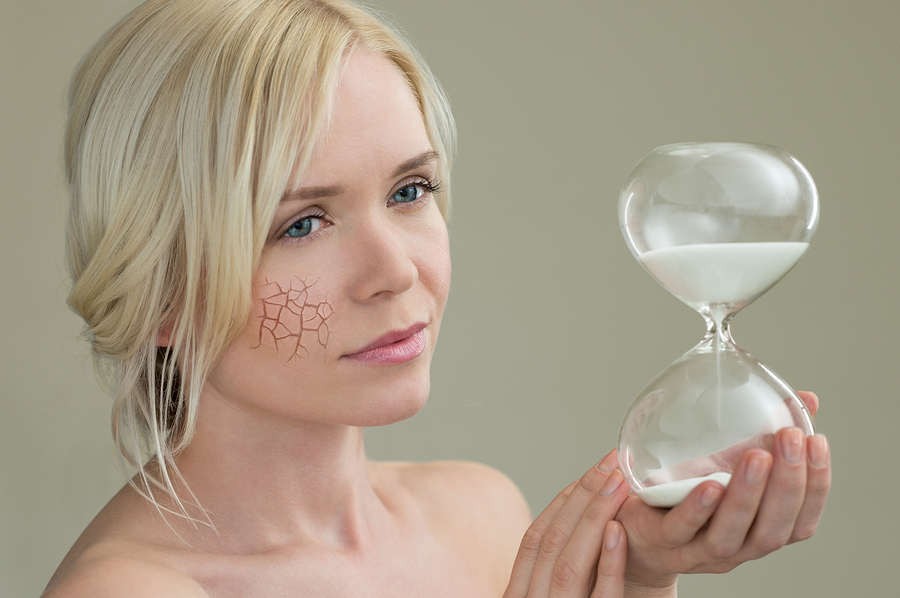
I had to read the headline twice, but there it was in large bold font on page one in the United Nations Bulletin of Medicine.

“THE EFFECTS OF AGEING, SOLVED”.

Now, who could pass up reading that article? So, I carefully placed my well-worn pince-nez glasses on my ever-increasing sun Australian freckled nose and strained to read the words with an ever expectant, and most hopeful personal self-preservation interest.

After a few minutes, I had finished reading it and thoughtfully leaned back in my well-worn comfy leather chair and placed my cupped hands on the back of my bald head to fully comprehend the intriguing solution presented. Yes, it all made perfect sense, and I, like all the other mature aged readers of this article, quickly went to the Apple App Store and downloaded the answer.

What’s so special about this article you may ask? The article explains that “AGE”, is really an acronym for the “Accumulated Gravitational Effects” on the human body.

Accumulated:
As the years pass, the human brain accumulates an ever-increasing amount of useless and redundant information. Those thoughts that are deemed particularly useful to our survival remain permanently lodged deep within the nodes of the brain; those that aren’t, are quickly and effortlessly removed. With time, these discarded thoughts permeate to certain parts of the body that humans typically associate with getting old. For instance, in men, the classic depositories for wasteful thoughts are in the ear lobes, nose, chin and stomach, all of which seem to gradually elongate, droop or expand. In women, similar elongations occur in other parts of the body which some may try and alleviate via various medical procedures involving reduction, lifting, or tucks.

Gravitational Effects:
Put simply, this is body sag! Need I say anymore?

So what’s this App that you can download from the Apple Store? Well, it’s an “anti-AGE” App that requires you to reverse the polarity of the battery in your iPhone in order to use it. Once installed, you place your earplugs gently into your ageing ear canals and the App automatically initiates the process of unwanted thought purgification. The experience is quite painless, the only sensation being a tingling in your saggy body bits as they slowly change back to their youthful appearance.

So next time you visit your grandparents in the Aged Care Facility and you see them all pretending to listen to music on their iPhones, maybe check the polarity of the battery as I’m sure they all tuned in to the “anti-AGE” App! If so, in a couple of months, maybe bring a photograph with you of when they were twenty years younger as you may not recognise the new youthful them!

The Cardigan Effect

cardigan

If you are still searching for that illusive light bulb moment of inspiration that illuminates you on how to develop a culture of innovation within the corporate office, well, cover your shrinking expectant diluted pupils and look no further!

Those organisations that publicly acknowledge that they have attained this cultural goal of ongoing creative status fully understand, and vehemently practice, a little known law that many of you I’m sure have never heard of, or have ever been exposed to. The law is never discussed in any external academic of business journals, or in a public forum. Those CEOs that utilise this law protect it, and value it on an equal footing with any other prized intellectual property that they own.

The power of this law is like that of a welcome virus, and when unleashed without any senior management constraint within an organisation, it quickly takes hold and generates an uncontrollable innovative forward momentum.

The law is known as “The Cardigan Effect”. So how does it work you may gleefully ask? Let me explain.

The “cardigan” is a metaphor and is used to describe the relaxed, unhindered mental behaviour of an employee when they are not in the corporate office. When exhibiting “cardigan” behaviour, the employee speaks their mind openly; they have an opinion that they happily express with their family and friends. They solve problems, have suggestions and are not scared to challenge the status quo. They may be introverts, extroverts, or anything in between, and are content in realising and accepting their own unique persona.

But when many of these employees enter the corporate office, they remove their snug and comfortable “cardigan” and take on the excepted foreign characteristics and behaviour of the organisation. They become a different person, and all their inherent creativity becomes stifled, suppressed or non-existent.

Those organisations that have mastered the “Cardigan Effect” to drive a culture of innovation within their businesses allow, in fact fully encourage, their employees to wear their personalised “cardigans” in the office. The have created a work environment where their employees want to be their natural selves both in, and out of the office, there is no behavioural separation. However, there is one defining and strategic filter used for this “cardigan” behaviour, that being the organisations corporate values. Here the corporate values are not used to hinder the individual’s creativity, but rather to ensure consistency and a reference point for behaviour.

So how does an organisation create a work environment to fully reap the ongoing benefits of the “Cardigan Effect”? Well, it starts at the top with the Senior Executive team happily wearing their very own personal (not company supplied or corporately branded) “cardigans” publicly in the office. Some of their cardigans may not be that fashionable, may be a tad dirty, or may have a hole in the sleeve, if so, that’s even better. They need to consistently “walk the talk” and wear their “cardigans” everyday, not once off as part of a fad or promotion which most employees recognise quite quickly.

So on Monday as you dress for work, why not leave your usual corporate attire in the wardrobe and pull on your old and trusted “cardigan”. But more importantly, make sure that your home persona accompanies your “cardigan” as you enter the office. Then watch and behold just how fast this new and highly welcome innovation fashion trend quickly prevails!

The Scenic Desk

Mobile-Office-1961

You have all had that feeling, it’s 3 PM in the afternoon and your motivational levels are starting to rapidly decline. Your coffee intake is becoming dangerously high, so much so that your tastebuds have now maxed out on caffeine, and you are worried that one more cup consumed will definitely impede any potential sleeping opportunities that evening. Your eyelids are closing heavily under an unknown and dreaded forced hypnotic influence as they encourage you to place your head surreptitiously on your desk and initiate an inconspicuous state of slumber.

However, relax, you don’t need to worry about this unwanted physical eventuality, as your corporate office is equipped with the latest afternoon motivational technique, that being, the “scenic desk”.

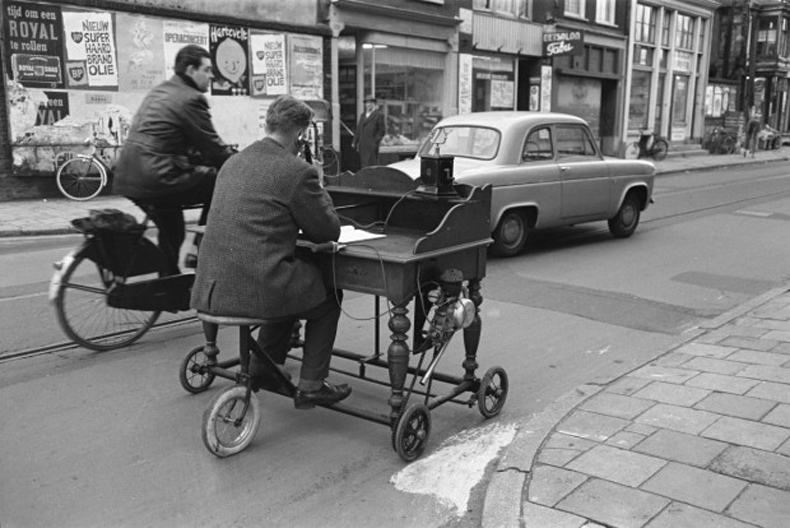
Yes, at precisely 9 AM each morning, your desk, like all the others in your office, start their journey of scenic transition that takes exactly 8 hours to complete. The process starts with the application of a quiet, yet highly powerful high velocity air current that lifts each desk (and the matching chair) an inconspicuous 5 millimetres above the floor. By cleverly changing the angle of these air currents, each office worker’s desk can be propelled in a forward, backward or sideways trajectory. An inbuilt desk computer developed by “Google Desks” charts a unique journey that traverses the entire corporate office to ensure a different, and enthralling desk experience every day, and one that naturally avoids any possible desk collision.

Following extensive R&D testing at a soon to be prestigious Melbourne University, the speed of desk movement has been calibrated at a most comfortable 2 kilometres/hour so as to alleviate any projectile g-forces that may fling the desk occupant, or items loosely residing on the desk surface, in an uncontrollable and dangerous manner. However, for those office workers that don’t worry about the residual side effects of windblown hair, or are particularly bored at work, their desk velocity can be tweaked to much higher levels (following the requisite completion of a personal liability disclaimer issued by their HR Manager). There is also a special office “ejection option” feature that can be used for those recalcitrant employees that utilises a camouflaged sound-proof one-way exit system.

Once the desk movement activity progresses, the desk owner will be enthralled as they meander with gleeful curiosity throughout the corporate office. Any thoughts of feeling tired, or exhausted, will quickly mentally evaporate as they experience new visual aspects and encounter different work colleagues along their scenic desk journey.

Like clockwork, at precisely 5 PM, their desk will arrive back at the original office location ready for the worker’s timely departure, but with them now brandishing a totally refreshed and visually inspired mindset.

So should you experience that unwelcome sensation of mental boredom, don’t reach for another coffee, just send an E-mail to your HR Manager lobbying for your corporate office to purchase the “scenic desk” system. It will change your office environment forever!

Caputignis: Business Greatness

paul-lasalle-my-favorite-martian-by-conceptguy-d5lqdzw

What makes a good company great? Forget looking to the traditional sources of business, academia and other highly paid consultants for a complex answer as the solution is deceptively simple.

After years of tireless observation in the corporate office, the source of company greatness was found to wholly reside in the “caputignis” level of the organization. Those with a classical education grounded firmly in Latin will know exactly what this word means, that being “head sparkification” (caput = head, ignis = spark).

The classification of “great” can be readily substituted with “innovation”, as a great company is one that is immediately known for its phenomenal ingenuity and corresponding business success in the marketplace.

Caputignis is thought to be an emotional energy state that is generated when the employee has a spark of creativity. However, unless this fleeting moment of inspiration is rapidly captured and harnessed within the corporate office, it will quickly vanish and will be permanently extinguished by a conservative organizational culture. For those unfortunate companies where this occurs, their caputignis levels were found to be very low.

Now for those businesses that were deemed by the financial market to be great, their caputignis levels were recorded as being extremely high, continuous and homogenous in all their work activities. The culture of these companies was publicly and internally acknowledged as being highly innovative, and almost electrifying in its nature, so much so that any creative sparks generated by individuals, or work teams, were instantaneously conducted throughout the organization. Here the employees as a collective, worked and shared ideas thereby generating a highly reactive caputignis flux that stimulated and encouraged innovation, together with an overflowing plethora of new thoughts.

Do you need to purchase an expensive caputignis measuring device to see where your organization sits on the greatness level? No, there is a more cost effective approach, that being the vibe that your employees feel when they are in the corporate office. If they are continually bubbling with new mind-sets, and end the working day with a feeling of excitement, then your caputignis level is high. Alternatively, if your organization struggles with the generation of innovative ideas, then you need to work on establishing an employee culture that stimulates head sparkification.

So what makes a good company great? Caputignis.

The Answer to that Male Question

Shaving

There is “a question” that has been baffling mankind for centuries, and as “the answer” was unknown, professional men all around the world reluctantly decided to play it safe, just in case they got it wrong. That is, until now!

As I sat in private solace in the world-renowned Corporate Observation Research Zone (aka the Virgin Australia Lounge at Melbourne airport), after many minutes watching my fellow travelling compatriots, the clues to “the answer” slowly became apparent.

The attraction of the Virgin Australia Lounge is the diversity of corporate inhabitants that provide a huge array of visual observation fodder. There are men of all ages, some wearing suits, others casually dressed. Some with hair purposefully positioned on their face and heads, some with a deliberate close shaved facial nudified look, even those with an upper head appearance that conforms to their hairless heredity.

“The answer” to “the question” is that it doesn’t matter where your draw that “line of separation”.

Yes, men from the time they first decided to shave have been in a quandary as to where to position that mysterious demarcation line that signifies the end of the side-burn. To make matters even more confusing, should the man be fortunate enough to have a headless head, and has a beard, where should the top of the side-burn commence?

The author of this blog post is pleased to advise that men’s side-burn fashion has now progressed to the point where no facial rules apply. Men are now exercising their innovative side-burn freedom and are letting their razors do the talking without any limitation, or fear of visual retribution.

So men, next time you are confronted with a decision as where to “draw the line of separation”, relax, the choice is indeed yours. And should you make a mistake, all is good, as the hairy, or hairless, problem will be rectified in due course by the planned arrival of the following morning, when next you look in the mirror equipped with your trusty razor.

“White Rabbit” Behaviour

55090611e4ef2-0112-woman-hanging-on-clock-xl

According to a recent and widely acclaimed behavioural study, one of the biggest killers of innovation in the corporate office is the effect known as “White Rabbit” disease. Once a business is infested with this potent virus, it quickly spreads, and is difficult to exterminate without the introduction of a brutal change management regime.

The “White Rabbit” disease gets its name from the fictional character in the book “Alice in Wonderland” (Lewis Carroll), where a large white rabbit is seen to be in a continual state of panic, whilst shouting the words “Oh dear! Oh dear! I shall be too late!”

Those employees exhibiting “White Rabbit” behaviour are easily identifiable. They will be the visibly stressed people rushing from meeting to meeting, always running late, and will be constantly letting you know just how busy they are with strong verbal flagellation sighs of self-importance.

If your organisation is deemed to have too many “White Rabbit” sufferers, and should an appropriate course of corrective action not be immediately implemented by a suitably qualified corporate physician, a stock market directive of absolute quarantine may be imposed. A short time later, a quick financial business vaporization will then prevail with irreversible effect.

But there is a simple and effective treatment that can be easily applied to those afflicted with the “White Rabbit” disease, and one which also acts as a long term inoculation for those that don’t yet exhibit any of the symptoms.

The treatment is called “time”. Not just any “time”, but “thinking time”, where the psychological stress and strain of those affected, who believe they have a need to rush in the corporate office, is eliminated from their daily ritual. The habitual application of “thinking time” leads to the development of a creative thought which tends to free the poor sufferer from all anxiety, which apparently has a direct causal link with the onset of “White Rabbit” disease.

Repeated applications of the treatment also appears to fortify the organization’s resistance to the affliction with lasting effect, as their employee’s ability to think creatively is reinforced, and in due course, may even lead to the encouraging signs of innovation.

So the answer is clear. When the first indications of “White Rabbit” disease become apparent, be swift with the copious application of “thinking time”, before it is too late!