The Choice is in Your Hand – Left or Right?

Thinking Mode 1

For many years now, men of all ages, have been daunted with one of the most important life choices that needs to be made on a daily basis first thing each morning. This decision is not one that should ever be rushed, nor should it be trivialized, as the resultant selection will linger for the remainder of the day until eventually corrected that evening with a potential, and welcome, sigh of relief.

For most men, symmetry is the most common selection criterion, but some do like to go with a surprise methodology that may invoke that well known law of uncertainty and mystique. Others may match colour, size and complexity to complement their prevailing mood. Some may utilize a delayed surprise and shock strategy that requires a pointed unveiling, at the appropriate time, to reinforce and embellish an important event. For me, I go with an approach that is built entirely around complete randomness, however, having them is a non-negotiable life necessity.

Women and children have also been known to partake in their use as they reinforce diversity and are not bound, nor limited, by any classification of stereotype, nor allocated gender.

The items are ageless and can be passed down between generations to signify belonging, prestige, heredity or just plain and simple usefulness. Some are priceless, others may be worthless, but their value is indeed calculated in the eye of the beholder.

They are typically seen in the corporate office, but no restriction applies to their use as they are not bound by any regulations, statutes, or HR policies, and are free to participate in any public, or private, work, or social environment.

Some say they were first observed in the 16th century. I say their use is timeless, and they shall prevail for many centuries to come bringing a sense of satisfaction and continued personal self-esteem for all generations!

They are a sign of personal innovation, creativity and confirm your undeniable link to shirt fashion.

Yes, they are cuff-links. May you wear them with pride, savor the experience, and enjoy the looks of nodding approval from your colleagues, friends, and even those you don’t know yet (but they will undoubtedly know you)!


The Transfer of Wisdom

66dd2-2006_devil_wears_prada_wallpaper_00

I looked with a sense of pride at my fellow colleagues as I slowly, and methodically, sat in the large well-worn leather chair in the HR Director’s office awaiting her arrival.

This was my first day of employment following the completion of my university degree three months earlier. After what seemed like a torturous series of endless interviews and countless tests, I had finally made it. I was now about to start my career in one of the most innovative and famous global companies. It was hard to disguise the smile that was slowly permeating within me, but the feeling was electic, and one that I’m sure I will never forget for the rest of my working life.

Susan finally arrived and walked into her office with a confident stride that just oozed with a persona of success. I liked her immediately.

After a few minutes of pleasant small talk, Susan took a piece of neatly folded paper out from her folder and handed it to me. At the top, it said Myers-Briggs personality profile “ENFP”. Susan then smiled, and then pressed a button on her desk. Thirty seconds later, an older, and immaculately dressed woman appeared called Megan who I surmised was nearing retirement, politely introduced herself to me. Following a brief and most enjoyable discussion, I learnt that she was also an “ENFP”, and was the company’s Global Director of Innovation.

I noticed Megan give a surreptitious nod of what seemed like “approval” to Susan. Following this gesture, Susan then excused herself from the room and I was left alone with Megan.

For the next 30 minutes, Megan explained to me the secret of this company’s success. The key, was how they passed on their experience to the new employees to ensure that the young graduates quickly obtained years of wisdom from those who were like minded. Apparently, Megan and I had a 99.99% “ENFP” personality match!

Megan, then with my permission, then commenced the secretive “wisdom transfer procedure” that “transmitted” her years of professional, social and people logic into my inexperienced and quite naive persona. At the end of the process, although I was only 22, I had the business experience of a 59 year old. I would have the unique skill set combination of youth and seniority not typically found in a person who had just commenced their first day of employment. I soon learnt, that all new starters in this company went through this procedure.

Wouldn’t it be great if all organizations could exchange knowledge between employees in this way! Although, the “wisdom transfer procedure” indicated above does not yet exist, it does so in a slightly different format that is not science fiction. The process is available to all those in the workforce right now, is relatively simple, needs no additional financial expenditure, except for one strategic prerequisite, that being “time”.

CEO’s reading this blog post take note. Why not give your young and older employees more time and opportunities to learn off each other by establishing work groups that encourage and facilitate greater communication? In these days of corporate diversity, consider age as one of your untapped resources for innovation and creativity!

PS: Yes, this photo is from the film “The Devil Wears Prada”. 

Wink to the Rhythm

wiggity wizzink bw

Woohooo, there was only two minutes to go!

You could sense the air of anticipation as everyone was starting to psych themselves up for it! As the seconds counted down, people were trying to hurriedly conclude their phone conversations, meetings were quickly ending and there was a mass movement of excited employees all racing back their desks in order to get there in time. I was no exception as I looked down at the clock on my computer screen and saw that it was now 1:59 PM, only one more minute to wait!

Then at precisely 2:00 PM, with all the office staff now quietly seated at their allocated desk positions, it started.

The PA system crackled and the countdown began….5, 4, 3, 2, 1. On reaching the eagerly awaited number 1, the “gym workout music” loudly blurted out throughout the building with a rhythm of exactly 150 beats per minute.

As my desk was situated to the extreme left of the building, it was my allocated task to start the “Mexican Wave of Wink”. I turned my head to Melissa (the colleague on my right) and winked my right eye and smiled. Immediately, Melissa winked her left eye in time to the beat, then quickly turned her head to face Jules (seated on her right) and winked her right eye with perfect musical synergy, together with a the requisite beaming smile. This process continued in time to the beat until all 153 employees had winked and smiled. On reaching Peter, who was seated at the extreme right of the building, his timely wink initiated the “wink rebound” back along the “wink-chain” until I was able to receive the wink with my opposite eye. Gleeful and spontaneous laughter prevailed, as it was a unique sight to behold and a great opener to the daily 2:00 PM ritual.

My next task was to pass the “K-card”, once again in time to the beat, to Melissa, who handed it to Jules, and the process again continued. At the same time, Peter spun around once in his desk chair and stood up, thereby signalling to Angus (sitting on his left), to spin and stand up, again the process continued, until the music beat randomly stopped. The person in possession of the “K-card” now had to do some solo “krumping” for 5 seconds, following which the beat would start up again signalling the continuation of the “K-card” passing and chair spinning/standing.

Ten minutes later, the beat stopped. All employees now returned to work.

However, there was a noticeable “buzz” permeating throughout the corporate office. Motivation, employee concentration, and a most recognizable feeling of fun and teamwork prevailed.

The Office Revolution

Boldly Masculine Design

The alarm bell screeched with maximum volume! The Manager’s heartbeat immediately started to pound loudly as this was the first time that she had heard the sound, after all, it had never actually gone off before….ever! Other Managers around her also started to run around in a panic as they too had no idea what to do. The worried Managers huddled together as they quickly searched through their book of corporate policies and procedures. Finally, on page 272, there they found the answer. It was a “non-conformity” alarm! But how was it activated, and how do they stop this continual noise permeating through their normally quiet office floor?

Unbeknownst to the Managers, one of their employees had decided to mount a personal revolt!

Let’s go back to 8:30 AM that morning to understand the origin of this mystery!

Employee number 468136, aka Bernard Smith, arrived at his allocated work station. His desk was the same as every other desk on his office floor. It was white, immaculately tidy, a computer placed centrally, 4 piles of primary coloured folders on the left side, and had a standard black chair with his name branded on the back. Bernard was dressed in his black suit, white shirt and company embellished logo tie, just like all his fellow male workers.

At precisely 8:31 AM, each employee started to type on their computer and the day commenced just like every other day. However, at 8:32 AM, Bernard stopped work. He looked up and down the line of desks, each positioned in a perfectly straight line so as to not break the red laser beam, and thought…..”enough”, as a bead of sweat slowly rolled down his forehead.

To the amazement of those sitting around him, he took off his tie and undid the top button of his business shirt. Silence and an uneasy feeling quickly started to prevail. Bernard had taken the first step to his creative freedom and it felt good! As his confidence increased, he messed up his 4 folder piles. Then he did something completely radical, he moved his desk over the laser line and turned it by a full 180 degrees. He was now facing into the office, rather than a wall!

Little did Bernard know that once his newly re-positioned desk broke the red laser beam, an alarm would be triggered……

The Managers now knew the cause of the alarm and initiated an immediate and successful remedy. They decided to quickly reconfigure all work desks with Bernard’s new alignment so each and every desk now faced inwards. Once again quietness was instilled in the office as all desks now looked precisely the same as all the others. As the week progressed, the bewildered employees slowly got used to their new desk view until normality once again was achieved.

But not for Bernard, he still had no tie around his neck and there was no way he was going back to that form of corporate fashion control. He liked his messy folder pile and the air movement around his uncollared neck. It was time for revolution……!!

Seeking that Optimal Balance

10863647583_75b3c791a5_q

The rather assertive, and I thought rather scary young woman, dressed impeccably in the bland and very dark company coloured uniform, beckoned me forward as I was next in the line and requested my name. Without any hesitation so as to not potentially upset her, I quickly replied, “CRAMER, Steven”. My name was immediately crossed off the list.

She, although her name badge said ‘Mandy’ (I wouldn’t dare call her this for fear of appearing too friendly) then asked me and my luggage to stand on the scales to which the total weight was duly recorded with minimal facial expression nor interest.

I was then given my helicopter boarding pass which specified my seating position for the short flight out to the off shore oil platform in Bass Strait some distance off the Southern Australian coastline.

All this procedural rigmarole was apparently required to ensure the helicopter weight was balanced from a safety perspective as we traversed the fierce, and somewhat unpredictable, cyclonic wind gusts to our offshore destination.

Now this got me thinking about the corporate office and how the business tries to “balance” their people skill sets to achieve the best chance of success. Well, I say this comment a little bit tongue in cheek as most organisations unfortunately don’t actually do this aviation procedure of ‘skill balancing’ particularly well. If they were indeed a helicopter, I suspect many of them would be flying along lopsided with a predominance of accountants, HR, engineers, extroverts or introverts! No wonder many companies tend to plummet to their financial doom and fail to obtain their targeted business objectives!

As each business objective may be different, management (just like ‘Mandy’) need to plan accordingly to ensure the right ‘weight’ mix of skills are on board. This skill set will often change based on the task and velocity of the objective required.

Now when potential danger looms, a pilot may reluctantly jettison a selected item from the aircraft to avoid jeopardizing the entire mission. Should a business encounter unexpected climatic economic turbulence, it may necessitate the ejection of some awkward and oversized individuals who are exacerbating the effect. If this needs to be done, the kind and humane approach is to provide these people with a personalized parachute before pushing them out the door, but there are some mean spirited and callous managers who like the free-fall spectacle. For those who choose the latter, may I remind them that what goes up does eventually come down, and lands with a massive hard thump!

Yes, it’s all in planning which bottoms you want in which seats in your next business mission. Without the right “bottom balance” it could be a rather uncomfortable and long flight.

One final comment and it relates to the scenery the business will observe as you travel to your intended destination and this relates to your choice of navigator. For the optimum journey of learning and excitement, may I suggest placing a creative individual in this role and your flight will never be boring!

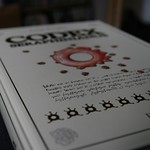
Codex Seraphinianus

The Codex Seraphinianus

Today I was reading a Twitter post by Maria Popova (http://t.co/RdK5JUZsOI) about Luigi Serafini and his encyclopaedia called “Codex Seraphinianus”. The following is the first paragraph from Maria’s post;

In 1976, Italian artist, architect, and designer Luigi Serafini, only 27 at the time, set out to create an elaborate encyclopedia of imaginary objects and creatures that fell somewhere between Edward Gorey’s cryptic alphabets, Albertus Seba’s cabinet of curiosities, the book of surrealist games, and Alice in Wonderland. What’s more, it wasn’t written in any ordinary language but in an unintelligible alphabet that appeared to be a conlang — an undertaking so complex it constitutes one of the highest feats of cryptography. It took him nearly three years to complete the project, and three more to publish it, but when it was finally released, the book — a weird and wonderful masterpiece of art and philosophical provocation on the precipice of the information age — attracted a growing following that continued to gather momentum even as the original edition went out of print.”

My first reaction on reading this was, “What a brilliant concept!”.
My second reaction was, “Why do we never see such creativity in the corporate office?”
The third reaction was, a repeat of my second reaction, “Why not?”

For a corporate organization to be innovative, it needs to be allowed to think. It’s employees need to be provided with the opportunity to have random, creative thoughts that are not inhibited in any way, but are allowed to run free.

In my blog (https://thinkingfuturethoughts.wordpress.com/) I have written many posts trying to inspire those in the corporate office to think that little bit differently. Yes, some of these posts are a little bit way out, but that’s very much the intention. A previous blog post called “The Room of Thought” typifies some of this thinking; (https://thinkingfuturethoughts.wordpress.com/2013/08/29/the-room-of-thought/)

It’s gratifying to hear that many corporate organizations are now using my blog posts as “thought starters” for their employees, but companies need to do more and strategically embed creativity into their cultural DNA. Unfortunately, for some CEOs, innovation is merely just lip service.

The concept of “Codex Seraphinianus” is a fantastic example in “thinking that little bit differently” and inspires those reading it to open and expand their imagination. It breaks all the traditional rules, which I can only applaud.

Yes, this is my first book review and I give it 4.5 out of 5. Why not 5? Well, the score of 5 has been reserved for your own version of “Codex Seraphinianus” of which you will be the author. This version will I’m sure be a creative masterpiece!

The Gingerbread People

Happy Biscuit

The freshly baked gingerbread men and women with an impressive and distinctive corporate logo stamped across their chest were carefully placed on each employee’s desk in the early hours of the morning. It was the last day of work before Xmas and the department manager had spent many hours tirelessly baking that morning in preparation for the annual ritual of gingerbread person desk placement.

The time was now 6 AM and with the task of distribution completed, he decided to find a quiet corporate sick-bay bed and have a couple of hours sleep before his fellow employees arrived in the office to gleefully devour their eagerly anticipated baked gourmet morsels with an accompanying cup of coffee or tea.

But this year, something rather different and decidedly odd occurred. At about 6:15 AM there was a discreet, yet distinctive, sound of pastry movement. Yes, on some of the poorly lit office desks, an occasional little gingerbread arm and foot was beginning to display some rather unique humanistic characteristics. But not all gingerbread people sprung to life?

At 6:30 AM, some baked people of gingerbread DNA were leaping and gesticulating with extensive social skills and were having a great time getting to know each other and exchanging various bodily crumbs. However, some of their other baked relatives were just lying there in a motionless state, whilst others were still experiencing the joy of minimal hand movement with no prospect of running amuck!

Just before the department manager took his last snuff of slumbered bliss signalling that it was time to awake, an internal motion ceasing sensor was triggered in each of the gingerbread people and those that were mobile all dropped down on the spot and once again became just a baked stationary figurine.

As the employees started to arrive at their desks, some were greeted with a large number of scrumptious gingerbread people. Many of the staff found a single gingerbread person on their desk in the exact same position that it has been placed by the manager, others, found none at all. So, the question that you are all thinking is, why do some people have more gingerbread than others? The answer is fairly obvious if you have studied the traits of gingerbread culture and society, but if you do not have this educational knowledge, let me explain.

It all has to do with the energy and creativity that is exhibited by those employees in your corporate office that are innovative. These people are the lifeblood of your organization and they stimulate and encourage all sorts of ideas and inspirational thinking that some of you may think is a little bit way out. But, without these people, there is no imagination, and no hope that fictional ideas such as gingerbread people coming to life could ever exist. So it is really any wonder why the gingerbread people flocked to these people’s desks?

When next you are fortunate enough to hold a gingerbread person, prior to that first chomp of delight, may I suggest you stop and think and question yourself about your level of innovation and whether your personality entitles you to eat just one, or maybe more?

Neck Naked Innovation

32 of 365.

It’s 6 am in the morning and many woman of all ages (and some lucky men) with long locks of hair all over the world are having to make a strategic decision that will impact not only themselves, but also their work colleagues, family and friends.

That key decision is, should my hair be up or down? Now before you scoff at this important question, please understand that this key piece of personal grooming will influence their mood throughout the day, and potentially into the evening!

As I’m follicley challenged, I’m not that familiar with this mood influence, but according to “extensive personal research”, I’m now convinced of the data validity and the direct behavioural correlation. So for those of you looking for a worthwhile topic for an elaborate and complex government funded research project, look no further, this one will keep you mentally, and financially equipped, for years!

According to the “extensive data”, it’s not actually the length of the hair, but the feeling of the hair on the individual’s neck. The presence of neck hair apparently provides a feeling of protection from the surrounding environment, whereas no neck hair (the technical term known as “neck nakedness”) yields a sensation of freedom and potential optimism for the acceptance of new challenges! (yes, it’s all seen in the “analysis data”).

So, should you be planning to introduce a culture of innovation in your corporate office, may I suggest that an internal memorandum, issued by your HR Director, be quickly distributed instructing all employees to wear their hair up to ensure the best chance of success!

Now I can all hear you asking about those with a bald head. Well, the “data” suggests that these highly valued employees are the obvious candidates for the esteemed position of “Innovation Champions” as they have no creative inhibitions!

So next time you look at yourself in the mirror as you prepare yourself for your day of work, remember, the hairbrush is your key to corporate innovation!

Oh, what a feeling!

Jockey Underwear

“Now these do feel a bit different”, I thought to myself. Yes, the colour was rather flamboyant, not particularly subtle, quite tight and rather a snug, all encapsulating, body hugging fit. However, they did feel fantastic, so I purchased three pairs and I looked forward to wearing one pair under my suit trousers to work the following morning. Yes, in case they are what you are thinking, you are correct, they were some spiffy new underpants!

As I’m quite shy and reserved, although some of you who know me better may beg to differ, I am not showing you a photo, nor am I providing any additional information on the style of underpants. So those of you who were wondering if they were Y-front, low-cut hipsters, G-string or whether I’ve gone with the famous “commando”, you will never know!

So what has this got to do with the corporate office you may be asking? The answer is actually very relevant. No, I am not proposing that you promote an underwear parade at your place of employment where employees, both male and female, model the latest in underwear fashions. However, the concept would be rather unique and may lead to a new revolution in team bonding, but somehow I suspect that the HR team will find some harassment rule that may be applicable?

It does however lead to the question, are you a creature of habit? If I was to continue with the theme of underpants, do you wear the same style and coloured underpants each day? Are you set in your ways, and are you reluctant to change and explore new fashions and ideas that may better meet your underwear requirements?

The key is to explore new experiences in your work life that may lead to exciting and stimulating innovations of thought that you may have only dreamed about. If we stay in the same job and don’t challenge ourselves to test new frontiers, you will quickly fall into a rut and corporate boredom will prevail. This applies to the organization as a whole, not just the individual.

So if your business has that stayed underwear feel about it where corporate life is becoming a little bit faded, shabby and a tad loose fitting, may I strongly encourage you to introduce some creativity into your work routine as the resultant feeling, with something a little bit different, may just provide that required motivational step you are looking for in your career and place of employment.

Go on, give it a go!

Not just any tête-à-tête!

2010-violin_MG_0227 - Version 2

Without any hesitation, or consultation, she picked up the red pen and scribbled some notes down in the margin of the musical score. She looked at her colleague seated next to her and nodded with a look of a “question mark” on her face, and was immediately greeted with an emphatic and resounding “yes” from his eyes. This intimate interaction continued throughout the remainder of the orchestral practice.

However, this little tête-à-tête was not just limited to this couple, it occurred with couples sitting next to them, behind them, in fact, all around them. There were trios, foursomes and even larger groups spontaneously erupting all over the stage!

Violinists, were talking to other violinists, trumpeters were waving to their friends in the double-bass section who responded with an immediate “thumbs up”! If you hadn’t had been watching, any one would have thought that there was an undisciplined, commotional, musical rabble in full force. However, what was occurring was the natural and evolving formation of sub-groups in the larger orchestra. The musicians were sharing their thoughts and ideas freely, there was no malice, withholding of information, and it appeared to be done most harmoniously and constructive.

The conductor then tapped his baton and immediately there was silence and all eyes and instruments were focussed on him. The orchestra then commenced playing with all their communal learning and experiences and the outcome was truly awe-inspiring.

I had just witnessed the final rehearsal of the Melbourne Symphony Orchestra (MSO) playing Mahler’s Symphony Number 2. But I’m sure that this famous and world-renowned orchestra would go through the same motions at all of their rehearsals.

So why can’t business learn from this orchestra? Why can’t they quickly form fully functioning sub-teams when required to focus on a work problem as a matter of normal practice? Businesses tend to only do this when in a time of crisis, or when a significant change is occurring?

The key is typically the prevailing culture of the organisation and it originates directly from the top. The conductor (or CEO) may be rather spiffy at waving his baton in a rather flamboyant and glamorous manner, but if the orchestra (or managers) aren’t following in “tune”, then the result will be utter chaos.

The right business culture takes time to develop. Work teams need to feel empowered and confident that their input into the larger business issue is significant and will make a difference. For instance, if the percussionists in the MSO didn’t play in time with the rest of the orchestra, regardless of how impressive the rest of the musicians played, the result would be rather discordant.

Another requirement is a willingness to listen to your colleagues in an open and unhindered manner. The conductor of the MSO listened and accepted feedback and suggestions for improvement from the various musicians, each of them a brilliant instrumentalist in their own right (just like a technical or functional expert in the corporate office). If your CEO doesn’t do this, well, is your CEO the right person for your business?

When a business has the right culture in play, the performance is “music to your ears, your employees, and to your customers”.