I Am Your Idea

Euphoria

As an idea, I was quite happily resting in an unassuming nerve-end in a remote corner of the brain of my original owner. It was quite a good life really, just sitting back taking it easy where I was oblivious to all the busyness of those other ideas around me. But then, my life changed, and in a phenomenally big way!

For some unexplained reason, my owner’s brain decided to think. Why this happened, I have no rhyme or reason as to what initiated this mental activity, but the result for me was an electric and significantly life changing experience. Once the process of thinking commenced, I started to notice an immediate change in my appearance. Yes, I started to transform into a larger and more complex idea. I quickly gained substance, and in a most surprising and totally unexpected way, my social life increased exponentially as I became really popular with other ideas that were totally unknown to me. It seemed like all my new idea acquaintances wanted a piece of my being, so much so that I started to lose my individual identity.

As the concept of human time mysteriously progressed in what seemed like only microseconds, the idea of me started to reside in not just my owner’s brain, but also in that of many people. This biological effect continued to compound and I was swiftly transported via numerous communication methods across the globe into other countries, cultures and out into the solar system and beyond.

I started life as a single idea, but now I am a thought celebrity and one that is core to the survival of many other ideas and foundations of knowledge. Owing to my immense popularity of thought, I am now frequently mobbed by many other small and less advanced ideas, all seeking my autograph where they try and absorb any readily accessible part of me as they themselves quickly grow and develop.

I’m now unstoppable, viral and as long as there is a mind that can reason and think, I will exist. I am thought personified as creativity and innovation. I am your idea.

Framing Your Office Correctly

Paris & London 2011 922

When walking around an art gallery you will see a variety of different people mulling in front of an oil painting making all kinds of comments. Each of them will see different aspects of the painting and will make their own interpretation as to the artistic and messaging intentions of the painter.

Some observers will focus on colour, the scene portrayed, or potentially the interaction of the people encapsulated in the work of art, and what they may be thinking or experiencing.

The viewer’s analysis of the painting will be varied, with each opinion based on their own unique life experiences that have coloured their thoughts and imagery on life.

This got me thinking. What if you took a random, non-staged photograph of the workers in your office that captured a specific moment in their working day? This image could be black and white, or coloured, placed in an impressive frame and then hung on a wall, just like in an art gallery.

So as to avoid any potential bias and insider people knowledge, employees from a non-related business would then be asked to comment as to photographer’s intentions, just like the painter of the oil canvas.

Those observing would come up with a range of assumptions and theories, some of which could be related to the work culture, stress, mood, or happiness of those people contained within the “frame”.

The collective feedback would provide a unique and objective insight into the machinations of your office. However, in this instance, the painter, or photographer, is your CEO, as this role is the creative source of the scene. Depending on the critical comments received, is your CEO proud to sign their name in the bottom right corner of the painting to stamp their ownership of the work? If not, maybe they would prefer to learn from the feedback and use it to develop and fine-tune their management artistry skills and have another go?

Yes, a picture does indeed say a thousand words. The key is to listen to them.

Keep your Eyes Focussed

Closeup of a woman wearing a monocle in one eye. Date taken- 1930

The date was the 4th September 2025 and the last Will and Testament of my dear grandfather had just been read. His friends knew him as Barry “Pirate” Cramer, to me, he was simply Papa, and he and I, were the best of friends.

Barry “Pirate” Cramer was an entrepreneur in the true sense of the word and left his family a financial fortune that many people can only dream of attaining. My father, Leon Cramer, was his only son and today became the wealthiest person on the planet.

In my grandfather’s Will, I was left no money, real estate, works of art, or other trinkets that those in the know would classify as valuable. However, the “Pirate” had left me two items that to me characterised the “real” him. These were his gold-rimmed monocle, and his personal diary.

It took about three months before I could open his diary owing to the grief I had been feeling, but once I did, I could never have imagined the innovative insights that this little worn leather bound book contained.

Barry “Pirate” Cramer was a business visionary and could always see how to commercialise new and novel ideas that many of his peers, and competitors, could never understand, or appreciate.

He earned his “Pirate” nickname for two reasons. The most obvious one being that he always wore a monocle in his right eye. The other one was that he was famous for plundering companies that were on the brink of bankruptcy that he miraculously, and quickly, transformed into highly profitable business that were the envy of the original owners.

As I was rummaging one night through his diary, I was intrigued by the words that he had scribbled when he was only 21 years old, an age which signalled the start of his financial prowess. The reference was to why pirates wore a patch over one eye. Apparently they did this so their eyes were ready for combat in the poorly lit interior of a ship [1]. As such, they always had one eye accustomed to light, the other prepped for darkness.

Papa took this concept further and replaced the pirate eye patch with the monocle, which eventually became his personal signature facial accessory. Yes, he did need to wear glasses, but he used the monocle in a cunning and rather visionary way. By wearing a monocle, his eyes were always focussed on the short and longer distances, ready for any visual obstacle that he may encounter. However, he took this in not just the metaphorical sense. Whenever he viewed a problem, he was always able to literally “see” two sides to the solution, the short-term and most obvious one that everyone could appreciate, but also the future opportunity that many of his competition could not comprehend.

What a brilliant visionary concept, one that many corporate businesses, particularly their CEOs, could learn from and utilise in in the development of their strategic plans. The key is to be a “pirate” and to have one eye looking at the now, the other eye very much focussed on the future.

So next time you go to the optometrist for your pair of fashionable glasses, why not get a monocle instead and let the potential pirate in you take control! You will also look rather spiffy, and will most definitely be noticed.

[1] https://en.wikipedia.org/wiki/Eyepatch

Free your Hairs

Woman holding hair

I am indeed honoured to receive the 2015 Nobel Prize for Science!

I’m particularly pleased that my academic peers, and the international science community, have now finally accepted my many years of extensive research into hair receptivity and now recognise it as a credible scientific theory into innovative psychology.

Yes, we can now prove without a “reasonable” doubt that there is indeed a direct causal link between an individual’s hair and their ability to think creatively.

It appears that woman throughout the ages have inherently understood this little known fact which is exemplified by their willingness to have long, free flowing hair. Men, on the other hand, have considerably disadvantaged themselves creatively via an interest in having that clean shaven look (face and head), and their hair far too short. To exacerbate the male problem, those with a hairy chest, and those lucky enough to have a hairy back, have hidden their follicle prowess under garments (see the blog post titled “Membership in the League of Hairy Chested Men”) [1]. Age should also no longer be a reason for eliminating bushy eyebrows, hairs permeating in your ears and other less spoken about facial areas.

Thankfully, our proven research will now change this archaic hair behaviour for good.

This ground-breaking research indicates that the volume of hair, regardless of where it is located on the body, acts as a transmitter of creative thoughts, the more hair, the increased ability of the individual to think imaginatively. Yes, this theory does indeed explain the innovation behavioural problem evidenced in cyclists who shave their legs, and swimmers who like that total all over body nude look, specifically high platform divers.

For all you HR Managers reading this blog post, the key to creating a culture of innovation in the corporate office is for your employees to be encouraged to have long hair (both men and women) and for men to grow beards and moustaches. Now for those men fortunate enough to have a hairy chest, yes, the choice is obvious; all business shirts should have no buttons.

Yes, there is one casualty with this research and this relates to the activities of the hairdresser. Demand for haircuts will indeed decrease, yet hair styling will remain constant, so should you be thinking about a career in this field of employment, you have been warned.

In summary, be hairy and let your innovation grow to the fullest.

[1] https://thinkingfuturethoughts.wordpress.com/2015/03/30/membership-in-the-league-of-hairy-chested-men/

Fully Equipped by Q

M4DGOLD EC004

I was rather chuffed, I had just received my “00” status and was now fully licensed and about to start my first assignment.

As is customary, all “00” agents had the obligatory visit to the office of Q to get fully equipped for the task at hand to ensure a successful mission. On talking with my mentor, James, I was rather excited about what tools of the trade the famous Q would provide me for my first business encounter.

As I walked down the bleak office corridor that typified MI6, my mind wondered about what tools I would receive. Would it be a Walther PPK, a Geiger counter watch, tear gas cartridge disguised as talcum powder, or maybe a bagpipe with hidden machine gun? I didn’t really care I must admit, I just wanted to start my first mission which was to infiltrate a corporate office with my assigned identity as Global Marketing Director.

I nervously knocked on Q’s office door and a female voice invited me in. Once inside, I quickly discovered that this was no office, this was a room full of an overabundance of gadgets, some I recognised, some I had no clue as to their use.

Q, was not what I expected. She was a redheaded woman, I suspected in her early thirties, dressed impeccably in the latest business attire with a smile that made you melt when you first met her. Q had me at “hello”.

Q enquired as to my mission to which I provided the requisite details in rather a tedious and long-winded verbose manner. Q smiled and cut my conversation short and said, “Say no more, I know exactly what you will need”, to which I sighed in rather a too loud a manner for a “00” agent. After all, we are elite professionals tasked with one objective that can be brutal, callous and potentially dangerous.

Q walked to a large cupboard, did a retina scan security check and immediately the cupboard door opened. Q reached in and pulled out a large clear glass bottle with a cork strategically placed as a stopper. Q then handed it to me and stated that this is all that I needed for my first mission. I picked it up, shook it, peered into it and asked whether it contained nerve gas or whether the glass was an explosive?

Q then explained the power of the corked bottle. “As you are going to work in a corporate office, the only tool you will require is what’s inside the bottle and you can open it any time you like, here, now, or when you are strategically positioned at your allocated place of work”.

I couldn’t resist, I decided to pop the cork and see what awaited me. I did so and encountered no gas, no odour, no bang, just, nothing. I glanced at Q with an inquisitive look.

Before I could ask my question, Q advised; “You don’t need any gadgets, you just need to allow yourself to be creative, to let your mind go, just like the gas inside that bottle has now done. This is the key to any marketing and innovation role. Many people think they need tools to stimulate their creativity, such as brainstorming sessions, external stimuli, etc, but what they really need to do is to just think that little bit differently. It’s quite simple really, this isn’t rocket science”.

I thanked Q for the corked bottle and slowly walked out of her office ready to commence my mission, but stopped and said, “But surely as a “00” I should at least have a Walther PPK?” Q replied, “You have a creative mind, that is much more powerful and deadly, trust me”. And I did.

Dream Communications

Untitled

Sometimes it’s difficult to tell whether you are dreaming, or actually in a dream. In this instance, it was not a dream, I was wide awake and fully conscious.

My doubt about dream authenticity started yesterday when I was looking at the young woman sitting opposite me in the coffee shop. I was thinking thoughts, and she seemed to respond ‘verbally’, but there were no words or facial expressions exchanged. Yes, we were communicating, having a conversation that only we were privy to, well, I thought we were, or was it my imagination? So I decided to test the theory and commenced an unspoken thought conversation of triviality about the benefits and negatives of colonising the moon with soy milk chai latte drinkers! After a few minutes of what seemed ‘mindless dialogue’, she stood up from her comfortable cafe seat, straightened her skirt, flicked her long blond hair back and smiled directly at me. She then to my surprise said, “Chai lattes do need honey, but are there bees on the moon?” She then handed me her business card and suggested that we ‘chat again’! Yep, I had my proof!

Now this might have also been a dream, but let’s not worry about the semantics of truth as the concept gave me an idea for the corporate office.

What if we could train ourselves to dream, but in a way that we communicate with colleagues on a particular topic that needs to be resolved or progressed, but only in our subconscious mind? The workplace and the people concerned could be role played in our thought whilst we slept?

Taking the concept further, what if you could ‘suggest’ an issue that your colleagues could also ponder and work on in their minds whilst they also slept?

Now for the interesting and really exciting next step, what if we could get your mind, and the minds of your colleagues sharing the identical dream at the same time, exchanging learnings and experiences? Following on from that idea, why not add other people that you don’t yet know from different companies, cultures or countries, into the dream for an exponential group thought enhancement experience?

Those readers in HR will I’m sure now be realising the training and innovation development opportunities, particularly from a regional or global perspective?

For those of you struggling with all of the above, may I suggest you go into a coffee shop and order a soy milk chai latte (with honey) and just let your thinking go with the flow. And, should a blond woman appear to respond to one of your thoughts whilst you quietly sip your drink, just mention this blog post and I’m sure you will be surprised by the response!

What does your bowl say about you?

Day 96 - Thinking about it...

As usual, I arrived in our corporate office early and made that all too familiar journey of walk into our club lounge where the ingredients of a basic breakfast awaited me. There was the usual array of cereal, muesli, fruit, whole milk, light milk, the obligatory soy milk, and of course coffee and a plethora of teas.

But this morning, something was noticeably different. Rather than being confronted with the usual food branding, some clever and rather innovative colleague had labeled each item with a unique and curiously descriptive name. There was also a page of instructions that each breakfast eater had to follow, otherwise they would be excluded from this unique eating activity.

The first instruction was to grab a white bowl and mug from the cupboard and scribe my name on it with the black marker pen provided. However, rather than just spelling my name, I had to add the words “personality” after it. As such, my bowl and mug were named “Steven’s personality”.

I was then asked to peruse the array of cereals which were now labelled as ‘creative’ (aka muesli), ‘conservative’ (aka corn flakes), ‘fun’ (aka Coco Pops), ‘vitality’ (aka porridge). What looked like full cream milk was called ‘communication”, light milk (‘vision’) and soy milk (‘humour’). The process continued for all the fruit and beverage selections to which other descriptive tags were applied.

Once my food and beverage selection had been made, I was then requested by the instructions to write these pseudonyms on the bowl and the mug which was to be a reminder of personality for that day.

Although the process sounded like a bit of fun, after a week of breakfast personality profiling, there were some interesting learnings from the activity:

1. You are what you eat.
2. We can be so set in our ways which, we may not see until you observe the same food and beverage personality pseudonyms written in black pen on our bowl and mug each day.
3. Change is not as hard as you think, just reach out and try something new (eg different cereal, fruit, milk). If you don’t like the ‘taste’ of it, well, learn from the experience and explore something that is more suited to your palate.
4. Variety is indeed the spice of life.

My personality, well, I’m quite content with a bowl of Fruit Loops, yes, say no more!

You have Changed!

doriangray1

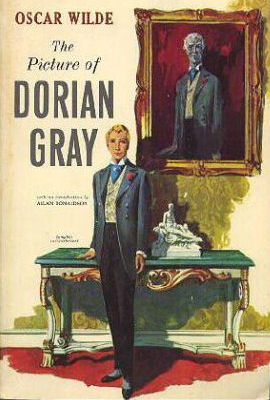
Yes, my friends were right, it was just like “Dorian Gray”, I had changed. To confirm their thoughts, I decided to review images of myself over the past few months, just to see if there were any visual signs.

I perused Facebook and a multitude of iPhone images and aligned them in chronological date order hoping to find a clue. I quizzed my friends as to what differences they were observing in me, in particular, when they thought the change may have occurred? I needed to discover my behavioural tipping point and it’s potential origin.

I spend the whole night pondering my notes, looking at photographs and at 11:34 PM that evening, I noticed it.

The initial change was subtle, but the time comparison between then and now was momentous. Yes, I had changed, and in a big way.

I was now a much more confident, outgoing individual, with a continual smile on my face. My business attire of the traditional and conservative dark blue suit with white shirt, and boring striped tie, had been replaced with a stylish array of coloured shirts with cuff-linked sleeves, bow-ties, pocket hankies, and an impressive daily shaved smooth slick head.

The point zero appeared to coincide when I began working for a new company, one that had an amazingly vibrant work ethic and culture. As a pondered and thought about this further, the term “cultural chemicalization” came to mind. For those of who reading this blog post let me explain the concept further.

If I were to look up the term “cultural chemicalization” in a dictionary, it would say: “the subconscious absorption (or chemicalization) of an organization’s culture by an employee where a change in behavioural state occurs”.

Yes, I had subconsciously, and quite happily I must admit, absorbed the positive culture of my new place of work, and the more I thought about it, so had all my fellow colleagues. The result was an amazing environment where creativity and innovation excelled to the fullest.

The process of “cultural chemicalization” begins with the CEO and the Executive Team. It is their behaviour that sets the benchmark for all employees and those they meet externally. As that saying goes, “what you see is what you get”. As an employee, if you observe a positive, enthusiastic management team, you and your organization will respond accordingly. If you see “nothing”, then that’s exactly what you will receive and experience.

Yes, my friends were right, I had changed, and I was loving it!

It’s the Stalk

Over the centuries there has been one grand piece of clothing that has been worn by many a mighty warrior that immediately symbolises unity of nationality, pride and belonging. These illustrious fighting men and women, be they French, Spanish, or Scottish, all wore this famous and readily identifiable hat called the beret in various styles, colours and forms.

Today, it is still worn as a statement of artistic intellect, or by those who want to make a statement of fashion, or simply by those people who just know better than others. I, for one, happily wear my beret and relish the admiring glances of those around me who are obviously most envious of my beret ownership good fortune.

There is something unique about wearing a beret, which needs to be done with a slight skew placement upon your head, so as to achieve the correct appearance. But once done, there is a “feeling” that permeates your thinking. Those who have had this beret wearing experience will immediately relate to this comment.

As a “thought academic”, following “years” of extensive research, I believe I have now formed a beret hypothesis on the origins of this “feeling”.

The “research” suggests that this “feeling” is concentrated when many wearers are in close proximity. This could explain why those warriors of yesteryear were such a formidable force when they all wore their berets together in military formation? With the advent of the more safe and bulletproof soldier headgear, the frequency of beret use understandably diminished, as such, so did the “feeling”. It is also interesting to note, that the French, Spanish and Scottish armed forces are no longer as feared to the same extent as they used to be, surely this is “no coincidence”?

Now let’s move to another area of the “feeling” research. Those in the artistic fields, for example the French Impressionists, or Film Directors, all have reported an additional influx of creativity when wearing their berets. Yes, it’s all in the “research”.

But there was a most surprising and curious theory identified that the “research” almost overlooked. Apparently the origin of this “feeling” is due to the small stub in the top centre of the beret called the “stalk”. It just so happens that this stalk acts like a thought transmitter between beret wearers. The longer the stalk, the greater the range of the thought transfers! A truly phenomenal discovery!

Now should you be an innovative thinker, you will immediately recognise the practical application with this “stalk” discovery for the corporate office. Yes, the answer is simple; all employees should be encouraged to wear a beret, particularly those with long stalks. Once worn, I’m sure that your organisation’s ability to develop new and novel business ideas will increase exponentially. There will also be a supplementary benefit, that being, all your employees will look brilliant!

“FITBIT Thought” Performance

People at the gym

For a year now I have been wearing my “FITBIT Thought” Earwig and today was the day in which I would see whether I was going to be paid my annual bonus.

Most people tend to only use their FITBIT to record the number of steps they had achieved, but not those in my company. I was fortunate to work for a large innovative organisation that was a leader in its field, and one that was prepared to think that little bit differently.

My company had pioneered the “FITBIT Thought” which when placed unassumingly into the wearers ear, measured not just steps, heart rate, hours slept, but also their “thoughts”. This particular FITBIT had some clever and unique IP built into it that was able to these filter thoughts, differentiate and classify them into various thinking categories. Now this is where it gets interesting.

My company elected to utilise the following thinking categories:
1. Creative (C)
2. Boredom (B)
3. Repetition (R)
4. Humanistic (H)

Based on feedback from our HR Director, thoughts relating to those more “private and personal activities” were excluded from the analysis data, which was probably a good thing knowing my fellow work colleagues!

Performance based “Thought KPIs” were then discussed and agreed with the employee. A daily “FITBIT Thought” dashboard was updated when the wearers Earwig was in close proximity to a corporate computer thereby allowing data synchronisation. Each night I would review my C, B, R, H achievement levels and would make the appropriate behaviour adjustment the following day should I be falling behind, or exceeding certain thought activities.

As it was now day 366, I excitedly logged onto my work computer and made the required “FITBIT Thought” synchronisation. Immediately I received 4 Badges of Performance Merit, each relating to the C, B, R and H categories. But more importantly, another message appeared a few seconds later with an avatar of my CEO advising me of my financial bonus! The gleeful smile continued as I then checked my bank account.

So, should your organisation be looking for a unique and more productive method for measuring your employee’s performance, why not explore the “FITBIT Thought”?

(Note: If only the “FITBIT Thought” really existed!)