Sold, For Sale, or Open for Inspection?

For Sale

When you have outgrown your current home, you then start the process of looking for a new house. As part of this process, you typically have a list outlining the criteria that your new home must have (eg location, number of bedrooms, bathrooms, garage, etc). To complement this list, there are also the “nice to haves”, which could vary from a spa and sauna to a star gazing observatory in the loft, plus more!

As you progress through the searching process, for those houses that you are interested in pursuing further, there are three real estate signs located outside the front of these homes that typically catch your eye, “Sold”, “For Sale” and “Open for Inspection”.

“Sold” – forget this one, too late……but how much did it sell for?
“For Sale” – this looks interesting, I wonder what it’s like inside?
“Open For Inspection” – yep, let’s go in and have a look around and check it out.

This house searching process got me thinking……how do we promote ourselves in our place of employment and externally in the market from an innovation and creativity perspective?

Do people also view us with us with these “real estate” signs?

“Sold” – no new ideas, no interest in thinking differently, go away and stop bothering me!
“For Sale” – you have a range of valued creative ideas that you would like to share and promote within your workplace and the broader market.
“Open For Inspection” – you have some innovative thoughts that you would welcome feedback from your work colleagues which can then be modified as appropriate.

So…..what sign are you displaying?

Chatter Vocabulary in the Air

Leather Seats

For those of you who travel regularly by plane, you will know the “joy” of being strapped into your allocated seat for a few hours. You have the smallest possible personal space, and those sitting next to you can be riveting company and fun to be with, or exceptionally dull – unfortunately the later being most common!

This got me thinking…how could we make this journey of travel more interesting and utilize the many creative skills of the passengers who are getting a tad bored?

One possible solution is to invite passengers to participate in an anonymous “chatter” group discussion on a selected brainstorming topic during the flight. To be included, they would press a special “call button” which adds their seat number into the discussion. A Flight Attendant then provides them with an electronic writing tablet that allows communication with the other interested passengers.

Chatter Texts with impressive vocabulary would be then start to quickly permeate through the cabin during the flight, for example:

Seat 12A:   “Oh yes, I agree with you, but have you considered….”
Seat 29D:   “Thank you 12A, but I think it should be expanded to include…”
Seat 1F:      “Interesting concept, particularly if you consider the habitat of the West Australian wombat…”
Etc, etc…

At the conclusion of the flight, those involved could elect to have a copy of the transcript E-mailed to them, just in case there were any creative gems of inspiration written!

To me, this would be a much better use of people’s travel time and would make the total plane experience much more interesting and potentially productive.

Coat Buttons Undone

Winter Walk

In the colder months of the year, should you quickly glance at the commuting business person when they are travelling to and from the office, it is most likely that you will notice a common corporate appearance – black coat, single coloured scarf and the occasional dark gloves. If it is raining, the umbrella is usually of a colour to complement the coat, once again…black.

However, when this worker arrives at the office and disrobes their black coat and scarf, there is an observed vibrancy of coloured shirts, ties, suits and skirts.

To me this is an interesting conundrum.

All these workers have a similar external appearance as typified by the black coat, yet once the “coat buttons are undone”, each of them has their own unique dress style that expresses their individual personality.

So in the office environment, don’t judge a person’s character and capability by their external persona. Try to get to understand them better when they have been given the opportunity to demonstrate some of their hidden talents!

The Diary of Thoughts and Questions

Journal

When you start a role with a new organization, you typically observe and learn from your immediate colleagues so you can quickly gain an appreciation of how things need to be done. During this process, you are flooded with a broad range of different ideas and processes, including the business culture.

Your mind is continually questioning and exploring potentially better ways to perform your new role. However, most new employees do not raise these new ideas owing to their short time period in the business.

After a few months, the new employee has settled in to their role and is happily following the old and well used and established processes that they were taught by their manager or work colleagues.

But what happened to all the ideas that they observed in the early stages of their employment? These valuable challenging “thoughts and questions” are key to driving change in the organization so it continues to develop and improve!

One solution is to capture all these ideas in the “Diary of Thoughts and Questions”.

This diary would be completed by the new employee at the end of each work day for the first few weeks of their employment. At the end of this time, the diary contents would then be discussed with their manager, and their boss, to explore how the potential improvements could be implemented. For the process to work effectively, all readers of the diary would need to have an open mind and be prepared to consider all “thoughts and questions” whether they be positive or negative.

Mannequin Motivation

Interview Series, Arlington Street between Boylston and Newbury Streets, Store Window Displays, Ida Claire and Esther Dorothy, Inc.

When walking past any clothing department store, you will typically observe a mannequin in the shop window parading the latest fashions and accessories.

The purpose of this promotional activity is to attract your attention and to entice you into thinking about how those clothes may look on you. As part of this process, you may visualize where you could wear these exciting items of clothing, and also the reaction you may receive from your friends, family and work colleagues. Your thoughts are no longer standing in front of the shop window, they are now travelling to various geographic locations and different emotional states via the use of your imagination.

What about using the motivational benefits derived from these mannequins in the corporate office?

Just imagine having a mannequin strategically positioned in the office foyer as you enter the building. Each Monday morning, the attire of the mannequin would change to provide a theme for the week and to act as a thought provoker. Some potential clothing options:

Personal Wellbeing: sporting clothes (eg tennis outfit)
Creative Thinking: 1960s “flower power” clothes
Watch out for the competition: a suit of armor
New Business Development: a mountain explorer
Appraisal Time: a corporate suit
Holidays: swimwear

The mannequin could also hold message signs to highlight specific business events and communications. For instance, if it was the boss’s birthday, a sign stating “It’s my birthday today, so please enjoy a longer lunch break to celebrate!”….the possibilities are endless!

So next time you walk past that clothing store, think about the “motivational mannequin” and how it could improve the morale in your business.

The Importance of the Joker

The Jokers of the Pack

In a pack of playing cards, there is the Ace, King, Queen, Jack and the other numbered cards which comprise the full set of 52. These cards have a different value, suit or family, and can be utilized in a variety of permutations in the construction of numerous games.

There is an interesting comparison here with the corporate organizational structure where there is the CEO, General Managers, middle management and the workers. Each business uses their “cards” to differentiate their “playing hand” to try and achieve a competitive advantage. However, with many companies using similar cards, the game can be tough unless one player has a trump card which can provide a winning move.

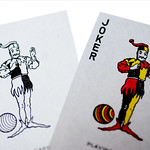
This unique and powerful trump card is typically the Joker which has the ability to transform into any other card in the pack. In business, the “Joker” accepts no assigned job title or limitation and readily takes on any senior or junior role that is required to win the game.

In business we need more “Jokers”. These are employees that are not intimidated by the existing organization chart, nor the other players, and are prepared to provide the required strategic and timely moves into the business game to achieve success. They play within the rules, but they think creatively and with purpose.

So, to ensure that your house of business cards does not crumble under external stress, I encourage you to make sure that you have a good supply of Jokers in your deck!

The Corporate Zoo

Zoo

If the corporate office was likened to a zoo, it would have a collection of many different animals all roaming freely throughout the building. Each animal would have its individual innate work style and unique personality traits. Inside the animal enclave, each animal would need to learn to adapt to the surrounding work environment or mayhem would prevail.

Some animals would want to maintain their own personal space, others may form packs to work more effectively together and for their longer term survival.

The question is…..which animal are you?

Are you…..

The Peacock:
Roams the office with a showy plumage to impress your fellow animals and be noticed?

The Mouse:
Doesn’t want to be seen so scurries quickly around the building trying to evade direct eye contact?

The Bear:
A loud and obnoxious animal who typically has minimal friends and which other animals try and avoid?

The Cat:
Likes to have a quiet unobserved snooze in a hidden and unused office?

The Turtle:
Thinks that everything is all too hard and would prefer to be somewhere else so is very distant and aloof?

The YOU:
Is highly liked and well respected and is prepared to take on a range of animal behaviours. Sometimes the YOU is required to be a leader, other times a follower. The greatest skill of the YOU is in being able to adapt to your ever changing zoo environment to drive progress and the welfare of the total animal community and YOUrself.

I’m sure you are the YOU. However, make sure that YOU have a loud roar now and then to ensure your standing and respect within the animal kingdom!

The Innovation Index

2 stars

When seeking out an exciting restaurant to savour and appreciate some fine gourmet delights, the dining patron has the ability to select an appropriate eating establishment via an internationally recognised rating system characterised by the number of “Michelin Stars”. The higher the number of “stars”, the greater the eating experience!

Wouldn’t it be great to have a rating system along the lines of the “Michelin Stars” for a corporate organization’s culture of innovation? (As a suggestion, these ratings could be called the “Innovation Index”, or some other creative innovative name..)

“Innovation Index”:
1 = Boring and very conservative workplace
2 = The workplace is innovative now and then
3 = There are times of brilliance, but not consistent
4 = Wow!!!

The “Innovation Index” could be promoted in the organization’s internal and external communications, websites and could even be stencilled under the company name in their registered offices.

Job seekers could use the “Innovation Index” to identify potential employers of choice, and those to keep well away from?

How would your company rate on the “Innovation Index”?