As CEO of a large, conservative company that has been in operation for over a century with little or no business growth, how do you know if you have those pesky weeds of innovation in your business? The following are some clues to help you quickly identify them before they can take root and grow.
Ideas: Should you hear an employee uttering the blasphemous words “I have an idea”, then they need to be dismissed immediately before that frightening innovation virus can contaminate your workforce.
Fashion: Luckily these recalcitrant employees are easily identifiable by their annoying clothes, colourful shirts, bow-ties and the occasional hat. Just ask HR to quietly usher them to the exit with minimal fuss.
Laughter: Fun in the office should definitely not be tolerated and should result in the employee being speedily placed on disciplinary action with the threat of instantaneous termination for a repeat offence.
Unauthorised Fonts: Yes, there are strict corporate guidelines that must be followed. Any employee daring to use any other font rather than the long standing and approved black Times New Roman needs to be quickly educated on the 100 year old corporate values that have served the company well, and are based on tradition.
Customers: Any customer having the nerve to complain about our products not meeting their requirements do not deserve the privilege of being supplied by us, after all, we know what’s best for their business. How dare they tell us otherwise!
Career: Any employee seeking clarification on their future within our business obviously does not appreciate the honour of working for us (or should I say for me).
My fellow CEOs, hopefully the above insights have provided you with sufficient information to nippily identify any annoying employees that might be creative, or have mad ambitions of creating a culture of innovation in your company. The key is to act swiftly before their offensive ideas can take hold and spread. God forbid!
Age. It’s a complex thing, the importance of which seems to change frequently depending on where you are in your life.
It is said that age is just a number; so why in the Western world do we commonly characterise everyone according to their year of birth? Sure, there are many sound, well researched legal and practical aspects that both should and need to be adhered to, but why is age such an important factor in the workforce?
When you are at Primary School, those who you knew in High School seemed very worldly and sophisticated. You saw your parents as old and out of touch with the worldly and social needs of your own generation, not to mention your grandparents, who fell into the absolutely ancient classification.
But consider how your age perspectives changed when you yourself entered the workforce for the first time. All of a sudden you saw your parents and others with an increased number of years under their belts as wise and possessing a valued experience, and some you even gave esteemed oracle status.
In the business world, people in their early twenties are typically deemed to be naïve and lack the requisite knowledge, whereas people in their sixties or seventies are seen as being ready for retirement and quickly put out to the vast unemployment pasture.
I believe it’s high time for a long overdue ’age coup‘ where an individual’s mindset and willingness to learn and/or mentor those around them should be the main criteria, instead of how old they are on their employment contract.
To accomplish this, we need to redefine the term ‘age’ and replace it with a combination of a willingness to learn and to share experiences, regardless of whether obtained in the workplace, or via life’s complex journey.
However, to do this there needs to be a mindset change within the corporate world, particularly with in HR where age is commonly seen as just a start or finish date of employment, not a potential indication of longer-term value.
Yes, it’s time for an ‘age coup’ as there are many willing participants keen, able and wanting to join the revolution.
Every Grand Final winning player knows that unforgettable feeling as they lift up high the Premiership Cup signifying a lifetime achievement of sporting success. An injured player quickly forgets the pain and suffering they may have experienced in the game, or during the season, once their hands eagerly embrace the coveted item. One could say, it is analogous to a religious experience where all wounds and maladies are quickly forgotten.
The Premiership player carries the memory of this glorious event with them for the rest of their lives and they are similarly revered and immortalized by their sporting club fans, family and friends. Their legend status also accompanies them into their business and private life wherever they may go throughout the sporting globe.
Now let’s liken this Premiership Cup to the revered Holy Grail, or Golden Chalice, a cup that brings to the cup holder life changing powers.
Many a sporting club supporter that has the joyous opportunity to view their team’s winning cup, even if it’s locked away in a protective glass cabinet, is wooed by the powerful winning aura that adds a sense of pride, enjoyment and loyalty to the beholder. A team with a plethora of cups on display is deemed to be more powerful and impressive than their competition, and the copious silverware stache facilitates, motivates and maintains supporter club loyalty.
So why is it that most businesses have no such display that entices and stimulates employee commitment to the organization via its corporate achievements and victories? There are typically no such physical cups or chalices, or analogous symbols to improve and facilitate morale. Unfortunately business success is commonly celebrated by a few senior managers with little spoils of triumph passed on to the lower-level troops who may have been key in achieving the fruitful outcome.
So, if you are a business leader reading this blog post, what is your Holy Grail? How will you celebrate and share it with your employees when you obtain it? Do you have one or more cups that you can put on display to inspire current and future employees that demonstrate a longer-term legacy of achievement? Go on, let all employees drink from the cup as the taste will be beneficial to all, and will most definitely not be forgotten.
Is there such a thing as a magic innovation pill that when swallowed, thoughts of innovation just blossom instantaneously in your mind?
The answer is, if only!
However, many organisations do believe in mystical wonders when they create the role of Chief Innovation Officer. Yes, once brought to life in the corporate organisation chart, this creatively anointed individual is expected to whip up all sorts of innovative wonders to the immediate benefit of the shareholders and those deemed less wise.
The question then is how?
The answer is simple when understood, and it all revolves around the ingredients used to manufacture that magic innovation pill in your organisation. There are 5 key ingredients, and if one is left out deliberately, or by mistake, the efficacy of the pill will take the form of a placebo which may seem to work in the short term, but failure will ultimately prevail with doomed longevity.
The first ingredient is called “Employee Diversity”. If you haven’t got this additive, well, just stop now and give up and go to the pub for a long lunch. Innovation needs employees who differ in thought processes, background, culture and beliefs in order to develop a plethora of creative ideas that deliberately push the organisation’s status quo and understanding.
You then need to add a good measure of a “Creative Work Environment”. There are many ways to do this, the key approach is to encourage and facilitate many idea interactions where an innovative chain reaction can start and quickly develop without restriction. If you get the occasional bang or loud explosion along the way, even better as this signals progress!
Next is the ingredient from the bottle labelled “Communication”. When added, you may see copious amounts of smoke quickly rising from the mixing bowl. Note, this is good and should be immediately communicated throughout the whole organisation so those not involved in the process know that there is nothing to be afraid of, or concerned about, and don’t call the Fire Brigade to quickly extinguish the innovative catalytic reaction from progressing.
You then need to add a few large drops of “Courage” which may leave a bitter taste in the mouth of the CEO, who may spit it out should they not be accustomed to the flavour. Courage is required to let the innovation process bubble away without interference, and to provide the requisite time for all the ingredients to adequately mix and blend into a homogeneous idea.
The final and most important ingredient that must permeate throughout the entire concoction is that called “Fun”. Without it, any hope of success is doomed to fail and a sticky, tasteless mess will linger in the organisation for years resulting in all references of the word innovation being quickly purged from the corporate recipe book pages.
So, should your business be blessed with the role of the Chief Innovation Officer, the first question to ask is, “can they cook”? if the answer is no, it’s time to invest in some takeaway!
There is a viral condition called “Office Fretification” (otherwise known as as OfficeFret) that is sweeping the corporate world globally. I’m sure many of you have seen it and are aware of the severe negative influence it can have on others, but didn’t know it had a name, or indeed a cure.
It’s frequently observed in employees who have a psychological intolerance that flares up as soon as they’re asked to leave the comfort of their snug home abode and return to the office to work.
The origin of this devastating malady was COVID-19 when some employees gleefully packed up their desks and became accustomed to a blissful life of working from home for long periods of time. Gone were the days of actually conversing to a real person, or having to be transparent as to their work activities. At home they could hide behind their video conferencing avatar, be busy doing their own personal machinations, like cooking, walking the dog, or having a quiet snooze.
But alas, all that changed once the COVID-19 vaccinations started to negate the reason for their newly cherished home lifestyle and they were requested to return to the office. Upon hearing this instruction, this is when the condition of OfficeFret starts to become most evident.
The OfficeFret symptoms are easily identified:
“I don’t feel well, – I need to take sick leave”. It’s remarkable how easily a medical certificate materialises to validate the claim?
“It’s too noisy in the office – I need quiet to think”. Funny that with so many empty desks in the office, not one of them could be used?
“I have to get my car serviced, or a fridge needs to be delivered – so I need to work from home all day”.
As the name suggests, the employee starts to fret and begins to implement a diversionary tactic to maintain their working from home bliss.
So how does an one treat an employee suffering with OfficeFret you may ask?
No medical script is required; rather it comes in the form of a termination letter. The sufferer of this malady then has a choice, they can come into the office, or stay out permanently where they can continue with the lifestyle they have become accustomed to, but minus the salary.
It is a great honour to be looking at you all as I sit in your individual home offices virtually via hologram. For those of you that made an effort to tidy your work-spaces, wear the non-standard tracky pants and have a business-like appearance, I applaud you for trying something different and unusual.
Please note that I have turned off the odour link in this presentation. The woft of coffee from some of your living abodes is indeed most enticing, but there was a rather distinct and a tad offensive smell originating from one of you so for the sake of all those participating, you will no longer be able to access this function in the hologram conference setting.
Today is your day, so enjoy it.
As you now enter the corporate workforce where you will be asked to work at least a 15 hour week (two days in the old business language), make sure you do dedicate some time in your busy work-life schedule for actual work. I know it’s a big ask, but your employer will expect nothing less.
By comparison, when I was in your shoes (for those of you that don’t wear any, it’s a metaphor), my employer actually insisted that we work in a physical office, sitting next to real people for five nominated days per week, these being Monday to Friday. We also arrived and departed at the same time each day. I know this concept is truly foreign to you all, but there were some learnings to this rather archaic practice that you might find interesting and beneficial as you commence your business careers armed with your digital graduation certificates.
1. Working in an Office
To many off you, this will be a concept that you have only read about, or watched in old movies, but it did occur. Employees really did cohabitate in buildings for prescribed hours in the working day. There were many benefits, the main one being physical interaction where you could communicate with a co-worker, not in a virtual sense, but in real life. Meeting rooms had four physical walls, a roof and a floor. Those encapsulated in the room entered and departed via a door. You saw the whole person, they could not be muted, or turn off their camera. Once located in the room, you had to focus on the nominated activity, you couldn’t pretend to be there, or nominate a stand-in avatar of yourself, you had to actually concentrate and participate on the meeting agenda.
2. Travelling to and from the Office
Employees literally did travel to the office. The choice of travel was left entirely to the individual, it was not mandated. This could be done via car, public transport, pedal power, or other forms of transportation. The only requisite was that you arrived and left work at a nominated time each day. By doing this, your work colleagues had the optimum opportunity for engagement.
3. Interstate and Overseas
Yes, those working on business did truly leave the office and travel to see customers, colleagues or develop and progress new relationships. In the olden days, we enjoyed face-to-face interaction, particularly when meeting someone for the first time. The main mode of travel used was the aeroplane. There was even a section on the aircraft called “Business Class” that catered for the needs of those travelling on business, not pleasure.
4. Business Attire
This you will most likely find unbelievable, but we dressed up each day when we attended the office. There was such a thing called “corporate attire” which was typically a jacket, shirt and trousers, women occasionally wore a skirt or a dress. Now and then, men would even wear a tie, which was an expensive piece of cloth wrapped around the collar of the shirt. Why would we do this? A good question, as I see many of you squirming in your casual clothes. It was done out of respect for your colleagues, where you tried to make them feel valued and important. It also differentiated business from home and assisted in putting your mind into work-mode. Nowadays, you can do this by simply changing your avatar, but the concept most likely originated in the days of yesteryear when we all worked in the office.
But enough of the past. Your time is now. Please make the most of it.
But I do have one additional thought for you to keep and ponder. Don’t forget the historical benefits of working in an actual office because one day, although highly improbable, there may be a power or battery failure, which would result in no virtual engagement of any kind. Should this occur, you would have to actually talk to a work colleague in a physical and real work setting! So please be prepared for this unlikely, but potentially possible eventuality, you just never know, do you?
For those of you that have spent the past few months working from home with a COVID restraining legrope that has successfully tied you to your desk of self-isolation, there is a proven outdoor immersion wipeout that will immediately refresh your starved physical senses. This rejuvenation act is commonly known as surfing and is one that any progressive Human Resources Manager will strongly recommend to all corporate office employees, regardless of their age, sex or body flotation ability following weeks of incremental self pudgification.
Surfing requires minimal equipment, but one necessary prerequisite is water, ideally with movement in the form of waves that traverse up and down with regular repetition. The optimum wave size may vary, and is directly linked to the perceived risk profile of the employee, but in general, a slight pond ripple will be deemed too small, but an ocean tsunami is considered by many to be a tad too imposing, somewhere in between is the goldilocks wave and will be just right. My advice, seek out a beach as you will have a high probability in finding what you desire.
Regardless of the weather, most surfers adorn a wetsuit which is used to provide welcome thermal protection. But for those of us who may have visited the COVID lockdown household fridge on too many occasions, the wetsuit provides a more useful purpose. That being, an ideal girth circumferential retardant mechanism that maintains some sense of personal dignity, particularly when frolicking with one’s office colleagues in an uninhibited outdoor physical state, many of whom may not have seen you for an extended period of time.
Another benefit of surfing is that electrically powered items and water are deemed by the laws of physics to be not compatible. As such, there will be no temptation to take your mobile phone or work computer with you, nor will you see any fridges stocked with food and drink to surreptitiously persuade you from your intended outdoor goal.
Your eyes will also appreciate the lack of electrical gadgetry which may have negatively impacted your sight via continual teleconference concentration. Waves are typically quite large, so regardless of how good or poor your eyesight is, when an unexpected wave fully encapsulates your body and drives your face deep into the sand, you will know immediately of their presence.
A surfboard is also another necessary piece of kit as it assists with employee flotation. However, don’t forget the Archimedes Principle as the size of the board will need to be customised to the individual’s body surface area, which may have slowly increased owing to some slothful home working experience.
Practice does indeed make your chances of staying on top of your surfboard more successful, but that’s not the primary objective. Your HR Team want the sea water to effortlessly bleach out any residual mental constraints that may be hindering your return to the office. So go forth and get wet, and then go fully revitalized ready to Hang Five.
An item of clothing that was once regarded in the casual, semi-slothful classification has slowly permeated its way into the corporate approved list, all as a result of COVID-19.
It never makes any visual appearance in a video conference call, but is happily and comfortably worn by many an employee who has been reluctantly forced to work from home, all under the requirement of strict self-isolation.
It is commonly known by all employee classes in the corporate office as the trackie pant and comes in a variety of fashionable colours, fittings and price tags.
In days gone past, the trackie pant served as a stress relaxation catalyst that quickly assisted the employee’s mindset change from work, to home mode. The process was simple, corporate clothes off, trackie pants on, where a feeling of individual freedom and minimal restriction was instantaneously achieved. All this was done in their private abode, where no discerning eyes of any critical observation were ever to be found.
Historically, the trackie pant was never worn to the office, even on a Casual Friday, as dictated by the well-established rules of corporate dress code. But like all traditions, when subjected to a massive paradigm shift outside the individual’s control, even the most ardent corporate customs slowly yield to change, all due to the prevailing clothing environment.
But once the world has overcome the dreaded impact of COVID-19, whenever that day may be, and all corporate employees are allowed to yet again return to their beloved offices, will the trackie pant come with them? Will it be allowed to embellish their bodies as they sit at their desks, or be publicly portrayed as they casually walk the corridors? Time will tell, and I am not one to judge, nor should I comment in the positive, nor the negative.
New dress rules will surely apply, as some employees will undoubtedly test the boundaries of track suit pant decency.
However, I can see a positive influence on corporate innovation. For those of you who have read the Cardigan Effect, there is an obvious correlation with the trackie pant, so with some trepidation, I am indeed a supporter! Anything that influences creativity should definitely be given a go, regardless of any visual consequences.
But, will this slowly mean the demise of the suit? I hope not, but you never know…..
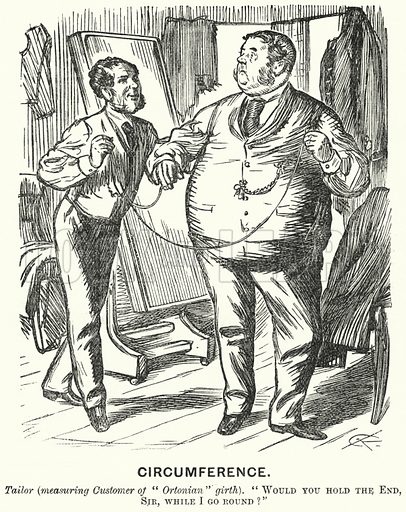
The Law of Pudgification states, that for every food excess consumed by the eater, regardless of how many attempts are made to lose the weight from your corporately embellished stomach, the consumer’s physical body form will never completely return back to its previous slim state. The extent of this stomach deviation is called the “Residual Pudge”.
Now for those of you that have reluctantly bitten off more than you can chew over the holiday festivities, you may be experiencing the unwanted influence of this Law. If that is you, a word of advice for your planned first day of work return, that being, don’t try and wear your normal business attire because you are doomed to experience massive wardrobe failure. Yes, buttons will pop, zippers will bulge, and fabric seams will be tested to their extreme limit. The unavoidable result will be catastrophic clothing malfunction combined with severe personal embarrassment.
As you nervously approach this first day back in the office, you do have at least three options to carefully ponder:
Option 1: Fast continually for a week and hope that the “Residual Pudge” quickly alleviates. But let’s be realistic, this is never going to happen!
Option 2: Defer your scheduled first day back in the office by at least a month so your voluminous body has an opportunity to naturally deflate.
Option 3: Purchase an “Expando-Suit”.
Yes, for those of you that can’t accommodate Options 1 and 2, Option 3 is an efficient route to pudgification ownership correction.
What? You haven’t heard of the “Expando-Suit”? Well, it has successfully encapsulated the exterior of numerous well-fed corporate individuals for many a decade. No, it is not advertised, but is readily available via word of a full mouth from those that are in corresponding need of depudgification.
The “Expando-Suit” looks like any fashionable business suit so the innocent onlooker would never be the wiser. It can be purchased in a variety of the latest stylish trends, or for those more conservative, in solid grey, blue or black colours (perfect for any lawyers or politicians that may be reading who have partaken of one piece of plum pudding too many), and meticulously meets the clothing needs of both the corporate woman or man. But it has one unique point of difference, that being the fabric that happily stretches around any over pudgified body part with minimal visual cling. Yes, the wearer will look fashionably suave and sophisticated and not like a plastic cling-wrapped piece of produce.
However, a word of caution. The “Expando-Suit” will feel so comfortable to wear that you may forget the reason why you purchased one in the first place. Yes, you need to lose pudge. To assist in this endeavour, the cotton used in the fabric seams (patent pending) will disintegrate in exactly four weeks of continual office wear. So, in order to avoid breaking any HR laws of personal exposure in your office, you have been officially warned!
Yes, the “Expando-Suit” is indeed an option, but let’s be honest with ourselves, the preferred choice when eating is to be conscious of The Law of Pudgification and to minimise any potential side effects that may be looming from overindulgence.
In the days of yesteryear, hiring a new employee was fraught with numerous uncertainties and typically required the service of a professional recruiter. The process was timing consuming, costly, and usually involved ploughing through an endless list of CVs, countless interviews, tedious salary negotiations, a job offer, a period of probation, and then finally, if you were lucky, you had a useful new member of staff. If not, you were then back to the start, absent your time, dollars and the few remaining hairs from your quickly balding head.
Enter the role of your Personnel Staffing Tailor (PST). Yes, as the name suggests, this is a new addition to the recruiting business, and one that guarantees 100% corporate satisfaction, complete with a lifetime warranty on your new hire. Your risk, zero.
Now that I have your interest, I’m sure that you will want to quickly utilise the service of your nearest PST. How? Simple. Just ask Siri.
By adhering to Siri’s detailed instructions, you should now be about to enter the business abode of your PST. Don’t be shy, just open the door and go in, even-though it looks like a high-end tailor’s shop. Once inside, you will be greeted by a person that has a welcoming appearance, and one that makes you feel completely relaxed and comfortable. Which, they should do on all occasions for every prospective buyer, as they have been matched to your individual personality requirements to ensure you complete corporate shopping ease. Yes, they are a fashionably dressed humanoid, fully equipped with a remarkedly superior artificial intelligence.
Once seated in a perfectly fitting leather viewing chair, together with any nourishment that you desire at that point in time, your charming PST will ask you to list the full personality traits, qualifications, experience, gender and physical appearance that you require with your new hire.
Equipped with the completed list, your PST will now mix and match your potential new employee via a meticulous arrangement of humanoid features and downloaded artificial intelligence Apps (just like the Apple App Store) to fulfil all your business requirements. Once done, your new employee will quietly sit down next to you awaiting your approval.
So, what are the additional benefits associated with using the services of a PST?
Should the employee’s role change in the future, just refresh their accumulated Apps, or download additional ones as required for a modest fee. Your PST will have a stock of all the latest fashionable ones!
Your new employee will never need sick leave, annual leave, lunch or coffee breaks.
Their hours of work are 24 hours, they don’t abide by the restrictive 9-5 regime.
They speak, read and write all languages, even the rarest of dialects.
They have a work ethic that perfectly matches your corporate culture.
Their clothing attire is never dull and always an inspiration to others in the corporate office.
But, one word of caution, just in case you didn’t read the fine print on the PST contract. You boss has the right to match you with the equivalent AI humanoid, so don’t be surprised if your tenure is limited. But, as they say, that’s progress!
The corporate office has the potential to be a much more innovative and exciting place. This blog is a compilation of my thoughts that try to inspire others into thinking that “little bit differently” and which might just be useful in the future!









 Thoughts that might just be useful in the future