Jockey Office Thoughts

Silks

The jockey adorned in an impressive satin quartered racing silk raised her white covered jodhpur pantalooned bottom above her mighty steed; her black crop was poised as she awaited the start of the race.

The masses that had come to see the great event cheered and shouted with such volume that the roar permeated throughout the racing track and the surrounding suburbs. It was so loud that those with hearing aids had to reduce the receptivity for fear of blowing the last remaining remnants of their fragile eardrums! The charming ladies looked absolutely gorgeous in their fashionable dresses and fancy stylish array of hats. The gentlemen all dressed in suits and bright ties complemented the occasion and looked quite spiffy. It was going to be a grand day out!

Once the race started, the booming announcer’s voice kept those punters informed on the status of their various Castillo boot cladded jockey as they competitively galloped in a rather uncomfortable looking postured position up high on their horses towards the winning post. For the winning jockey, the crowd would go wild, a voluminous frenzy would erupt and it was party time!

According to a “prominent blog writer”, a question now needs to be asked, and that is; “Why do such grand occasions not occur in the corporate office”? Why is it that when a new innovation is being developed, those employees working on it tend to sulk around the office in a mode of stealth. Is it for fear of failure, or perhaps that new innovations are not that exciting and interfere with the normal day-to-day business activities?

A “prominent blog writer” postulates that innovation should be greatly publicised within the corporate office. It should have the same sense of occasion and festivity associated with an important horse race. Those working on the innovation should be given a high profile and their progress broadcasted throughout the organization so all employees can feel part of the process of creativity and celebrate that winning feeling once the product/service is commercialised. So how do we do this? The key is communication and a function that lends itself nicely to those within your Corporate Affairs and Marketing teams. A “buzz of excitement” needs to be created and maintained along the innovation journey.

By the way, in case you are wondering, that “prominent blog writer” does not suggest that those members of the innovation teams should wear white jodhpur pants and silk shirts (OK, maybe the shirts, but definitely not the jodhpurs!), but it would make them a lot more visible within the organization?

The Panic Button

A new Button

I’d heard about this particular corporate office, but thought the rumours just couldn’t be true, afterall, nothing could be that bad! So with a certain feeling of uncertainty, I mustered up the required courage and walked with some trepidation through the entrance of the building to my scheduled appointment.

As I walked through the automatic opening and rather imposing glass doors each of which boldly portrayed the company’s famous insignia, I heard a quiet woosh sound, and sensed that a small quota of my innovation can been surreptitiously sucked out of the pores from a skin. A slight feeling of fear started to permeate through me!

I waited in the reception area for my host to arrive and noticed that the office was devoid of colour, all employees were dressed in dark ominous tones of corporate boringness and the walls were blank canvasses of white with the occasional random poster of business repetition. A drop of sweat now slowly meandered down from my forehead…this was not looking good!

After waiting about five minutes completely immersed in silence as no one appeared to laugh, smile or have any normal facial expression that had a glimmer of hope or inspiration, my host finally appeared.

My host was the CMO. He was dressed in a traditional dark suit, white shirt, rather bland yet expensive tie, black polished shoes and reeked of that rather common aftershave.

My internal innovation meter sensed impending doom and urgently started to seek an exit from this place of potential creative tyranny. I noticed a prominent button protected by thick glass on the wall that was fully coated in dust and cobwebs which read “break in case of innovation emergency!” This was indeed such a situation! I excused myself from my host, ran to the button, smashed the glass and eagerly pressed this button of hope.

What happened next….well that is a choice that all you who are reading this blog post can make! All of us have the choice to work in a corporate environment that is bleak, or one that inspires and cultivates innovation. If it is the former, then why not implement a culture of innovation change…it could be fun and quite stimulating for all concerned!

If you are in any doubt, may I suggest you place an ‘Innovation Panic Button” on your office wall and then quietly observe just how many employees try to press it? I think that you will be surprised at the number of people who desperately seek that innovation cultural change and the associated benefits that are derived from it!

Just a thought…..?

Shirt Wear – Guidelines for Corporate Creativity

Shirt

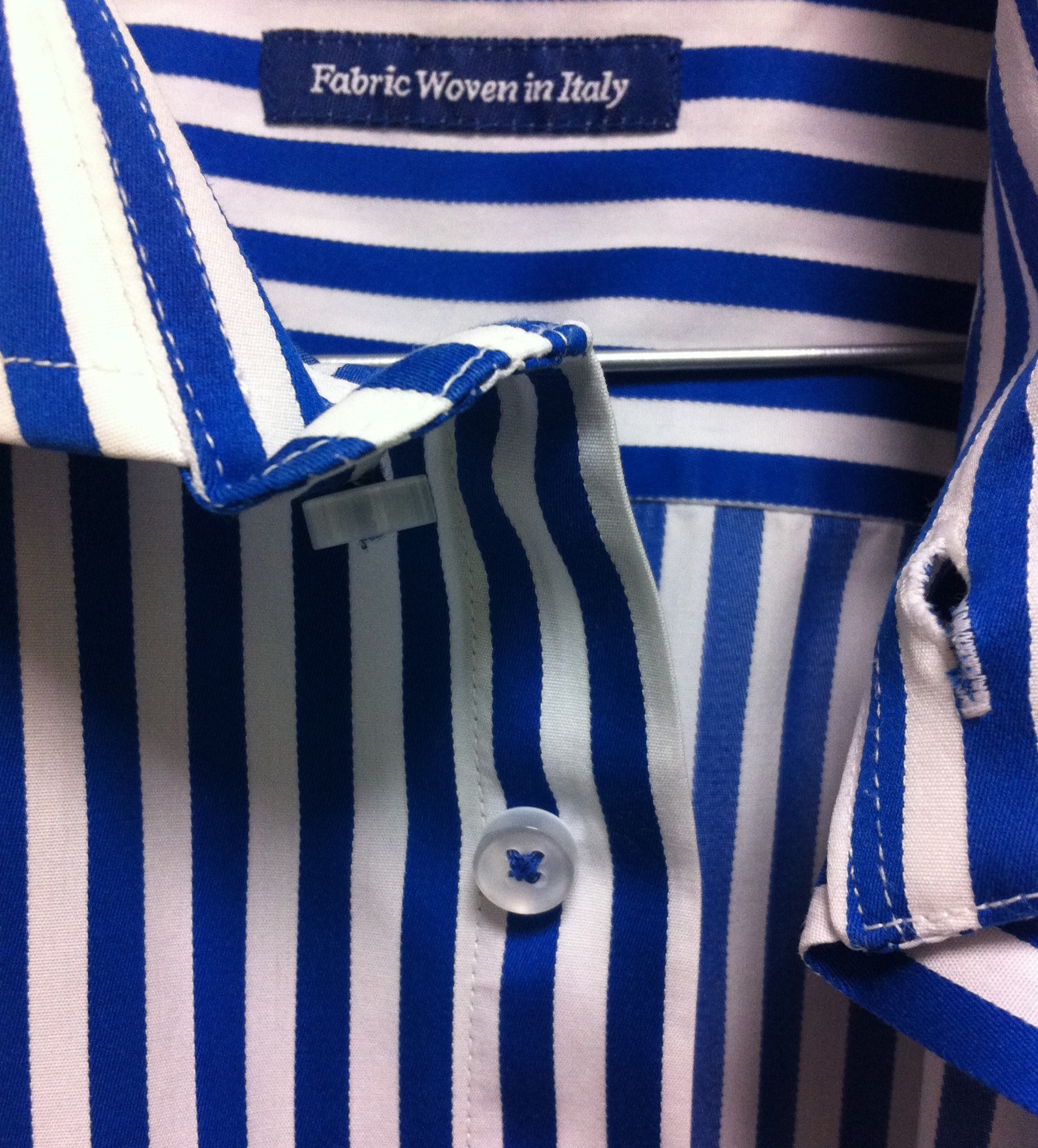
You know…the business shirt is quite an amazing source of innovation and creativity and has a unique and strategic place in the corporate office. However, many wearers do not recognise this fact, or its importance. So let’s explore this grand piece of clothing a little bit further.

The key shirt characteristics that define your shirt wearing creativity are:
• The colour
• The buttons
• The in/out tuck

Colour:
Most shirt wearers in your typical conservative corporate organisation tend to wear the stock standard white shirt. Need we say anymore, except, this probably explains why these companies are quite boring and lacking innovation!
When colour is introduced; now we are talking! These colourful shirt wearers tend to have that increased level of flamboyance and “oomph” that supports the generation of new ideas. Other areas for creative differentiation are the optional stripe or pattern.

Buttons:
The typical business shirt has seven buttons in the main frontal section, and a smaller button on the sleeves (assuming that this is a cufflink shirt).
My extensive research (based on extensive individual research I might add), is that the number of buttons done-up greatly influences the shirt wearers level of freedom which I assert has a direct correlation with creativity.
The optimum level of thought freedom appears to be attained with no buttons done up….yep that hairy chested high air-flow look! When all the buttons are done-up, “theory” states that creativity is proportionally reduced. Owing to HR T&Cs of acceptable dress in the corporate office, I would suggest the top two buttons being undone, if not completely removed to ensure that happy creative compromise with the official corporate guidelines.
Another option is to undo the small buttons on the shirtsleeves and roll your sleeves up, once again, a certain freedom of corporate constraint seems to prevail as a consequence.

In/Out Tuck:
This is indeed a very personal choice. Some people like to have their shirt tucked in, others like it out. However, when wearing a suit, having the shirt out does tend to make you look rather uncouth hedging towards that bogun looking classification. However, if it improves your ability to think with your shirt flapping around your bottom, well, each to their own!

Now, I haven’t explored the choice of hooks and eyes, or zips, as an alternative to buttons, but would welcome any constructive feedback from any readers of this blog post that might be beneficial to the argument being proposed above (which of course is all tongue in cheek!).

In conclusion, may I suggest that you view your business shirt as a key factor in the development of a culture of innovation in the corporate office.

The Chief Corporate Wardrobe Selector

The costume wardrobe room for a theatre production is an amazing and vibrant place. It contains a multitude of various clothing props in a range of sizes, colours, designs, accessories, time-periods and fashions; it is almost like entering a “house of fiction” where the options for selection, combination and use are endless!

If you observe those entering the room, they will look quite normal. They will wear the same traditional casual or work attire that most people would adorn. However, on leaving the room, they will have a completely different appearance. It is almost as if the actor discards their normal appearance and personality in the wardrobe room from which they depart with a tantalising and decidedly new modus operandi for their behaviour. This new profile may be assertive, reserved, allusive or seductive; the key requirement is that it is different; their clothes also complement and support their new character.

This got me thinking about how people behave in the corporate office. If you study your colleagues in your workplace, you will see a high frequency of suits, ties, skirts, shirts and jackets. But how often do you see someone adorning a bow tie, stylish tartan shorts, a bright pink fluoro shirt, a beret, or some other unique clothing item? The answer is most rarely, if ever!

An actor uses a range of clothing costumes to enhance their character and to instil and encourage certain qualities that they want to promote during their theatrical performance. If all of your work colleagues are dressed similarly, this may lead so a standardised thought and minimal opportunity for those creative individuals amongst you to fully express themselves in the corporate office? Some people may also receive that additional “spark of motivation” that accompanies the wearing of a costume to break free from their “reserved person label”?

Why not encourage this opportunity for corporate creativity by having an “office costume room” that all employees must walk through as they arrive at work? Each person would be required to select a different costume each day, under the supervision of the “Chief Corporate Wardrobe Selector”, to inspire a different way of thinking in the office. At the conclusion of the working day, employees would once again pass through the “office costume room” and change into their traditional clothing attire.

Just a thought, but maybe it will help people think that little bit differently?

That “Gaelic Place”

Big Mac

“Two all beef patties, special sauce, lettuce, cheese, pickles, onions on a sesame seed bun”.

On reading this sentence, many of you would immediately think of that global hamburger chain identified with the golden arches that I call that “Gaelic Place”.

To many children and adults from all around the world, this is their common perception of a hamburger. But what if we replaced the following ingredients…

Beef patties WITH lamb rissoles?
Special sauce WITH leaves of mint?
Lettuce WITH spinach?
Cheese WITH fetta?
Pickles WITH chutney?
Onions WITH beetroot?
Sesame seed bun WITH Toasted wholemeal bread?

I’m sure that those frequent and loyal eaters at the “Gaelic Place” would not recognise these replacement ingredients when constructed together as a hamburger!?

Let’s just ponder this thought for a moment and expand the discussion a little bit further. Many foods, fashions, music, plus many other items used daily, have become stereotyped by a consistent and standardised formula or delivery methodology. This can also be observed in the corporate workplace where everyone seems to dress in the same work attire, similarly, the offices have that regular format of appearance, funnily enough, very much like the business model used by that “Gaelic Place”?

The same can also be said about the process of innovation where most businesses utilise the same old standard approach of “brainstorming” to try and develop some new ideas.  I have even heard of some brainstorming sessions feasting on a selection of “Gaelic Place” food assortments to assist with the participant’s creative receptivity!

To foster some creativity in the workplace, why not try some new “ingredients”, just like the replacement “WITH” examples provided in the hamburger example above.  Some of these alternative “ingredients” could be:

Standard Work Attire WITH a bow-tie, cravat, kilt, swimming costume?
Corporate Office WITH an external location (the zoo, a picnic ground, railway train, gymnasium)?
Business Co-workers WITH kindergarten children, a choir, actors, artists, the French Foreign Legion?

In summary, there is more than one type of hamburger, the key is to expand your taste-buds with a variety of new ingredients so you continue to think that little bit differently!

Trinkets of Status

Mr. Morgan Howard, Q. C., "Energetic Toryism"

Have you ever noticed that as you get more senior in an organisation, either professionally or academically, that the size of your “trinkets of status” increases correspondingly? For instance:

A PhD when graduating has a bright and very colourful hat that is bigger than those with a humble Bachelor’s degree.
A Judge has a sturdy and “not so impressive” wig and dominant gown that conveys their esteemed authority when in the court.
The CEO drives a flashy car that somehow always remains clean regardless of how many days they spend on their private farm roughing it in the dirt.

This got me thinking…..what if these trinkets of status were distributed on a random basis to those in their organisation even though they were not entitled to exhibit them?

Would those observing these new trinket recipients view them in a different light? I suspect so, initially at least in the short term. Those wearing the trinket may also momentarily take on the persona of the rightful trinket owner and demonstrate a higher level of performance and innovation?

So why not give it a go in your place of employment? The results could be rather interesting!?

There is of course one condition that needs to be imposed with respect to the CEO’s car. Before returning it, it does need to be clean, and should there be any speeding fines, the honorary trinket person is still personally responsible for the payment!


Coat Buttons Undone

Winter Walk

In the colder months of the year, should you quickly glance at the commuting business person when they are travelling to and from the office, it is most likely that you will notice a common corporate appearance – black coat, single coloured scarf and the occasional dark gloves. If it is raining, the umbrella is usually of a colour to complement the coat, once again…black.

However, when this worker arrives at the office and disrobes their black coat and scarf, there is an observed vibrancy of coloured shirts, ties, suits and skirts.

To me this is an interesting conundrum.

All these workers have a similar external appearance as typified by the black coat, yet once the “coat buttons are undone”, each of them has their own unique dress style that expresses their individual personality.

So in the office environment, don’t judge a person’s character and capability by their external persona. Try to get to understand them better when they have been given the opportunity to demonstrate some of their hidden talents!

The Corporate Costume

With Eyes as Dark as his Soul

Actors have brilliant costumes that assist them in getting their character…..just right. They can spend hours sourcing their clothes, make-up, supporting props to that required level of perfection.

What about the humble business person? Here the imagination is quite limited with the standard suit, shirt, tie, cuff-links and of course those well polished shiny black shoes.

But what if we considered ourselves actors working in a corporate environment? Now this gets interesting!

Why not have a business wardrobe that includes:

  1. Facial hair additions: moustache, beard, bushy eyebrows, long side buns?
  2. Hair additions: different hair colours, a pony-tail?
  3. Facial accessories: glasses, monocle, coloured contacts, scars?
  4. Clothes: cravat, bow-tie, scarf, braces, kilt?
  5. Accent: Italian, Greek, French, Irish?

Now that would be fun…..it would certainly make business a lot more interesting!