The Experience of E-Class Flight

Annex - Grant, Cary (Only Angels Have Wings)_05

Once again, I had to go through the drudgery of booking my Qantas flight QF9 from Melbourne to London. It was a business flight that I reluctantly did every month, I loved it when I arrived at my London destination, but the long flight, well, I despised every torturous hour associated with it.

Owing to the frequency of my travel, the online booking process typically only took me a few minutes to complete. As usual, I entered my well-versed Qantas Frequent Flyer number, but once done, a new and rather unexpected screen mysteriously opened up in my booking. Initially I was a tad flabbergasted, as I was accustomed to seeing the usual cabin selection options of First, Business and the various Economy options. But this time, I was presented with some rather unusual seating option classifications; S, F or E to which I was quite intrigued. Apparently, owing to a combination of my lofty Frequent Flyer status, and my personal profile (possibly also due to my habitual bow-tie wearing fashion statements as professionally noted by the more discerning Qantas flight stewardesses), I had been offered the opportunity to participate in a rather unique test flight to London. I was then provided with an option to proceed, or to go back to the booking screen of normality. I had 30 seconds to make my choice. After a brief microsecond period of some limited superficial in depth thinking, I had quickly made my decision and without any hesitation selected the button marked “Go for it”.

Immediately, I entered a new and differently badged Qantas booking screen and discovered that S = Serious, F = Fun and E = Experience. Without going into all the aircraft cabin classification descriptive paraphernalia, and for the sake of verbal brevity, all you need to know is that I selected E-class (and checked the 12 page disclaimer box to confirm my booking).

A few days later, I arrived at Melbourne airport dressed in the minimalist clothing as prescribed by Qantas for the newly designated E-class traveller. Once checked in by the delightful and somewhat suspiciously and rather endlessly smirking Qantas staff, I was handed my E-class travel kit. In it were some face masked goggles, a tight fitting Qantas embroidered and personally monogrammed rubber suit that made me look like a spiffy surfer, some matching rubber boots, gloves and snug hat (we didn’t need to wear the latter until further advised). I was then ushered into an impressive private Qantas Club Lounge and saw a variety of other cautiously optimistic travellers.

There were those dressed like me, some looking slightly embarrassed as these suits were so body hugging that nothing was left to the imagination. There were others dressed in the traditional long haul international air travel casual attire; apparently these people had booked F-class. There was a small minority dressed in their stock-standard business suits, skirts, and other conservative items; they were obviously the S-class travellers.

A few minutes later we boarded the plane, but I was soon to discover that this was no ordinary Qantas plane, far from it. As I was in E-class, we boarded first as we had to make our way to the rear of the aircraft.

As we walked through the plane, the first thing that was immediately apparent was that the usual row of passenger seats had been removed. In the First/Business class seating location, there was a range of individually placed workstations, desks, sofas-chairs, computer screens, private sleeping booths, showers and a fine dining restaurant. This was S-class and it was designed for the serious business worker!

In the middle section of the plane, F-class resided. Here a vast array of computer games, cinemas, snooker tables, dartboards, massage rooms, spas, saunas and a healthy organic restaurant was located. This was an area that encouraged fun, frivolity and definitely no work. For those passengers that were a little bit overcome with too much excitement, there were large brightly coloured beanbags, lounge chairs and some private sleep booths.

After a few minutes I finally arrived in my designated E-class and was asked to adorn my complete rubber uniform. I, and my fellow apprehensive thrill seekers were then ushered in groups of four into separate doorways that led into a small-enclosed capsule. It was at this stage, as my heart sounded to pound a little too loudly, that I started to question my enthusiasm and whether I had made the right travel choice, but there was no turning back now, particularly as it would take me hours to peel this wetsuit from my body, no, the only choice was to proceed.

In the capsule there were no seats, just a long cushioned black couch and what looked like a surfboard leg rope, but I quickly ascertained that this was actually an oxygen chord that was soon plugged into my goggle facemask by yet another smiling Flight Attendant. I was now starting to sweat quite profusely in my wet suit with some trepidation, particularly as I vividly recalled the long-winded and fine font disclaimer that I had recently signed without reading any of the content.

A few minutes later, I was strapped in with my fellow E-class pioneers and soon felt the immense vibration of the aircraft’s B777 engines permeating through my body as we became airborne. Then it happened.

An almighty noise occurred and my capsule started to quickly separate from the plane, the only link being a metal umbilical chord. To my delight (and horror), the aerodynamic capsule was completely encapsulated with an external wall of highly transparent glass, and a massive array of strategically positioned air vents. I immediately felt the cold icy air gusting ferociously all over my body. Suddenly, the tight straps tying me, and my fellow E-classers, to the couch were released. We were now free flowing and quickly started to body surf the air currents! A sign now appeared on the capsule console saying, “Welcome to E-class”.

After a few hours, I quickly mastered the flying technique and was sought out by other passengers for tips on how to stay aloft without getting that unfashionable, and rather uncomfortable, wind puffed look when a high velocity slip stream entered the wearers protective rubber body suit without formal invitation.

Yes, the time quickly passed as I literally flew to London, and what an experience!

In recognition for my E-class prowess, I have now been issued with a special Qantas Frequent Flyer card, one that provides me with travel privileges that cannot be disclosed so as to avoid envy from other passengers. Would I fly E-class again? No, I’ve moved beyond that, I now fly EE-class, one that is very exclusive.

So next time you fly on business, may I suggest that you try and think that little bit differently with your selected cabin class and airline? And should you get the opportunity to ever travel E-class, most definitely do so as it will be worth it, trust me.
If The Head Fits, Then Wear It

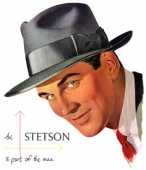
1950-mens-fedora-stetson-whippet

This afternoon I was standing nonchalantly at the corner of a busy road intersection painfully aware of the intense bright Australian sun beaming down on my hairless head with absolute ferocity. “Why was I not wearing a hat?” It was quite stupid really when I actually thought about, particularly when reminded by my delicate skinned head as it quickly transitioned to a pink coloured and progressively uncomfortable warm state.

Looking around at my fellow Melbourne city lunchtime walkers, I literally saw no hats adorning the head of any fashionable suit clad man, nor elegantly and spiffily dressed woman. The only hats observed seemed to be situated on the heads of the elderly, or those below the age of 20 in the shape of a mod-looking cap, complete with a market approved logo emblazoned just above its peak. In the years past, men and woman all wore hats that complemented and embellished their business attire, and which provided them with a distinctive look that was most dashing, sophisticated, and had that mark of business professionalism. So, why the change in our cultural hat appreciation? Was it due to the long, free flowing hairstyles of the sixties, seventies and eighties decades where the hair-boof factor made wearing a hat not socially acceptable, nor possible, owing to the excessive follicular volume?

One will never know, but the time is now ripe for a global corporate hat revolution!

Oui, Vive Le Chapeau!

My fellow corporate office compatriots, go on, don’t procrastinate any longer, take action, heed this call to your head and wear a hat!

I can hear your objections, one in particular, that being, what about the dreaded look of “hat hair”? Relax, all will be just fine, mainly as this newly acquired hair look will soon become a fashion statement that publicly notifies the world that you have elected to protect the longer term wellbeing of your head, and are now an accredited and chicly respected wearer of hats! Yes, you will be a modern trendsetter, and one that will soon be a stylish pioneer that will be ogled with extreme envy by the unfortunate hatless few.

Now, for any HR Managers reading this blog post, there is now one strategically important office furniture addition that you will quickly need to purchase to maintain employee morale, that being a hat stand so as to cope with the massive influx of hats!

The Theory of Toe-Show

70683e3bb39ed3da268d3b4419dcfc11

There is a little known, yet so very powerful, antique humanistic theory that is the key foundation in the development of creativity in the corporate office.

This theory has been in existence since the time of primitive man, reached its peak during the ancient Greek and Roman eras, and then regrettably, rapidly diminished with the advent of a more mobilised lifestyle and technology. Fortunately, we have all experienced momentary glimpses of its glory when we are imbibed in our unprotected casual or social interactive home state, but it is rarely seen in its natural physical form in the business environment.

For those exclusive individuals that are in the know, it is called the Theory of Toe-Show. Yes, this important theory relates to your feet, more precisely, your naked feet, unprotected by socks, stockings or shoes, but fully bare to the eyes of the world.

As you ponder the machinations of the Theory of Toe-Show, try and visualise yourself arriving home from the corporate office after a long, hard mind-draining day. What is the first thing that you do to alleviate and rectify your highly-strung mental state? Yes, you take your shoes off and introduce your poor bound feet to a world of nakedness and comfort, and typically exclaim an audible sigh of relief at the attainment of extreme personal satisfaction. Your mind quickly appreciates this mental toe showing and immediately responds with an unhindered release of creative thoughts that would never be aired in your corporate state of status quo.

Prior to the advent of shoes, our feet enjoyed a fully naked status as they were gleefully exposed to the full ambience of their geographic surroundings. The Theory of Toe-Show states that there is a direct link between your feet and your innate creativity. The more you cover your feet with shoes (and such-like), the more your mind is masked from the innovative sparks of your native imagination.

Think of the great Greek and Roman philosophers, their military leaders, their extraordinary astronomers, and their other leading and memorable personas. The origin of this creativity was indeed their minimalistic footwear. Yes, they wore sandals, or just wandered around quite content in bare footed bliss, fully aware that this was the source of their creative intelligence.

So next time you are trying to develop a culture of creativity and innovation in your corporate office, the answer is simple. All you need to do is to implement the Theory of Toe-Show and leave your shoes at the office door and many ideas (and potentially some odours) will quickly prevail.


The Mesmeric Corporate Prognosis

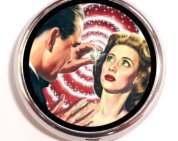
hypnotist

My esteemed colleagues, yes, I can sense your excitement and anticipation! But please relax as you need not wait any longer! After years of pain staking personal research sitting in the entrance foyers of the top 100 global companies, I am now pleased to announce that I have discovered the origins of this incapacitating corporate behavioural phenomenon.

This crippling condition that has inhibited the innovative thinking processes of employees for many decades, now has a medical name, that being “Corporate Mesmeric Innovative Retardation”, or CMIR for short. But more importantly, there is an antidote that is quite painless, and one that can be quickly administered to the corporate employee with immediate effect.

How did I discover this condition? Well, the intensive research required a high level of painstaking incognito behaviour on my behalf involving the wearing a beige nondescript suit, together with countless hours reading The Times, The Wall Street Journal and other local newspapers so as to not be noticed by the employees as they entered the corporate office. Unfortunately, I am still scared by the lack of fashion colour and style, but it was a burden that I was willing to bare for the sake of worldly corporate progress, I’m told the nightmares will eventually subside. The upside, is that my knowledge of world affairs, including the stock market, has resulted in various personal financial gains derived from highly profitable share trading, and a vast array of exclusive invitations to attend numerous London and New York high society trivia quizzes where I am deemed the font of all knowledge, and a most prized team member.

So what did the extensive research tell me? Although my study will be printed in next month’s edition of the Harvard Business Review, I’m sure that the HBR Publisher won’t mind me providing you all with a brief overview of my findings.

They key aspect to my world breaking research was the use of eagled-eyed observation. After countless detailed and personally exhaustive people watching experiences, I noticed the behaviour of all employees (particularly the attractive ones) as they entered the corporate office first thing in the morning, and then as they left that evening. The behavioural change in those inflicted employees at some businesses was profound, it was almost as if I was looking at two different people! Prior to them walking into the corporate reception area, they had a happy persona and exhibited all the normal signs of chirpiness, a willingness of thought, and a noticeable desire to learn. But once their foot stepped onto the marble tiled entrance foyer, it was as if an invisible intensely powerful force quickly sucked all the creativity from them, to which an innovative void remained until they departed the building at 5 PM sharp. At 5:01 PM, their creative vacuum was immediately replaced with their original pre-work positive behaviour. Yes, it was truly remarkable observation to behold!

Although quite mystifying, not all corporate businesses had employees that suffered from the dreaded CMIR condition. To understand the cause as to why this unexplained phenomenon may have occurred, I had to dig deeper into the observational evidence and decided to introduce the HR Managers of the companies studied into the rich complexity, and subtle machinations, of my academic research. After numerous soy milk chai lattes, and what seemed like an endless consumption of gluten-free bagels, I came to a momentous and decisive eureka moment. Apparently, the culture of the organization had a direct correlation with the onset of the CMIR. Should the culture be viewed negatively, then a high frequency of CMIR suffers prevailed. The trigger for most employees who had acute CMIR was the initial sighting of the company logo, typically first seen when they entered the company premises in the morning.  On viewing the logo, a negative and mesmeric effect immediately struck down the creatively-fragile employee resulting in a mind destroying innovation purge, luckily this was a reversible retardation that quickly ceased when exiting the building at 5 PM.

Yes, you are correct in assuming that those companies that had a positive and dynamic corporate culture that was well respected, and one that harmoniously and gleefully fitted with the employee’s lifestyle goals, experienced no CMIR sufferers. So the answer is simple. To eradicate any corrosive and long-term damaging CMIR influences in your business, management do need to focus on the right corporate culture to ensure that their business logo immediately inspires your employees when first sighted as they enter your office.

And should you need any assistance in the process, my consulting fees are indeed negotiable (but please, no gluten free bagels).

Motivator of Woft

the-isolator-640x539

It’s 3 PM in the corporate office and you are exhibiting all the classic signs of needing a work pick me up. Your eyes are getting tired and extremely bloodshot from looking at that computer screen all day, your bottom is starting to experience the occasional numb spot from sitting on your chair too long, and you are getting that grumpy and frustrated watch observation technique where the passage of time tirelessly slows as it nears 5 PM.

STOP! Don’t walk to the café to get that habitual afternoon long black coffee or soymilk latte, you need the HR approved “Motivator of Woft” (MoW). Yes, after an extensive university-testing regime on many willing (and some unwilling) employees, we are excited to announce the long anticipated market release of the MoW.

This classical motivation enhancement apparatus is fully equipped with the latest features that ensures the wearer total comfort whilst they are happily and constructively stimulated in the corporate office. No longer will your staff want to leave at 5 PM, they will be pleading with you to stay as long as possible, and may even want to make their permanent residence their work desk.

So what exactly is the MoW and how does it work?

The answer is quite simple and has its origins in the sensual excitement methodology that has tantalised many humans throughout the history of man and womankind. The key to the success of the MoW is the human nose. This remarkable facial protrusion is quite a complex and highly intricate odour (or woft) recognition apparatus.

I’m sure that many readers of this blog post will immediately relate to the pleasurable woft of a freshly brewed coffee, sizzling pan-fried bacon, or hot baked bread that has just been taken out of the oven. On smelling these odours, your mind typically awakens with immense delight and pleasure.

This is the key aspect of the MoW and is the strategic driver that ensures its remarkable success. Through the use of a fashionable and tailored facial mask, we have been able to provide the wearer with an endless supply of wofts that can be easily customised for the user. The process is simple. Just place the mask over your face when you require some corporate motivation and then select the woft odour to suit your specific need. Each facial mask comes with a selection dial of ten unique and nostril inspiring fragrances that will entice the wearer. No longer will you need to leave your work desk for that a traditional 3 PM stimulation, the MoW will provide you with all the inspiration you will ever need! And should you get bored with the standard 10 wofts, a bonus 20 woft pack is available for a small additional expense.

Yes, you know you want your own MoW. So what are you waiting for?

For all those blog post readers that respond* to the author in the next 30 minutes, we will provide you with an impressive monogramed MoW that will be the envy of all your colleagues.

Happy corporate office wofting!

*VISA, MC, AMEX and of course lots of cash are happily accepted!

When a Building Thinks

13948288967_646b2078bb_o

According to the erection date chiselled into my cornerstone, I’m a middle aged corporate building as measured by employee years. However, as all the other offices around me keep telling me, with age, comes experience, and I have seen it all.

My occupants come and go, make noise during the daylight hours, but thankfully they let me rest during the night which allows me time to recuperate and get my office back in order with the assistance of what they call “cleaners”.

Like all thinking entities, as I get older, I do start to lose a few fibres from my carpets, the walls and fixtures take on a slightly more shabby look, and there is the occasional random odour from the basement, but a regular make-over seems to do the trick which helps me look decades younger. The key to my youthful appearance is in having a well defined, and rigid inspection regime, where a realm of specialist tradespeople annually check me over and make sure my inners are operating efficiently. If not, a non-working item is quickly identified, rooted out and professionally replaced with something more modern. Any discomfort, or embarrassment that I may experience during this operation as my private rooms are exposed to all observers, is quickly forgotten when I consider the longer-term benefits.

As I’m more “buildingly” mature, I also have the ability to be the master of my occupant destiny, a trait many younger buildings can only aspire to, and one that I’m regularly quizzed about. For those of you that have read my many interviews in the Harvard Building Review (HBR), I won’t repeat the details here so as not to sound too pompous, nor repetitive. But for those that haven’t, the key is in using your inherent building skills to manipulate those within you. For example, should I experience an internal people upset that needs to be purged, I evoke my fire sprinkler system to remedy and dampen down the origin of the disturbance. Another option is to deliberately rest a people section of my building structure by strategically removing the power supply from the offending area. For those occasions that need a rapid solution, nothings beats the immediacy of a broken sewer pipe or gas leak which seems to work every time! But as a word of caution, don’t use this last one too often, otherwise you may find yourself being served with an official building condemnation notice which can cut short your life expectancy quite quickly.

Like all buildings, there will come a time when I’m no longer appreciated and I will be asked to make way for something an architect deems younger, more fashionable and environmentally friendlier. No, I’m not perturbed, because I know that I will be reincarnated once again into yet another building as my structural DNA is recycled and used as foundation rubble fill, thereby continuing my thought, and influence, in the corporate office.


Work Wear for the Active Martian

Jean Shrimpton - photo by Richard Avedon for HarperÕs Bazaar, April 1965

“It’s the year 2165 and we have been living on Mars for the past 30 Earth years and we still can’t differentiate the shape of a woman from a man when we are working outside on the planet surface! These old fashioned, unflattering, NASA styled baggy space suits all make us look like we are living in the 1960s! Enough is enough, it’s time to modernise our Martian appearance and to bring a long overdue standard of fashion to this red dusty plant.”

Yes, we hear you! So, you will all be pleased to know that the Galactic branch of “Space Road”, the leading fashion designer of casual clothing, has now expanded their work wear to accommodate the needs of the discerning Martian resident. No longer will women and men be visually indistinguishable. Yes, we understand the needs of the Martian worker and have developed a unique clothing range that will ensure the wearer is seen on this planet as a stylish leader in your chosen work team.

To cope with the extreme temperature fluctuations, and those pesky and highly unpredictable red dust storms, we have developed a remarkable lightweight fabric that provides optimum thermal protection, together with an inbuilt anti-static additive to repel dirt. This will ensure that the wearer always feels comfortable, refreshed and has that all over clean and stunning professional looking appearance.

The fabric comes in a range of colours and patterns, and there is even a transparent selection available, however owing to the high levels of solar radiation, we would recommend that only those with a large body hair covering choose this one to avoid potential discomfort.

I can hear you asking whether the fabric is clingy? Absolutely is the answer! The wearer will now be able to show the Martian civilisation the complete personality attributes of the individual without any physical limitations from gravity typically experienced when on Earth. There will now be no doubt as to the gender of the wearer, however, for those that are a tad more traditional and conservative by nature, blue and pink fabric selection options are indeed available. We at “Space Road” are also thinking ahead and should the human race mutate with the influence of some potential yet unknown alien relationships, we have reserved a number of unspecified gender colours, just in case they are required at some point in the future.

This modern leading edge Martian wear also fits comfortably into your space boots, gloves and helmet ensuring a snug and compete seal for added protection. Our new solar season range of clothing will soon contain a stylish helmet, which unfortunately wasn’t available for release in this clothing catalogue owing to some slight teething issues with oxygen leaks, a minor problem which we will quickly remedy I’m sure. Please ensure you send us your Martian email address so we can add you to our distribution list for when this helmet, and other cosmically exciting fashion items, become available.

We look forward to servicing all your Martian fashion requirements. For further information, please go to our website in about 6 months as we await the launch of our newly built Telstra 10G satellite which will soon be orbiting Mars. We at “Space Road” thank you you for your patience, but you know what it’s like getting a new satellite these days!

Image: Jean Shrimpton – photo by Richard Avedon for Harpers Bazaar, April 1965

I Am Your Idea

Euphoria

As an idea, I was quite happily resting in an unassuming nerve-end in a remote corner of the brain of my original owner. It was quite a good life really, just sitting back taking it easy where I was oblivious to all the busyness of those other ideas around me. But then, my life changed, and in a phenomenally big way!

For some unexplained reason, my owner’s brain decided to think. Why this happened, I have no rhyme or reason as to what initiated this mental activity, but the result for me was an electric and significantly life changing experience. Once the process of thinking commenced, I started to notice an immediate change in my appearance. Yes, I started to transform into a larger and more complex idea. I quickly gained substance, and in a most surprising and totally unexpected way, my social life increased exponentially as I became really popular with other ideas that were totally unknown to me. It seemed like all my new idea acquaintances wanted a piece of my being, so much so that I started to lose my individual identity.

As the concept of human time mysteriously progressed in what seemed like only microseconds, the idea of me started to reside in not just my owner’s brain, but also in that of many people. This biological effect continued to compound and I was swiftly transported via numerous communication methods across the globe into other countries, cultures and out into the solar system and beyond.

I started life as a single idea, but now I am a thought celebrity and one that is core to the survival of many other ideas and foundations of knowledge. Owing to my immense popularity of thought, I am now frequently mobbed by many other small and less advanced ideas, all seeking my autograph where they try and absorb any readily accessible part of me as they themselves quickly grow and develop.

I’m now unstoppable, viral and as long as there is a mind that can reason and think, I will exist. I am thought personified as creativity and innovation. I am your idea.

Framing Your Office Correctly

Paris & London 2011 922

When walking around an art gallery you will see a variety of different people mulling in front of an oil painting making all kinds of comments. Each of them will see different aspects of the painting and will make their own interpretation as to the artistic and messaging intentions of the painter.

Some observers will focus on colour, the scene portrayed, or potentially the interaction of the people encapsulated in the work of art, and what they may be thinking or experiencing.

The viewer’s analysis of the painting will be varied, with each opinion based on their own unique life experiences that have coloured their thoughts and imagery on life.

This got me thinking. What if you took a random, non-staged photograph of the workers in your office that captured a specific moment in their working day? This image could be black and white, or coloured, placed in an impressive frame and then hung on a wall, just like in an art gallery.

So as to avoid any potential bias and insider people knowledge, employees from a non-related business would then be asked to comment as to photographer’s intentions, just like the painter of the oil canvas.

Those observing would come up with a range of assumptions and theories, some of which could be related to the work culture, stress, mood, or happiness of those people contained within the “frame”.

The collective feedback would provide a unique and objective insight into the machinations of your office. However, in this instance, the painter, or photographer, is your CEO, as this role is the creative source of the scene. Depending on the critical comments received, is your CEO proud to sign their name in the bottom right corner of the painting to stamp their ownership of the work? If not, maybe they would prefer to learn from the feedback and use it to develop and fine-tune their management artistry skills and have another go?

Yes, a picture does indeed say a thousand words. The key is to listen to them.

Keep your Eyes Focussed

Closeup of a woman wearing a monocle in one eye. Date taken- 1930

The date was the 4th September 2025 and the last Will and Testament of my dear grandfather had just been read. His friends knew him as Barry “Pirate” Cramer, to me, he was simply Papa, and he and I, were the best of friends.

Barry “Pirate” Cramer was an entrepreneur in the true sense of the word and left his family a financial fortune that many people can only dream of attaining. My father, Leon Cramer, was his only son and today became the wealthiest person on the planet.

In my grandfather’s Will, I was left no money, real estate, works of art, or other trinkets that those in the know would classify as valuable. However, the “Pirate” had left me two items that to me characterised the “real” him. These were his gold-rimmed monocle, and his personal diary.

It took about three months before I could open his diary owing to the grief I had been feeling, but once I did, I could never have imagined the innovative insights that this little worn leather bound book contained.

Barry “Pirate” Cramer was a business visionary and could always see how to commercialise new and novel ideas that many of his peers, and competitors, could never understand, or appreciate.

He earned his “Pirate” nickname for two reasons. The most obvious one being that he always wore a monocle in his right eye. The other one was that he was famous for plundering companies that were on the brink of bankruptcy that he miraculously, and quickly, transformed into highly profitable business that were the envy of the original owners.

As I was rummaging one night through his diary, I was intrigued by the words that he had scribbled when he was only 21 years old, an age which signalled the start of his financial prowess. The reference was to why pirates wore a patch over one eye. Apparently they did this so their eyes were ready for combat in the poorly lit interior of a ship [1]. As such, they always had one eye accustomed to light, the other prepped for darkness.

Papa took this concept further and replaced the pirate eye patch with the monocle, which eventually became his personal signature facial accessory. Yes, he did need to wear glasses, but he used the monocle in a cunning and rather visionary way. By wearing a monocle, his eyes were always focussed on the short and longer distances, ready for any visual obstacle that he may encounter. However, he took this in not just the metaphorical sense. Whenever he viewed a problem, he was always able to literally “see” two sides to the solution, the short-term and most obvious one that everyone could appreciate, but also the future opportunity that many of his competition could not comprehend.

What a brilliant visionary concept, one that many corporate businesses, particularly their CEOs, could learn from and utilise in in the development of their strategic plans. The key is to be a “pirate” and to have one eye looking at the now, the other eye very much focussed on the future.

So next time you go to the optometrist for your pair of fashionable glasses, why not get a monocle instead and let the potential pirate in you take control! You will also look rather spiffy, and will most definitely be noticed.

[1] https://en.wikipedia.org/wiki/Eyepatch