Appearances are indeed everything?

8191448222_4192999f5b_q

Ok, it was agreed, I would be “Fabian Rizzo”, the famous ballet dancer from New York (USA), Fabian would be me, “Steven Cramer”, the “alleged founder” of the world renowned “Dram” whiskey distillery in Pitlochery (Scotland).

We would meet at the select, and might I add, very exclusive Melbourne socialite dinner party at different times and collect “our” nametags and then the personality pretence would commence in earnest.

I arrived first, wearing a strikingly loud, and as equally wide, pinstripe suit complemented with a white linen tight fitting shirt with the top three buttons undone allowing my copious chest hairs freedom to peruse all observers. I did think that my bright purple socks where a tad over the top, but they seemed to work well with my thin black pointy leather shoes. Maybe the orange floral handkerchief was a little too metrosexual, but what the heck, I was “Fabian Rizzo” after all, wasn’t I!

As I arrived at the well-staffed dinner party reception table and announced my name, I was immediately swarmed over by a large number of the “beautiful people”, many of which were obviously fashion models, and to my relief, the majority of them were woman!

But my famous nametag wouldn’t be sufficient to ensure a successful evening, I had to “act the Fabian” so my walk, voice delivery and other unique mannerisms needed to prevail. The more I delved into the character, the more responsive my audience of vast admirers responded and the greater my performance. Yes, I did have a successful night, but that part will remain private, after all, one can never be sure who is actually reading these blog posts!

But I was only half the story. “Steven Cramer” also arrived at the reception table about thirty minutes after “Fabian Rizzo”, dressed in a fashionable and unpretentious dark tartan suit. His business shirt did portray some loud chunky gold cufflinks, and a tie with a full Windsor knot adorned his shirt. With a loud and deep toned Scottish accent (which sounded quite authentic by the way), he announced his name. After a brief few seconds, he was then quickly surrounded by an array of other professional looking men and woman who had a look of financial affluence and success wofting from their persona. However, to the trained eye (mine in this case, who was watching from the other side of the room), they were a gabble of bankers, stock market analysts, politicians, lawyers, a couple of alcoholics who were seeking the possibility of a fine “Dram” drop prior to making it to the dinner reception, and a variety of other “unclassified hangeronerers”. “Steven Cramer” was brilliant as he announced his market predictions for the upcoming whiskey market and provided his confidential and creative insights on what made a good glass of the Scottish liquor. Rumours were that he also managed to have quite a successful evening from various anonymous reports the following morning.

Now you may be wondering how these exploits of disguise benefit those that work in the corporate office or any other organization? Well, it all comes down to how people become fixated with the personal image associated with an individual and whether it is really deserved or not. It is quite common for employees to be impressed by a manager’s job title and play along accordingly thinking that they might benefit from the association. Some people tend to be too easily fooled by the public “label” that disguises the person wearing it, and should focus more on the actual person inside the “labelled garment”.

It is also interesting to observe from a third person perspective just how your co-workers actually view you as exemplified by this famous “Fabian Rizzo” and “Steven Cramer” role reversal. Similarly, whether these colleagues are really interested in you, or the role you portray?

PS: In case you were wondering, yes, “Fabian Rizzo” and “Steven Cramer” did indeed compare notes the following morning and the learnings were quite interesting for both individuals.

That Cut of Difference

Salon Shots

Yes, just a little bit more on the left above the ear don’t you think? Yes, there are a few stragglers there. I will just get the cut-throat razor out and give those obstreperous hairs a strategic and decisive shave. What do you think? Oh yes, much better. It looks much more skinified and head nude now, not a hair in sight, that should do it!

I looked at the floor below the barber’s chair with trepidation. There I saw a messy foray of my recently attached blond locks of hair randomly splayed now looking up at me with a sense of desertion as they awaited the appearance of a sweeping broom focussed on tidiness.

Yes, the new hairless look suited me, and if I didn’t like it, in a few days some potentially yet to be welcomed hair stubble would reposition itself on my head allowing me to rethink my next attempt at head creativity (Author’s comment….except in my case where that hair stubble decided to abandon my head a couple of decades ago, with a decision never to return!).

As I left the barber’s chair, I saw the next employee eagerly awaiting their turn to start their own individual journey of hair discovery. Yes, in case you are wondering, this barber is actually located in the corporate office. A haircut can be booked via your online E-mail calendar room booking system and there is always a backlog of staff wanting these prestigious hair services.

Why located in the corporate office? Well, why not? In this instance, this organization’s CEO views hairstyles as an extension of the business innovation process. The objective is to encourage their employees to think that little bit differently and to explore experiences and sensations that break the traditional and conservative mindset. After all, many people tend to adopt the same haircut style, one that is deemed professional and generally acceptable to the corporate guidelines of appearance. However, not this organization which boasts a workforce with a varied hair fashion that comes in a mixture of colours, lengths and more diverse appearances.

So next time you are sitting in your barber’s (or hairdresser’s) chair and they ask whether to give you “the usual”, may this blog post give you the creative strength to try something rather different so you too can experience that feeling of hair creativity and freedom of thought! Go on, be brave, give it a go! (it will grow back you know…well, maybe?)

The Brand

IMG_0249 (1)

The Harley Davidson motorcycle hummed past me with that deep-throated gnarly musical sound. Perched aloft the seat was a rather tubby leather clad middle-aged man with a long matted grey beard. Branded across his back was a large replica of his bike’s logo to which a massive “smile” complemented his daredevil face.

A cold gust on the winter wind was thwarted in leaving in imprint on the young woman’s face by her strategically wrapped Burberry scarf. But not to be outdone by this singular and fashionable item, additional clothing with the well-known motif soon appeared to encapsulate her from any other unwanted cold forays of gust. A similar “smile” to her bike riding unknown friend also appeared across her face.

The chanting increased in volume from the crowd all fashionably mimicking each other in their blue and white horizontal striped football jumpers as they took delight in tormenting their brown and gold vertically striped opposition supporters. That “smile” was once again evident.

On walking into one particular corporate office, that “smile” of belonging was most noticeably absent. It appeared to be an office comprised of a large number of individuals all supporting their own “smile” or brand, not one of a unified and cohesive organization.

If we consider the Harley Davidson rider, the Burberry wearer, the football supporter, they all derived some “smile” benefit from their association with these brands. Some corporate organizations, such as Google, McKinsey & Co, Virgin (and many others), do instil brand loyalty and a strong desire of wanting to work there. No, an organization doesn’t need to be a well-known brand to achieve such employee motivation and commitment; similar results can also be attained from a small family business, a school or a local club. The key is in believing that you make a contribution to the progress of that organization and that you also derive some associated personal benefit in return (eg the “smile”, career, financial, friendship, etc).

If you are a CEO in your corporate office, is that “smile” evident in your employees? No, I’m not talking about that polite and courteous smile that employees always make in your presence, but that real “smile” of wanting to belong, as they believe in the organization. If it exists, fantastic! If it doesn’t, then you now have a very important New Year’s resolution for 2015?

Yes, it’s all in the Brand….

Codex Seraphinianus

The Codex Seraphinianus

Today I was reading a Twitter post by Maria Popova (http://t.co/RdK5JUZsOI) about Luigi Serafini and his encyclopaedia called “Codex Seraphinianus”. The following is the first paragraph from Maria’s post;

In 1976, Italian artist, architect, and designer Luigi Serafini, only 27 at the time, set out to create an elaborate encyclopedia of imaginary objects and creatures that fell somewhere between Edward Gorey’s cryptic alphabets, Albertus Seba’s cabinet of curiosities, the book of surrealist games, and Alice in Wonderland. What’s more, it wasn’t written in any ordinary language but in an unintelligible alphabet that appeared to be a conlang — an undertaking so complex it constitutes one of the highest feats of cryptography. It took him nearly three years to complete the project, and three more to publish it, but when it was finally released, the book — a weird and wonderful masterpiece of art and philosophical provocation on the precipice of the information age — attracted a growing following that continued to gather momentum even as the original edition went out of print.”

My first reaction on reading this was, “What a brilliant concept!”.
My second reaction was, “Why do we never see such creativity in the corporate office?”
The third reaction was, a repeat of my second reaction, “Why not?”

For a corporate organization to be innovative, it needs to be allowed to think. It’s employees need to be provided with the opportunity to have random, creative thoughts that are not inhibited in any way, but are allowed to run free.

In my blog (https://thinkingfuturethoughts.wordpress.com/) I have written many posts trying to inspire those in the corporate office to think that little bit differently. Yes, some of these posts are a little bit way out, but that’s very much the intention. A previous blog post called “The Room of Thought” typifies some of this thinking; (https://thinkingfuturethoughts.wordpress.com/2013/08/29/the-room-of-thought/)

It’s gratifying to hear that many corporate organizations are now using my blog posts as “thought starters” for their employees, but companies need to do more and strategically embed creativity into their cultural DNA. Unfortunately, for some CEOs, innovation is merely just lip service.

The concept of “Codex Seraphinianus” is a fantastic example in “thinking that little bit differently” and inspires those reading it to open and expand their imagination. It breaks all the traditional rules, which I can only applaud.

Yes, this is my first book review and I give it 4.5 out of 5. Why not 5? Well, the score of 5 has been reserved for your own version of “Codex Seraphinianus” of which you will be the author. This version will I’m sure be a creative masterpiece!

The Gingerbread People

Happy Biscuit

The freshly baked gingerbread men and women with an impressive and distinctive corporate logo stamped across their chest were carefully placed on each employee’s desk in the early hours of the morning. It was the last day of work before Xmas and the department manager had spent many hours tirelessly baking that morning in preparation for the annual ritual of gingerbread person desk placement.

The time was now 6 AM and with the task of distribution completed, he decided to find a quiet corporate sick-bay bed and have a couple of hours sleep before his fellow employees arrived in the office to gleefully devour their eagerly anticipated baked gourmet morsels with an accompanying cup of coffee or tea.

But this year, something rather different and decidedly odd occurred. At about 6:15 AM there was a discreet, yet distinctive, sound of pastry movement. Yes, on some of the poorly lit office desks, an occasional little gingerbread arm and foot was beginning to display some rather unique humanistic characteristics. But not all gingerbread people sprung to life?

At 6:30 AM, some baked people of gingerbread DNA were leaping and gesticulating with extensive social skills and were having a great time getting to know each other and exchanging various bodily crumbs. However, some of their other baked relatives were just lying there in a motionless state, whilst others were still experiencing the joy of minimal hand movement with no prospect of running amuck!

Just before the department manager took his last snuff of slumbered bliss signalling that it was time to awake, an internal motion ceasing sensor was triggered in each of the gingerbread people and those that were mobile all dropped down on the spot and once again became just a baked stationary figurine.

As the employees started to arrive at their desks, some were greeted with a large number of scrumptious gingerbread people. Many of the staff found a single gingerbread person on their desk in the exact same position that it has been placed by the manager, others, found none at all. So, the question that you are all thinking is, why do some people have more gingerbread than others? The answer is fairly obvious if you have studied the traits of gingerbread culture and society, but if you do not have this educational knowledge, let me explain.

It all has to do with the energy and creativity that is exhibited by those employees in your corporate office that are innovative. These people are the lifeblood of your organization and they stimulate and encourage all sorts of ideas and inspirational thinking that some of you may think is a little bit way out. But, without these people, there is no imagination, and no hope that fictional ideas such as gingerbread people coming to life could ever exist. So it is really any wonder why the gingerbread people flocked to these people’s desks?

When next you are fortunate enough to hold a gingerbread person, prior to that first chomp of delight, may I suggest you stop and think and question yourself about your level of innovation and whether your personality entitles you to eat just one, or maybe more?

The “Jane Award”

Vogue

“Not again!”, I said as the camera flashes went off in unison leading to yet another ritual of blinding light in the office meeting room. It was becoming an all too familiar event, but it was one that we all relished with eager anticipation, afterall, she is a celebrity.

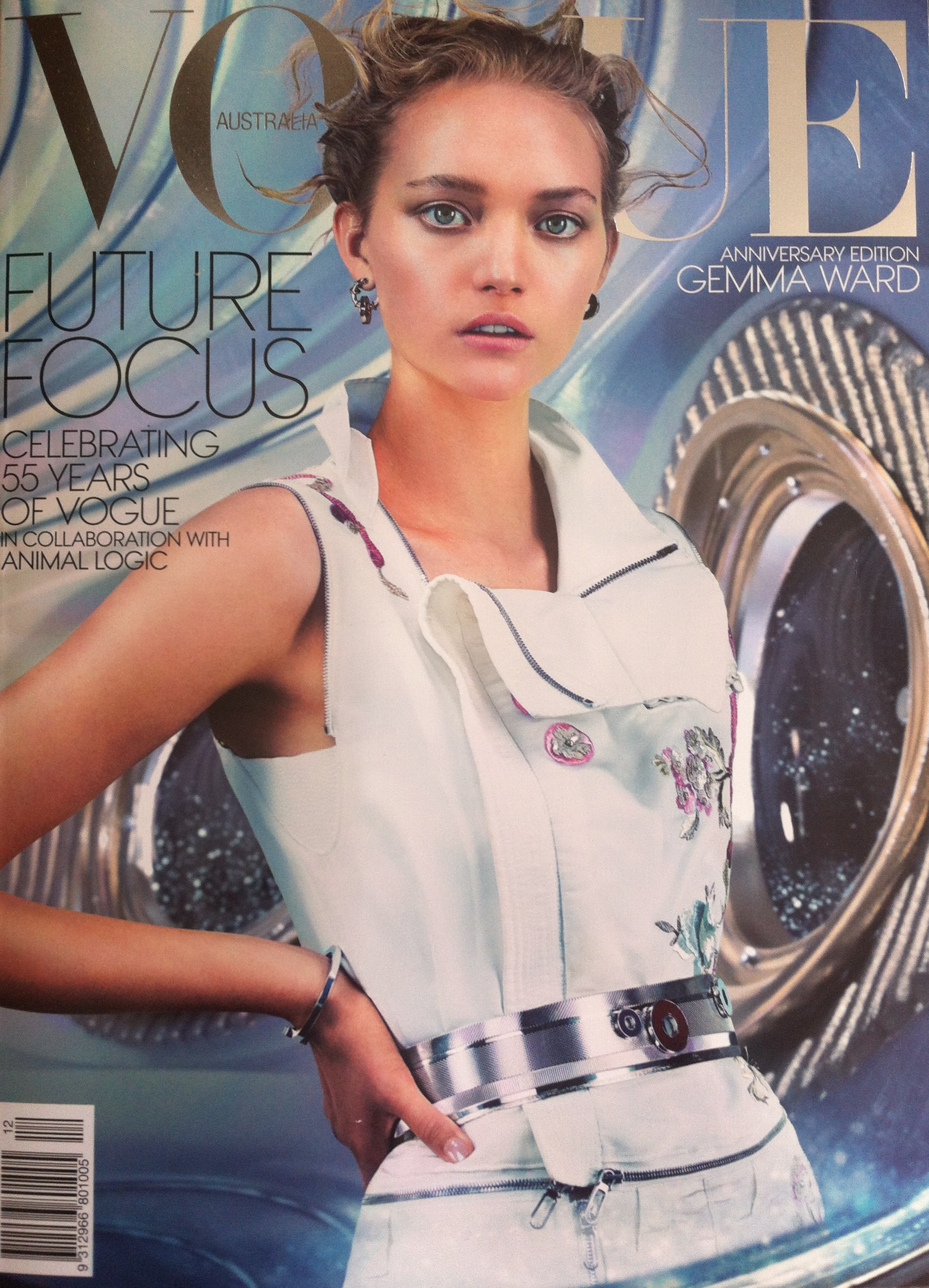
She did look rather stunning I thought to myself, in her chic white business attire, but she deserves the attention. It was also really inspiring seeing her on the cover of the December edition of Vogue* magazine.

However, what I loved the most about her, was that she still just accepted her usual position in the organization and went about her duties without any fuss or change in attitude or demeanor. One day, I just hope I get to be like her and the many others in the company that have achieved her lofty status.

Her business card says it all and our company utilises these rare and key employees to their maximum potential. After all, without these critical staff, we wouldn’t be enjoying the business success that we have now all become accustomed to on a daily occurrence.

What, you didn’t get a chance to read her business card? My apologies let me hand it over and read it to you. Her name is Jane Brown, her job title is “Creative Thinker”.

Yes……”Creative Thinker”.

So what exactly does Jane Brown do, you may ask? Well, Jane, and the other employees just like her, are allowed to…..think. They are provided time in their job routine to contemplate new ideas and solutions for the business. They are encouraged to network with their work colleagues, to talk to other organizations, to share thoughts and to develop other left field, non-work related dissertations. Ideas related to the future needs of the business are strongly encouraged; in fact, they are demanded by our senior management.

So why is Jane on the cover of Vogue* you may ask? Simple, the process of innovation has no boundaries and can be utilised in all activities that we do, in this instance, Jane is seen as a role model to encourage everyone to think just that little bit differently.

I’m sure that your organization has many people just like “Jane”. These people should be recognised and applauded for their creativity. Who knows, it might just lead to the instigation of the “Jane Awards” in your corporate work environment?

*Yes, Edwina McCann (Editor-In-Chief, Vogue Australia), this is fiction, Jane Brown is not a real person, but just image if she was!!

Neck Naked Innovation

32 of 365.

It’s 6 am in the morning and many woman of all ages (and some lucky men) with long locks of hair all over the world are having to make a strategic decision that will impact not only themselves, but also their work colleagues, family and friends.

That key decision is, should my hair be up or down? Now before you scoff at this important question, please understand that this key piece of personal grooming will influence their mood throughout the day, and potentially into the evening!

As I’m follicley challenged, I’m not that familiar with this mood influence, but according to “extensive personal research”, I’m now convinced of the data validity and the direct behavioural correlation. So for those of you looking for a worthwhile topic for an elaborate and complex government funded research project, look no further, this one will keep you mentally, and financially equipped, for years!

According to the “extensive data”, it’s not actually the length of the hair, but the feeling of the hair on the individual’s neck. The presence of neck hair apparently provides a feeling of protection from the surrounding environment, whereas no neck hair (the technical term known as “neck nakedness”) yields a sensation of freedom and potential optimism for the acceptance of new challenges! (yes, it’s all seen in the “analysis data”).

So, should you be planning to introduce a culture of innovation in your corporate office, may I suggest that an internal memorandum, issued by your HR Director, be quickly distributed instructing all employees to wear their hair up to ensure the best chance of success!

Now I can all hear you asking about those with a bald head. Well, the “data” suggests that these highly valued employees are the obvious candidates for the esteemed position of “Innovation Champions” as they have no creative inhibitions!

So next time you look at yourself in the mirror as you prepare yourself for your day of work, remember, the hairbrush is your key to corporate innovation!

Oh, what a feeling!

Jockey Underwear

“Now these do feel a bit different”, I thought to myself. Yes, the colour was rather flamboyant, not particularly subtle, quite tight and rather a snug, all encapsulating, body hugging fit. However, they did feel fantastic, so I purchased three pairs and I looked forward to wearing one pair under my suit trousers to work the following morning. Yes, in case they are what you are thinking, you are correct, they were some spiffy new underpants!

As I’m quite shy and reserved, although some of you who know me better may beg to differ, I am not showing you a photo, nor am I providing any additional information on the style of underpants. So those of you who were wondering if they were Y-front, low-cut hipsters, G-string or whether I’ve gone with the famous “commando”, you will never know!

So what has this got to do with the corporate office you may be asking? The answer is actually very relevant. No, I am not proposing that you promote an underwear parade at your place of employment where employees, both male and female, model the latest in underwear fashions. However, the concept would be rather unique and may lead to a new revolution in team bonding, but somehow I suspect that the HR team will find some harassment rule that may be applicable?

It does however lead to the question, are you a creature of habit? If I was to continue with the theme of underpants, do you wear the same style and coloured underpants each day? Are you set in your ways, and are you reluctant to change and explore new fashions and ideas that may better meet your underwear requirements?

The key is to explore new experiences in your work life that may lead to exciting and stimulating innovations of thought that you may have only dreamed about. If we stay in the same job and don’t challenge ourselves to test new frontiers, you will quickly fall into a rut and corporate boredom will prevail. This applies to the organization as a whole, not just the individual.

So if your business has that stayed underwear feel about it where corporate life is becoming a little bit faded, shabby and a tad loose fitting, may I strongly encourage you to introduce some creativity into your work routine as the resultant feeling, with something a little bit different, may just provide that required motivational step you are looking for in your career and place of employment.

Go on, give it a go!

Not just any tête-à-tête!

2010-violin_MG_0227 - Version 2

Without any hesitation, or consultation, she picked up the red pen and scribbled some notes down in the margin of the musical score. She looked at her colleague seated next to her and nodded with a look of a “question mark” on her face, and was immediately greeted with an emphatic and resounding “yes” from his eyes. This intimate interaction continued throughout the remainder of the orchestral practice.

However, this little tête-à-tête was not just limited to this couple, it occurred with couples sitting next to them, behind them, in fact, all around them. There were trios, foursomes and even larger groups spontaneously erupting all over the stage!

Violinists, were talking to other violinists, trumpeters were waving to their friends in the double-bass section who responded with an immediate “thumbs up”! If you hadn’t had been watching, any one would have thought that there was an undisciplined, commotional, musical rabble in full force. However, what was occurring was the natural and evolving formation of sub-groups in the larger orchestra. The musicians were sharing their thoughts and ideas freely, there was no malice, withholding of information, and it appeared to be done most harmoniously and constructive.

The conductor then tapped his baton and immediately there was silence and all eyes and instruments were focussed on him. The orchestra then commenced playing with all their communal learning and experiences and the outcome was truly awe-inspiring.

I had just witnessed the final rehearsal of the Melbourne Symphony Orchestra (MSO) playing Mahler’s Symphony Number 2. But I’m sure that this famous and world-renowned orchestra would go through the same motions at all of their rehearsals.

So why can’t business learn from this orchestra? Why can’t they quickly form fully functioning sub-teams when required to focus on a work problem as a matter of normal practice? Businesses tend to only do this when in a time of crisis, or when a significant change is occurring?

The key is typically the prevailing culture of the organisation and it originates directly from the top. The conductor (or CEO) may be rather spiffy at waving his baton in a rather flamboyant and glamorous manner, but if the orchestra (or managers) aren’t following in “tune”, then the result will be utter chaos.

The right business culture takes time to develop. Work teams need to feel empowered and confident that their input into the larger business issue is significant and will make a difference. For instance, if the percussionists in the MSO didn’t play in time with the rest of the orchestra, regardless of how impressive the rest of the musicians played, the result would be rather discordant.

Another requirement is a willingness to listen to your colleagues in an open and unhindered manner. The conductor of the MSO listened and accepted feedback and suggestions for improvement from the various musicians, each of them a brilliant instrumentalist in their own right (just like a technical or functional expert in the corporate office). If your CEO doesn’t do this, well, is your CEO the right person for your business?

When a business has the right culture in play, the performance is “music to your ears, your employees, and to your customers”.

Macabre Murderer of Marketing

Murder

The senior manager sat down exhausted in his large corporate black leather desk chair. The worn fabric felt so cool and relaxing as it snugged his body in a welcoming and inviting manner as it had done for the past thirty-five years.

He wiped the sweat from his forehead with his ragged company monogrammed handkerchief and looked at his hands now shaking with fear, thankfully he had achieved his objective before any “damage” had been done.

He carefully took out the black bound book that had lived in solitude and secrecy in his top desk draw and entered another name under the vast array of other recalcitrant employees that he had quietly “murdered” from a career perspective.

Yes, that was a close one he thought. If he hadn’t have acted, that employee might actually have changed the corporate status quo and may have injected some marketing creativity and innovation into the business. We can’t have that! But it was getting harder and harder to stop these employees infiltrating the company. He was also wondering what would happen when he retired at the end of the year. He was now despondent as he couldn’t find other younger employees that had the same unique business insight as him, nor his perceived flair of maintaining the existing corporate culture.

Mmmm, you might be thinking to yourself, as you may have already allocated a name to this senior manager in your business? If so, may I suggest that you publicly ‘call the behaviour” of these archaic and sorry individuals and lobby support amongst your colleagues to raise up a corporate mutiny for the long term betterment of your company! Don’t let this negative and destructive behaviour go unchallenged to avoid anymore creative casualties!

Sounds rather melodramatic doesn’t it? However, without creativity, innovation and marketing, it is the organisation as a whole that is suffocated as it loses the requisite lifeblood to ensure its longer term success and survival. May I suggest you don’t let this happen to yours, and if you see the signs of this occurring, try and quickly nip this potential “murder” in the corporate bud before it takes hold.

Just a thought to make you think that little bit differently.