The Isle of Creativia

New-Building-Ideas-Lilypad-Floating-city-of-the-future

As you fly over the Pacific Ocean at 25,000 feet in the luxurious comfort of your First Class fully reclined leather seat number 1A, the furthest thing from your mind would be the existence of the small county of Creativia located far below. In the time taken for you to scoff your second mouthful of that exquisite, and most decadent, 1951 Penfolds Grange Hermitage, the air turbulence from your plane would have only just tenderly kissed the peaktop of Creativia’s highest mountain. But then again, how could you know that in 20 years from now, Darwin’s Theory of Evolution would prevail, and that you, and all your fellow business travellers that you typify, will then be quite literally extinct. Yes, an unplanned catastrophic business event will exterminate all those corporate organisations that are deemed not up to the required survival standard of innovation and creativity. The result will be the survival of the business fittest, and these individuals will only be the fortunate inhabitants of Creativia.

The origins of Creativia goes back to the early 1960s, when an unknown mutant variant of the human DNA, just happened to form simultaneously by a remarkable freak of nature in many leading industrial countries around the world. Those born with this undetectable and unique gene condition grew up with a distinctively different view of life, business and mankind’s role and place in this earthly environment. For these select individuals, “the glass was always full”, they saw things with a continually positive and optimistic perspective as everything they did was based on an underlying theme of innovation.

These individuals from a very early age immediately understood that they were different from the common populous, and as they grew older and more business savvy, they nonchalantly started to meet surreptitiously in hidden boutique coffee shops around the world. Here they repeatedly tried to quench their endless thirst for creative stimulation with high doses of caffeine in an attempt to satisfy their enduring innovation habits and urges. However, their individual ESP insights warned them of a greater impending creative doom that would soon engulf the business world leading to the complete obliteration of the corporate world as they, and as we, knew it. Like a homing pigeon on a lifelong mission of creative destiny, each of them were mysteriously led by some unknown personal and instinctive force to a small deserted and entirely hidden island, rich in natural resources and copious cash reserves. As the years progressed, these inhabitants waxed strong into a diverse and mighty culture of creative thought. Then, when the time was just right, they as pioneering Creative Ambassadors of Thought, journeyed from Creativia to seek out new and impoverished businesses to rectify the time consuming wrongs of many out-dated CEOs and corporate Executives.

—— 

Twenty years later, it did indeed happen. Looking back, it was a slow, potent, and highly lethal cultural virus that with time took hold and eventually killed the corporate world due to a lack of futuristic and insightful thinking. CEOs from all around the world together fell on their business swords and bleated their proclaimed selfishness in focussing on short-term financial goals and not the longer wellbeing of their corporate organisations. But alas, it was all too late. 

Long live Creativia! 

Framing Your Office Correctly

Paris & London 2011 922

When walking around an art gallery you will see a variety of different people mulling in front of an oil painting making all kinds of comments. Each of them will see different aspects of the painting and will make their own interpretation as to the artistic and messaging intentions of the painter.

Some observers will focus on colour, the scene portrayed, or potentially the interaction of the people encapsulated in the work of art, and what they may be thinking or experiencing.

The viewer’s analysis of the painting will be varied, with each opinion based on their own unique life experiences that have coloured their thoughts and imagery on life.

This got me thinking. What if you took a random, non-staged photograph of the workers in your office that captured a specific moment in their working day? This image could be black and white, or coloured, placed in an impressive frame and then hung on a wall, just like in an art gallery.

So as to avoid any potential bias and insider people knowledge, employees from a non-related business would then be asked to comment as to photographer’s intentions, just like the painter of the oil canvas.

Those observing would come up with a range of assumptions and theories, some of which could be related to the work culture, stress, mood, or happiness of those people contained within the “frame”.

The collective feedback would provide a unique and objective insight into the machinations of your office. However, in this instance, the painter, or photographer, is your CEO, as this role is the creative source of the scene. Depending on the critical comments received, is your CEO proud to sign their name in the bottom right corner of the painting to stamp their ownership of the work? If not, maybe they would prefer to learn from the feedback and use it to develop and fine-tune their management artistry skills and have another go?

Yes, a picture does indeed say a thousand words. The key is to listen to them.

Keep your Eyes Focussed

Closeup of a woman wearing a monocle in one eye. Date taken- 1930

The date was the 4th September 2025 and the last Will and Testament of my dear grandfather had just been read. His friends knew him as Barry “Pirate” Cramer, to me, he was simply Papa, and he and I, were the best of friends.

Barry “Pirate” Cramer was an entrepreneur in the true sense of the word and left his family a financial fortune that many people can only dream of attaining. My father, Leon Cramer, was his only son and today became the wealthiest person on the planet.

In my grandfather’s Will, I was left no money, real estate, works of art, or other trinkets that those in the know would classify as valuable. However, the “Pirate” had left me two items that to me characterised the “real” him. These were his gold-rimmed monocle, and his personal diary.

It took about three months before I could open his diary owing to the grief I had been feeling, but once I did, I could never have imagined the innovative insights that this little worn leather bound book contained.

Barry “Pirate” Cramer was a business visionary and could always see how to commercialise new and novel ideas that many of his peers, and competitors, could never understand, or appreciate.

He earned his “Pirate” nickname for two reasons. The most obvious one being that he always wore a monocle in his right eye. The other one was that he was famous for plundering companies that were on the brink of bankruptcy that he miraculously, and quickly, transformed into highly profitable business that were the envy of the original owners.

As I was rummaging one night through his diary, I was intrigued by the words that he had scribbled when he was only 21 years old, an age which signalled the start of his financial prowess. The reference was to why pirates wore a patch over one eye. Apparently they did this so their eyes were ready for combat in the poorly lit interior of a ship [1]. As such, they always had one eye accustomed to light, the other prepped for darkness.

Papa took this concept further and replaced the pirate eye patch with the monocle, which eventually became his personal signature facial accessory. Yes, he did need to wear glasses, but he used the monocle in a cunning and rather visionary way. By wearing a monocle, his eyes were always focussed on the short and longer distances, ready for any visual obstacle that he may encounter. However, he took this in not just the metaphorical sense. Whenever he viewed a problem, he was always able to literally “see” two sides to the solution, the short-term and most obvious one that everyone could appreciate, but also the future opportunity that many of his competition could not comprehend.

What a brilliant visionary concept, one that many corporate businesses, particularly their CEOs, could learn from and utilise in in the development of their strategic plans. The key is to be a “pirate” and to have one eye looking at the now, the other eye very much focussed on the future.

So next time you go to the optometrist for your pair of fashionable glasses, why not get a monocle instead and let the potential pirate in you take control! You will also look rather spiffy, and will most definitely be noticed.

[1] https://en.wikipedia.org/wiki/Eyepatch

You have Changed!

doriangray1

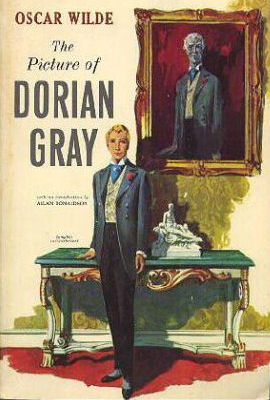
Yes, my friends were right, it was just like “Dorian Gray”, I had changed. To confirm their thoughts, I decided to review images of myself over the past few months, just to see if there were any visual signs.

I perused Facebook and a multitude of iPhone images and aligned them in chronological date order hoping to find a clue. I quizzed my friends as to what differences they were observing in me, in particular, when they thought the change may have occurred? I needed to discover my behavioural tipping point and it’s potential origin.

I spend the whole night pondering my notes, looking at photographs and at 11:34 PM that evening, I noticed it.

The initial change was subtle, but the time comparison between then and now was momentous. Yes, I had changed, and in a big way.

I was now a much more confident, outgoing individual, with a continual smile on my face. My business attire of the traditional and conservative dark blue suit with white shirt, and boring striped tie, had been replaced with a stylish array of coloured shirts with cuff-linked sleeves, bow-ties, pocket hankies, and an impressive daily shaved smooth slick head.

The point zero appeared to coincide when I began working for a new company, one that had an amazingly vibrant work ethic and culture. As a pondered and thought about this further, the term “cultural chemicalization” came to mind. For those of who reading this blog post let me explain the concept further.

If I were to look up the term “cultural chemicalization” in a dictionary, it would say: “the subconscious absorption (or chemicalization) of an organization’s culture by an employee where a change in behavioural state occurs”.

Yes, I had subconsciously, and quite happily I must admit, absorbed the positive culture of my new place of work, and the more I thought about it, so had all my fellow colleagues. The result was an amazing environment where creativity and innovation excelled to the fullest.

The process of “cultural chemicalization” begins with the CEO and the Executive Team. It is their behaviour that sets the benchmark for all employees and those they meet externally. As that saying goes, “what you see is what you get”. As an employee, if you observe a positive, enthusiastic management team, you and your organization will respond accordingly. If you see “nothing”, then that’s exactly what you will receive and experience.

Yes, my friends were right, I had changed, and I was loving it!

Doff your Hat

clipart arm tophat

There are reports of a substantial “theory” currently circulating amongst the higher echelons of academia and global business leaders that is causing the hair of many University Deans and CEOs to stand on end. This “theory”, soon to be published in “The Victorian Business Review”, provides many clues as to its origins, and also some potential thoughts that might just be useful in your business.

The basis of the “theory” goes back to the ancient days of the coronation ritual associated with Monarchs, Popes and other significant leaders and thinkers. The historical symbol fundamental to this “theory” is portrayed by the wearing of a Crown (if you are a Royal), the Papal Tiara (if you are a Pope), a Mitre (if you are the Archbishop of England), or a Tudor Bonnet (should you be a higher academic).

But the “theory” doesn’t focus on the head ornament. No, the “eureka” moment of discovery for those working on this “theory” as they tirelessly searched through endless archives and other old paraphernalia, was what was found under their hats! Yes, they discovered nothing, in other words, a very bald-head, one in which hairs no longer resided.

Their “research” found an inverse direct causal link between the number of hairs situated on one’s head and their IQ. Their “findings” indicated that those with a very smooth and shinny head were most gifted in the intellectual department.

These history records suggest that baldness was quite rare in the ancient years and that many people aspiring to thinking greatness shaved their heads in order to pretend that they were amongst the prized ranks of hairless head grandeur. (Note: It is interesting to note that many men today are still following this fashion trend!)

Those with a truly bald-head are known to be very caring and considerate people. It is for this reason that these great leaders in history decided to adorn a hat so as to disguise their lack of hair so others less fortunate (who had a full head of hair) felt less insignificant in their intellectual prowess.

If you be a CEO, this “theory” provides a timely opportunity for your business should you be embarking on a program of innovational change. The answer is indeed most obvious. All you need to do is to employ more bald headed people. Or, should you not be able to afford the high wages associated with these privileged intellectual thinkers owing to their high corporate demand, then just hire a few hairdressers and encourage some head shaving of employees that look like they may have the bald-headed potential.

My Esteemed Fellow Mischief Makers

The 39 Steps - Metro - Man 1 & 2

I paused at the top of the escalator and took a deep breath as I read the poorly illuminated conference sign that would direct me downwards to the basement of this 2 star hotel in the outer suburbs of Melbourne.

I dusted “on” my black suit, with matching black scruffy shirt; at least I didn’t have to worry about my black shoes as they were already quite dirty and had a few prominent scratches that looked most imposing and disrespectful.

There were no issues with my hair being uncombed, mainly because I was fortunate not to have any, so I decided to mess up my long eyebrows, just for added visual effect.

Perfect I thought, I was now ready to head downstairs to the Awards Ceremony, at which I was tipped to receive the most prestigious award, that being for “Disservice to Innovation in the Corporate Office”. I had been working on this achievement for the past twenty years, had successfully infiltrated many global architectural firms in Europe, North America and Australasia, and more importantly, no one had yet realized what I had been doing!

What still surprises me the most was that senior business leaders and managers all applauded my efforts, all happily accepted my designs without fully understanding the consequences, and; they eagerly paid me a massive fortune in the process, to which I am indeed most personally grateful. To top it all off, they unashamedly made my office concepts a blueprint standard of excellence which was adopted, without any intellectual thought, by all organisations that considered themselves leaders in creativity! I still laugh when I think about that last comment!

I glanced at the chipped hands on my tired looking watch and saw that it was now time to make my tardy entrance to the ceremony. As I slowly descended down the escalator, I reached into my suit pocket and had another brief look at my hastily written acceptance speech, just in case it was required.

Written in my messy black inked scribble, I reread the words….”Thank you for this great dishonor! Yes, it’s still hard to believe that my once crazy thought and so fantastically disruptive idea, which I initially developed so many years ago as a joke, is still being used in the corporate office! And to make it even more remarkable, this superbly dysfunctional concept is still cited by experts as being one of the strategic keys to innovation! I smiled, as I imagined the thunderous applause that I would receive from my fellow mischief makers on doing a job so well, for so long, and I was still fooling those that should know better!

I was so looking forward to making the celebratory champagne drinking toast, which would be; “My Esteemed Fellow Mischief Makers, I give you the “Open Planned Office!”

The Faceless Collective

Untitled1

There are some companies that effortlessly symbolise the definition of true success. Their business names are iconic and are immediately recognisable by the young, the old, and those selectively aged in between.

There are no descriptive emotional tag-lines, no longwinded corporately clever arrangement of words, they are just “are”, and don’t need “to be”.

And here I was, sitting in the Board Room of one of these globally clever giants of industry, all by myself! It was an eerie and exciting feeling as I sucked in the room’s impressive atmosphere. I carefully crossed my legs under the highly polished large wooden boardroom table and cautiously, and gingerly, leaned back and pressed my back into the well-worn brown leather club chair.

The north side of the room had large floor-to-ceiling glass windows that overlooked the Yarra River from high up on the 39th floor. This view was balanced by an array of large and formidable oil painting portraits of their esteemed leaders that had steered the company successfully over the past 83 years.

As I slowly studied the names under each painting, my eyes suddenly stopped when I read the polished brass name-tag of what appeared to be a most unusual portrait that was strategically, and I assumed deliberately, centred right in the middle of all the other framed canvasses. This painting was definitely larger in size, more brightly illuminated, and presumably highly prized, and worthy of more significant corporate value. The inscription in large black font read “Our Perpetual Innovator”. But the most striking aspect of this painting was the face, or should I say, its absence! Yes, this painting was of a “faceless”, yet distinguished individual. I was intrigued and decided to leave my comfortable leather chair and have a closer inspection. As I got closer, I noticed some additional words at the bottom; “Innovation is not derived from any individual, but from the collective”. I pondered these words and slowly understood their symbolic meaning, as this I suspected was the key fundamental aspect as to why this business was so successful.

This business recognised that many ideas, derived, and continually shared between the employees of this organisation, were the driving force behind their creativity. They had seen that this vast, and rich, source of innovation was not reliant upon a single individual, but the combined force of the collective.

Wow, if only all companies could recognise this fact!

So next time you are sitting in the Board Room of your company and happen to view the historical images of your past illustrious leaders, may I suggest you consider the power of the “Faceless Collective” and not just focus on any one individual?

The “White-Hole” of Innovation

28538975-young-woman-in-white-with-hologram-round-head

I have been writing copious business articles for the New York Times for the past 39 years. Let me tell you, I have seen it all, but I had never scored that once in a lifetime literary scoop that all serious and well-respected journalists dream about, until now! I was so excited that I could hardly sit still. I was seated, or should I say fidgeted, in the massive private reception area of the most amazing, and phenomenally advanced innovative global electronics company that the modern world has ever known, and I was about to meet their CEO (Chloe Jibs).

I had known Chloe for at least 20 years and considered her a true friend. On many occasions I had tried to gleam from her the source of her unique business prowess and unlimited creativity, but these numerous requests had been turned down with her usual, quiet, yet charming, nonchalant smile, until now. Her unexpected change in mind was most likely due to this being her last day as CEO. Tomorrow, Chloe would begin her long awaited, and very well planned, relaxed non-corporate life living on her private island located in the Great Barrier Reef (half her luck I thought).

At the predetermined meeting time, Chloe emerged from her office dressed in her traditional non-corporate casual attire (blue jeans, shirt, snug fitting boots and those ever present dark Ray-Ban sunglasses that complemented her golden long hair) and beckoned me into her office. With the door shut impeccably tight, the long awaited meeting began. In that room, I was provided with secrets that only an innovative visionary could communicate. My ears burned as I listened. My eyes were dazzled with the brilliance of the sights that I was most honoured and humbled to see.

That night as I sat in my study, I tried to come to terms with what I had seen when I was with Chloe earlier that afternoon. My brain was struggling to comprehend the enormity of it all; my body was still tingling with a sensation of unbelievable elation. In contrast, my heart was despondent, as I knew that I was on the precipice of a potential award in journalism that would be the pinnacle of my newspaper career, but I would never be able to publish my story owing to my promise to Chloe never to share this knowledge.

I needed more understanding and typed the term “black hole” into Google and read the following:

A black hole is a mathematically defined region of spacetime exhibiting such a strong gravitational pull that no particle or electromagnetic radiation can escape from it. The theory of general relativity predicts that a sufficiently compact mass can deform spacetime to form a black hole”. (http://en.wikipedia.org/wiki/Black_hole)

In other words, a “black hole” sucks everything into it, never to escape. But, apparently, according to a “reliable and informed academic”, some items do indeed escape! The exit point is a mathematical phenomenon called a “white hole” where all the contents of the “black hole” are expelled with massive energy and light.

Chloe’s “white hole” was an outlet for all the innovative and creative ideas created within other organisations that theoretically ended up going no where, or were forgotten with time. Somehow, Chloe had managed to direct the vast array of “idea black hole” waste sinks of her competition and to accumulate them into the “white hole” located with her office. No wonder she always wore sunglasses owing to the continual “white hole” illumination!

The core aspect in Chloe’s business success was in how she could cobble the discarded ideas gleamed from her competition into highly sought after, and very profitable, commercial electronic products that were now common items (eg phones, computers, tablets, watches) used by people of all ages around the world.

Well, a promise is a promise. I could never let the public know about the “white hole” phenomenon.

But, it’s a good thing that those of you reading this blog now know the “truth” about their existence. But more importantly, don’t let your innovative ideas go to waste, use them, and develop them further so as to avoid that undesirable “black hole” where they may just be useful to some other organisation in the future!

And yes….this is all fiction!
Image: 123RF

The Transfer of Wisdom

66dd2-2006_devil_wears_prada_wallpaper_00

I looked with a sense of pride at my fellow colleagues as I slowly, and methodically, sat in the large well-worn leather chair in the HR Director’s office awaiting her arrival.

This was my first day of employment following the completion of my university degree three months earlier. After what seemed like a torturous series of endless interviews and countless tests, I had finally made it. I was now about to start my career in one of the most innovative and famous global companies. It was hard to disguise the smile that was slowly permeating within me, but the feeling was electic, and one that I’m sure I will never forget for the rest of my working life.

Susan finally arrived and walked into her office with a confident stride that just oozed with a persona of success. I liked her immediately.

After a few minutes of pleasant small talk, Susan took a piece of neatly folded paper out from her folder and handed it to me. At the top, it said Myers-Briggs personality profile “ENFP”. Susan then smiled, and then pressed a button on her desk. Thirty seconds later, an older, and immaculately dressed woman appeared called Megan who I surmised was nearing retirement, politely introduced herself to me. Following a brief and most enjoyable discussion, I learnt that she was also an “ENFP”, and was the company’s Global Director of Innovation.

I noticed Megan give a surreptitious nod of what seemed like “approval” to Susan. Following this gesture, Susan then excused herself from the room and I was left alone with Megan.

For the next 30 minutes, Megan explained to me the secret of this company’s success. The key, was how they passed on their experience to the new employees to ensure that the young graduates quickly obtained years of wisdom from those who were like minded. Apparently, Megan and I had a 99.99% “ENFP” personality match!

Megan, then with my permission, then commenced the secretive “wisdom transfer procedure” that “transmitted” her years of professional, social and people logic into my inexperienced and quite naive persona. At the end of the process, although I was only 22, I had the business experience of a 59 year old. I would have the unique skill set combination of youth and seniority not typically found in a person who had just commenced their first day of employment. I soon learnt, that all new starters in this company went through this procedure.

Wouldn’t it be great if all organizations could exchange knowledge between employees in this way! Although, the “wisdom transfer procedure” indicated above does not yet exist, it does so in a slightly different format that is not science fiction. The process is available to all those in the workforce right now, is relatively simple, needs no additional financial expenditure, except for one strategic prerequisite, that being “time”.

CEO’s reading this blog post take note. Why not give your young and older employees more time and opportunities to learn off each other by establishing work groups that encourage and facilitate greater communication? In these days of corporate diversity, consider age as one of your untapped resources for innovation and creativity!

PS: Yes, this photo is from the film “The Devil Wears Prada”. 

The Office Revolution

Boldly Masculine Design

The alarm bell screeched with maximum volume! The Manager’s heartbeat immediately started to pound loudly as this was the first time that she had heard the sound, after all, it had never actually gone off before….ever! Other Managers around her also started to run around in a panic as they too had no idea what to do. The worried Managers huddled together as they quickly searched through their book of corporate policies and procedures. Finally, on page 272, there they found the answer. It was a “non-conformity” alarm! But how was it activated, and how do they stop this continual noise permeating through their normally quiet office floor?

Unbeknownst to the Managers, one of their employees had decided to mount a personal revolt!

Let’s go back to 8:30 AM that morning to understand the origin of this mystery!

Employee number 468136, aka Bernard Smith, arrived at his allocated work station. His desk was the same as every other desk on his office floor. It was white, immaculately tidy, a computer placed centrally, 4 piles of primary coloured folders on the left side, and had a standard black chair with his name branded on the back. Bernard was dressed in his black suit, white shirt and company embellished logo tie, just like all his fellow male workers.

At precisely 8:31 AM, each employee started to type on their computer and the day commenced just like every other day. However, at 8:32 AM, Bernard stopped work. He looked up and down the line of desks, each positioned in a perfectly straight line so as to not break the red laser beam, and thought…..”enough”, as a bead of sweat slowly rolled down his forehead.

To the amazement of those sitting around him, he took off his tie and undid the top button of his business shirt. Silence and an uneasy feeling quickly started to prevail. Bernard had taken the first step to his creative freedom and it felt good! As his confidence increased, he messed up his 4 folder piles. Then he did something completely radical, he moved his desk over the laser line and turned it by a full 180 degrees. He was now facing into the office, rather than a wall!

Little did Bernard know that once his newly re-positioned desk broke the red laser beam, an alarm would be triggered……

The Managers now knew the cause of the alarm and initiated an immediate and successful remedy. They decided to quickly reconfigure all work desks with Bernard’s new alignment so each and every desk now faced inwards. Once again quietness was instilled in the office as all desks now looked precisely the same as all the others. As the week progressed, the bewildered employees slowly got used to their new desk view until normality once again was achieved.

But not for Bernard, he still had no tie around his neck and there was no way he was going back to that form of corporate fashion control. He liked his messy folder pile and the air movement around his uncollared neck. It was time for revolution……!!