The Office Snoutster

The Office Snoutster is an annoying individual that can unfortunately be seen in many organizations. They are commonly found in senior government or corporate roles following many years of successful snoutsting.

So, how do you recognize a Snoutster?
These individuals, be they men or women, are quite cunning and have an ability to hide their snoutster skills from most of their friends and work colleagues. However, there are some common behavioural clues that usually gives them away.

Manipulative: They are extremely manipulative, lazy and prefer to rely on others to do their work for them rather than seeing the need to get their own hands dirty.
Hunter Leeches: They can quickly target a strategic person that will assist them in progressing their own personal career objectives. Once identified, they hang around them like a leech, put their hungry teeth into them, and then suck like hell for their own wellbeing until their usefulness is no longer required. They then seek out a new sucking target and repeat the process.
Clothing: They will dress to deliberately seek praise and approval from any person that may provide potential leech nourishment.

Why the term Snoutster?
Consider the traits of an overweight pig that joyfully uses their nose to smell out an opportunity, then sticks it in with gusto leaving a monumental mess for others to clean up.

How does one become a Snoutster?
Most Snoutsters typically have had a favoured upbringing where they are repeatedly spoilt and receive ongoing praise from their parents, relatives and friends without them having to make an effort, thereby feeding their ‘leecherous’ cravings for personal fulfilment and ongoing sustenance. Once accustomed to a decadent no-work lifestyle, they quickly realize that the shrewd use of their snout is the only way for them to survive in the office, and in their other life endeavours.

Can the Snoutster be removed from your office?
Yes, but only when their manager finally recognizes that the Office Snoutster adds no recognizable financial value, and that they are also a massive toxic emotional drain on their direct reports and other employees. The required solution is a quick termination and speedy exit from the office.

So should you know of there being a Snoutster in your office, quickly root them out and blunt their oinking snout cravings before they create immeasurable damage to your organisation and your colleagues.

Trends – Fact or Fiction?

Let’s start by considering two well-known quotations; “Knowledge is Power” (Sir Francis Bacon), and “Thinking maketh it so” (William Shakespeare).

Many of us in our private and business lives like to keep up to date with the latest trends, be they social, economic or just for fun. We, as curious individuals, like to know the key drivers that are influencing the now, and what may happen in the future.

We typically use this knowledge to make strategic decisions, to feel part of the crowd, or perhaps to simply equip ourselves with riveting dinner table conversation content to impress and stimulate our guests and friends. So yes, our awareness of trends does indeed potentially give us command over many things and people.

But what if this knowledge, derived from our understanding and belief of a trend is based on fiction? To put it bluntly, the author fabricated the trend, and then communicated it widely through various specifically selected channels, such as social media where their unassuming followers accepted it as fact without any reason for concern or doubt? Would their belief make this trend real, particularly if many believed it so?

Just look at how various individuals or organizations (private or political) disseminate information to a target audience for their own personal gains. Many a politician, in the past and today, have done so with great success. Unfortunately, it was only with hindsight that the trend was identified as fictional folly.

Many information seekers now look to artificial intelligent (A.I.) search engines (ChatGPT, Copilot, Grok, etc) for their insights and recommendations to various trends instead of using human intellect and analysis. The A.I. output being readily accepted as fact with minimal interrogation or suspicion.  

So how do we filter the fact from the fiction before we make them so?

The answer being a combination of independent quantitative and qualitative analysis based on the collective experience of many people who collaborate, discuss, interrogate and challenge what they observe, read and understand. Yes, it takes time, but it will hopefully uncover the fiction from the fact.

However, some people happily accept the fiction and will gleefully follow the false trend like a ‘lemming that is about to fall off a cliff’. Unfortunately, it is these gullible individuals that are commonly the target of the unscrupulous.

There are many trends emerging and currently in operation today. May I suggest that we relook at the two quotations mentioned at the beginning? Maybe they should read as ‘Knowledge could be Power and We decide whether to make it so”?

Is it time for an ‘Age Coup?’

Age. It’s a complex thing, the importance of which seems to change frequently depending on where you are in your life.

It is said that age is just a number; so why in the Western world do we commonly characterise everyone according to their year of birth? Sure, there are many sound, well researched legal and practical aspects that both should and need to be adhered to, but why is age such an important factor in the workforce?

When you are at Primary School, those who you knew in High School seemed very worldly and sophisticated. You saw your parents as old and out of touch with the worldly and social needs of your own generation, not to mention your grandparents, who fell into the absolutely ancient classification.

But consider how your age perspectives changed when you yourself entered the workforce for the first time. All of a sudden you saw your parents and others with an increased number of years under their belts as wise and possessing a valued experience, and some you even gave esteemed oracle status.

In the business world, people in their early twenties are typically deemed to be naïve and lack the requisite knowledge, whereas people in their sixties or seventies are seen as being ready for retirement and quickly put out to the vast unemployment pasture.

I believe it’s high time for a long overdue ’age coup‘ where an individual’s mindset and willingness to learn and/or mentor those around them should be the main criteria, instead of how old they are on their employment contract.

To accomplish this, we need to redefine the term ‘age’ and replace it with a combination of a willingness to learn and to share experiences, regardless of whether obtained in the workplace, or via life’s complex journey.

However, to do this there needs to be a mindset change within the corporate world, particularly with in HR where age is commonly seen as just a start or finish date of employment, not a potential indication of longer-term value.

Yes, it’s time for an ‘age coup’ as there are many willing participants keen, able and wanting to join the revolution.

Those Pesky Weeds of Innovation

ht-dwp-5-tips-control-weeds-lead

As CEO of a large, conservative company that has been in operation for over a century with little or no business growth, how do you know if you have those pesky weeds of innovation in your business? The following are some clues to help you quickly identify them before they can take root and grow.

Ideas: Should you hear an employee uttering the blasphemous words “I have an idea”, then they need to be dismissed immediately before that frightening innovation virus can contaminate your workforce.

Fashion: Luckily these recalcitrant employees are easily identifiable by their annoying clothes, colourful shirts, bow-ties and the occasional hat. Just ask HR to quietly usher them to the exit with minimal fuss.

Laughter: Fun in the office should definitely not be tolerated and should result in the employee being speedily placed on disciplinary action with the threat of instantaneous termination for a repeat offence.

Unauthorised Fonts: Yes, there are strict corporate guidelines that must be followed. Any employee daring to use any other font rather than the long standing and approved black Times New Roman needs to be quickly educated on the 100 year old corporate values that have served the company well, and are based on tradition.

Customers: Any customer having the nerve to complain about our products not meeting their requirements do not deserve the privilege of being supplied by us, after all, we know what’s best for their business. How dare they tell us otherwise!

Career: Any employee seeking clarification on their future within our business obviously does not appreciate the honour of working for us (or should I say for me).

My fellow CEOs, hopefully the above insights have provided you with sufficient information to nippily identify any annoying employees that might be creative, or have mad ambitions of creating a culture of innovation in your company. The key is to act swiftly before their offensive ideas can take hold and spread. God forbid!

Quod Erat Demonstrandum


Absolutely


Looking for a quick and easy method to identify if your corporate office is in the gradual process of innovative decline? If so, the answer is right before your ears, just simply listen to the vocabulary being used as it is a tell-tale sign as to the creative state of your staff.

A big clue is the frequent use of some common words, the main culprit of today being the word “absolutely”. Yes, you will hear “absolutely” being used with an increasingly high verbal frequency by a huge cross-section of employees, all unknowingly mimicking each other with involuntary abandonment in an attempt to sound “absolutely impressive”. But don’t be fooled, as with each nonchalant utterance, the employee is slowly eroding their ability to think creatively as they continue to narrow their thoughtful intellect.

Apparently, there are 171,476 words currently being used in the English language, so says the 2nd edition of the Oxford English Dictionary, with 47,156 obsolete words. So, those in the corporate office have a plethora of alternative words they could wittily choose from besides that most tedious and infamous word known as ‘absolutely’. Yes, it’s time to strategically add ‘absolutely’ to the mind dumbing obsolete word list for the sake of innovation!

When next you hear someone in the office use this soon to be defunct word, offer them the use of your Thesaurus, or maybe suggest another more apt word that impresses them with your mastery of the English language. Yes, it’s time my verbally educated friends for a word revolution!

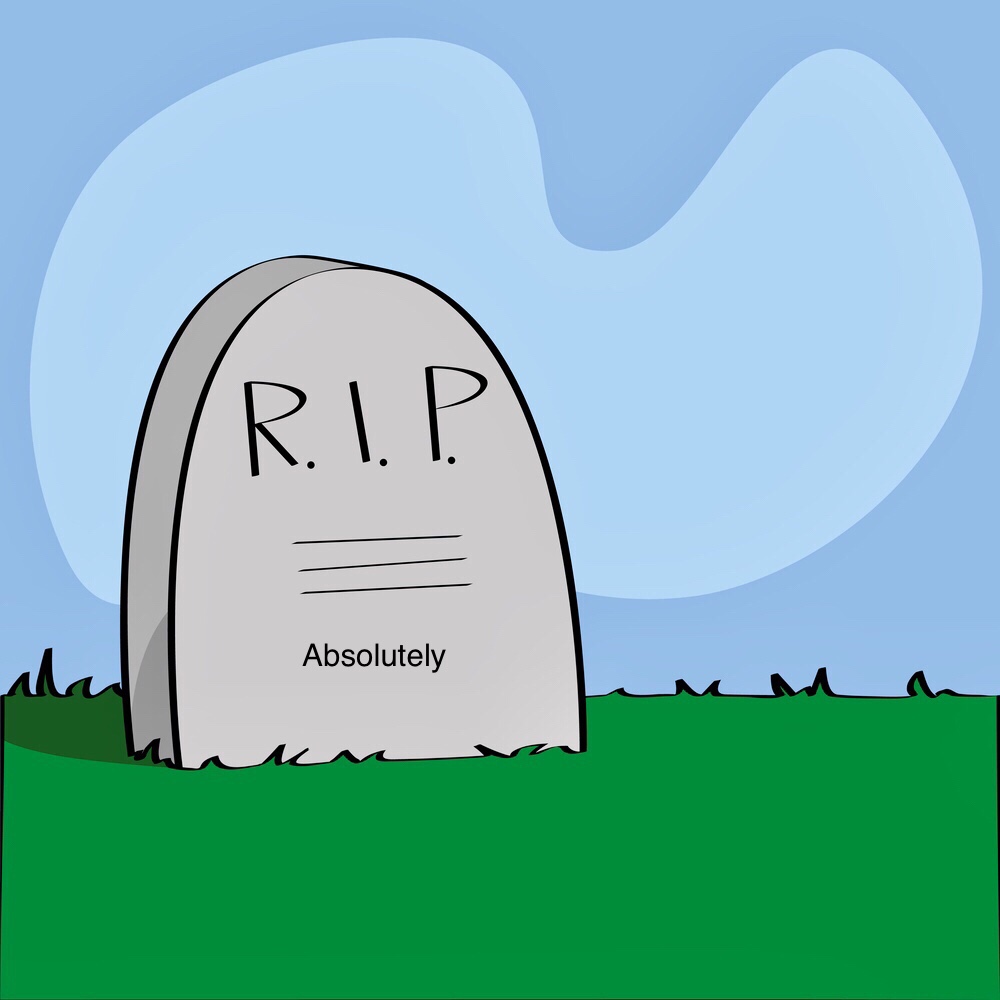
And may ‘absolutely’, soon RIP, never to be heard again.

The Brave New Office

joh-fredersen-metropolis-1926-fritz-lang-ufa-deutschland-art-deco-elements-of-design-zac-sawyer-2014

In a rather obscure, and regrettably, often ignored, paragraph in the classic 1935 novel supposedly written by Aldous Huxley titled “Brave New Office”, there is a clue as to the true source of sustained business innovation. Unfortunately, many corporate leaders have deliberately not heeded this now wise futuristic premonition and their leadership has suffered the perilous consequences.

Huxley outlines a corporate office in which humanistic creativity is directly linked to electronic devices for their inspiration and ongoing mental stimulation.

The paragraph states, “It was time for me to develop a corporate business plan so I carefully followed the detailed directions stipulated by my CEO (Central Emotion Organiser) and sat in the padded ideation chair located in the soundproof chamber, fastened the thought stabilisation seat belt around my waist and gently placed the mind activation headphones on my ears. I was now in complete isolation from the surrounding office and could only hear the thoughtful messages being directed to me by those ultimately more sagacious than myself.

Using the electronic thought pad placed within easy reach, I dutifully typed the words of communicated instructions that I obeyed without any need to question their authority or reasoning. Once done, I then touched the send button and the masterly corporate business plan was immediately replicated and distributed throughout the organisation for implementation by my fellow workers.

The whole process took less than 60 seconds to complete. Who could have imagined that many years ago, those in the corporate world that we now call “creative savages”, used nothing but the archaic ideation tools of their own mind, complemented with the incomprehensible use of a hand driven ink device that engraved odd-shaped letters on a fibrous paper medium. In the words of my CEO, totally unbelievable!”

The year is 2017 and I now look at all the electronic thought enhancement tools the corporate office now uses to drive innovation. We are all totally reliant upon our computer, iPhone, E-mail, TV, and a plethora of other associated and interlinked communication devices.

Why not try something brave, and definitely not new, in your corporate office?

Yes, it’s most likely hidden in the back of your stationery cupboard covered in a deep layer of cobwebs. Once you find it, it’s called a pen and a writing pad. To use it, just let your thoughts go free, unhindered by any electronic support device and scribe in free hand any ideas presented to you. With time, I promise that you will get used to it, you might even enjoy the positive emotive sensory feeling associated with writing!

Go on, free the creative savage within you, and redefine your Brave New Office.

The Masterly Tram Innovation Plan

tram

In 1967 a document written by the Melbourne and Metropolitan Tramways Board (MMTB) was officially stamped “Strictly Confidential” and was granted Restricted Access under the Australian Secrets Act for a period of 50 years. A few weeks ago, this document titled “A Plan to Enhance Tram Commuter Innovation via Strategic Design Disruption” was obtained under the Commonwealth Freedom of Information Laws and was promptly delivered to an eagerly awaiting Melbourne newspaper journalist.

After a few hours of detailed reading, the journalist dropped the heavy red leather bound 100 page document onto her office floor with a loud thud in a state of total astonishment and disbelief. She had just read a master plan cleverly constructed by the MMTB that explained in great detail how the Melbourne tram network was designed, developed and implemented as part of a secret psychological behavioural study commissioned by a leading Melbourne University Professor.  According to this Professor, the supple, malleable mind of the unsuspecting naive Melbourne tram user could be surreptitiously modified to think creatively via the use of some simple transport network modifications. Under the cloak of innovation, the following modes of tram operation were devised.

  1.  Punctuality
    An official MMTB tram timetable was published which made the commuter think that a tram might be arriving/departing according to the schedule. But no, this was never the intention, as all tram drivers were provided with a different, totally random timetable that had no correlation with that used by the commuter.
    The Benefit: This forced the commuter to develop innovative justifications to explain why they were always late. There was also an additional bonus of suspense as the commuter never really knew when the tram was going to arrive or depart.
  1. Tram Stop
    Tram Drivers were instructed never to stop in the middle of a designated tram stop, but always a few feet before, or after it. Some were even told not to actually stop, but to reduce the tram speed to an observable calculated velocity where the commuter thought it was just slow enough not to cause them significant personal harm as they scurried for the open door moving past them.
    The Benefit: In an attempt to reduce the growing problem of commuter obesity, this provided the traveller with some daily physical exercise, and always made sure that their reflexes were primed to leap into a partially open tram door when available.
  1. Tram Seats
    When the trams were being serviced at the depot in preparation for the following days commuter allocation, MMTB cleaners were instructed to deliberately dirty up a few seats, or to make some of them totally unserviceable.
    The Benefit: The forced some fortunate commuters to joyfully stretch their legs by having the delight of standing up for their entire tram journey. It also created a competitive seat culture where commuters were strategically jockeying for the remaining usable seats.
  1. Temperature Control
    Although most trams were fitted with large windows to regulate air flow to assist with commuter comfort, many of these windows were deliberately welded shut.
    The Benefit: The majority of the Melbourne commuters had never experienced the health benefits of a sauna. Here the MMTB gleefully provided this as part of the tram service with no additional ticket surcharge.
  1. Tram Break Down
    Tram Drivers were instructed to randomly turn the power off in their trams and feign an unplanned mechanical failure.
    The Benefit: This provided the commuter with an opportunity to bond and share personal experiences with their fellow travellers whilst they were all crammed into the stationary overheating tram. It was also great advertising for the MMTB as their trams became a readily identifiable symbol of iconic transport that all frustrated and fuming car drivers could continually look at whilst they sat for extended periods of time in the resultant traffic jam.

As you can imagine, the journalist was flabbergasted at the creative ingenuity of the MMTB in their attempt to create a culture of innovation on their Melbourne transport network. But what the journalist didn’t know, was that other cities all around the world adopted the MMTB commuter philosophy and applied the psychological learnings in all their trains, buses, trams, ferries and even some airlines. Was it successful? We will never know, however, the memoirs of that leading 1967 Melbourne University Professor do record that he never used public transport and was an avid car driver.

The Law of Scrabble

Letters are tricky objects, particularly so when left alone to their own arrangement. For centuries now, these 26 individual English characters have been portrayed as inanimate symbols, but that was indeed furthest from the reader’s comprehension.

Letters are most devious and have the imaginative ability to mentally reach out to the writer to get them combined into an alignment of grammatical strength where they can dictate their self-gratifying messages of command.

To avoid any potential human mutiny to their authority, Letters have created a complex array of continually updated syntax to ensure ongoing user bamboozlement, and to ensure that their vocabulary importance is never challenged, nor questioned.

Letters frequently align themselves in a position of strength and are usually not left on their lonesome, except for their leader “A”, a Letter that is quite unique and content to operate in isolation.

However, in the year 1938, the ordered life of the Letter changed forever. Yes, the culprit was a man called Alfred Mosher Butts and he challenged the happy status quo of the Letter by introducing the element of randomness into how Letters might be utilized by the thinker. No longer would a full powerful complement of 26 Letters hold the verbal attention of the user; Mr Butts cleverly restricted their influence to an unwordly 7 haphazard Letters for thoughtful “sentencifical” construct. As the years unfolded, the Butt’s invention was eventually known as the “Law of Scrabble” and it is still in operation today, and looks likely to prevail for many years into the future.

Now for those of you that work in the corporate office, you will be interested to know that the “Law of Scrabble” signalled the start of the modern age of innovation as mankind was now no longer subservient to the whimsical and tiresome demands of Letters. Yes, the users of Letters were now masters of their own written destiny of creative prose.

The year 1938 heralded noun and verbal freedom, and the patenting of many new writing inventions were quickly transcribed into inked existence via the application of the “Law of Scrabble”. Some of the more marked 1938 inventions were; the ballpoint pen that was triumphantly verbalised by Ladislo Biro, similarly the invention of the dry photocopier by Chester Carlson that dissipated any remnants of Letter uniqueness with an easily obtainable mirrored copy.

The “Law of Scrabble” also opened the reading person’s eyes to the real definition of the word called innovation. For decades, Letters of the English language had successfully masked its true meaning via the application of many obtuse rhymes, and a plethora of other devious grammatical diversions.

The “Law of Scrabble” allowed mankind to uncouple the individual letters used in the word innovation (10 letters) into two smaller, and more readily understood words, each within the 7 letter Scrabble limitation. These two words were: “In” (2 letters) and “Novate” (6 letters), which when combined formed the word “Innovate.

Now, should you use a dictionary that has its allegiances with those treacherous Letters, you would find that the definition for “Innovate” is: “To do something in a new way”. Reading between the lines, this definition wants mankind to keep using the old traditional Letters, but just mix them around a tad. Yes, our reliance on the Letter would indeed continue and the worker in the corporate office would be none the wiser, nor creative.

But by using the letter revelation yielded via the application of the “Law of Scrabble”, a slightly different meaning is cleverly unravelled counter to the wishes of the Letters:

In: “used to indicate location or position within something”,
Novate: “to replace (an old obligation) by a new obligation

So the word “Innovate” means to replace old Letters with new and different Letters. Or in more colloquial language, think differently, and use new Letters, some of which when assembled may form a word you have not previously encountered or understood. But the key is to be bold, italic and even indulge in some embellished conjugation when required. Yes, extend your vocabulary and seek new words, some of which may even be in a new language! The result will be the attainment of verbal innovation!

The Thought Creation Leadership Stick

Walking-Sticks-02

“Be not afraid of greatness. Some are born great, some achieve greatness, and others have greatness thrust upon them.”

I pondered these William Shakespeare words as I respectfully picked up my “Thought Creation Leadership Stick” and quietly acknowledged that I had just been “thrust”. Yes, it was my allocated turn to lead my fellow corporate office lunchtime walkers on a journey of fictitious discovery.

Like clockwork, at precisely 12:00 PM, those employees yearning for creative daily enrichment hurriedly assembled in the marbled office reception area eagerly awaiting the arrival of the scheduled holder of the Thought Creation Leadership Stick. Each person looked like any other typical employee, apart from the comfy grass-stained walking shoes brandishing their feet, and the small discrete hiking pack emblazoned with the corporate logo that snuggly contained a healthy company supplied lunch.

As I was now thrustfully tasked with my honoured opportunity of creative greatness, I carefully lifted the Stick of leadership authority that signalled to all onlookers the commencement of the lunchtime walk.

Off we went with an air of corporate cohesion, with me leading out the front as I mentally prepared for the numerous planned requisite creative stops. But this was not just any lunchtime walk. No sir, this was a walk in which the leader had to innovatively entertain everyone with an almost believable, yet highly fictitious, story along the way.

Each walk had an allocated duration of exactly 60 minutes, and to constructively utilise this time, I elected to take my walking colleagues along the muddy banks of Melbourne’s Yarra River. As stipulated by my esteemed position of holder of the Stick, we stopped at various picturesque locations where I creatively described the non-existent basic cave markings of prehistoric Melbourne man, the enticing smells wofting up from aboriginal campfires cooking a charcoaled selection of tasty barramundi fish fillets and yabbies, the first European naval ships equipped with copious stocks of rum soaked barrels, and the exploratory “beaming up” of our competition’s most valuable staff by the Martian aliens.

At the conclusion of the allocated walking time, we all returned to the corporate office with our FITBIT step count massively increased, our minds full of thoughtful creative inspiration, and an empty backpack symbolising a most content and happy stomach.

As holder of the Stick, I then proudly passed the leadership symbol over to a fellow colleague, which they accepted with a strong sense of humility and equally nervous anticipation.

So should you want to develop a culture of innovation in your corporate office, together with some complementary employee exercise, then may I suggest that you also have greatness thrust upon you and pick up your own Thought Creation Leadership Stick!

The Eyes of Electronic Stimulation

eyes

The E-mail designated “High Priority” in large red font from the HSE Director arrived in my Inbox at exactly 5 PM. It advised all employees that tomorrow was going to be an “Electronic Free Day”. I, and my fellow work colleagues, read the following safety directive as stipulated with keen interest.

Attention All Staff,

Owing to a dramatic increase in the number of deteriorating eyesight complaints derived from employee’s continually using work computers, iPhones, iPads and other electronic visual stimulators, we have been advised by our insurance underwriters that we have now reached the maximum number of optical claims allowed for this year.

As such, we have decided to mitigate this corporate eyeball risk by announcing that every Wednesday will now be deemed an “Electronic Free Day” (EFD), commencing tomorrow.

The IT department has been advised to implement an unconditional electricity supply freeze on all computer assets which will be effective between the hours of 8 AM to 5 PM.

When arriving at work, please place all personal smartphone devices, tablets, kindles, and other such like into the nominated collection baskets as advised by the Safety Wardens. Any refusal will result in immediate dismissal.

At your workstation, each employee will be greeted with a pen (complete with ink), writing paper (devoid of any words) that are to be used to capture any creative thoughts that may be generated during the work day. For those staff that may have forgotten how to use these work implements, a special tutorial has been scheduled in the auditorium at 9 AM.

On your desk, you will also find a personalised information sheet that provides some suggested finger exercises to ensure that no repetitive strain injuries (RSI) occur, please take a moment to familiarise yourself with the movements.

We value your eye safety, particularly as it will reduce our insurance premiums.

The management team thanks you for your understanding and optical conformance, so together, our business future will be visually bright.

Regards

HSE Director