Green Rolls and Hands? Nope!

11748752006_c8f81865c9_o

For those of you that notice things, you will have seen this overt activity as it nonchalantly happens at precisely the same time every work day, typically around 12 PM.

The routine has been slowly increasing in acceptance and is now seen gastronomically throughout the global corporate lunching fraternity. The more worrying part with this viral consumptive eating trend is that it has been gradually eroding the employee’s ability to be creative with each unassuming, yet decisive, bite.

Other visual clues to this habitual eating disorder are the sporadic green flakes, annoyingly wedged firmly between the consumer’s front teeth, that unfortunately quickly diminish the potency of any beneficial smile that may have permeated from the nominated cuisine experience.

Owing to the well marketed hand-held appeal and versatility of this unique luncheon product, your corporate colleagues will recklessly chomp on it without any personal welfare concern as they freely walk, engage in other physical exercise, or whilst happily sitting in a relaxed stationary position at their work desks.

Yes, I’m talking about sushi!

Unfortunately, this repeated daily eating sushi experience has markedly diminished their innovation skills as they no longer use their sensory exploration nous to seek out other equally satisfying food alternatives. After years of reckless sushi eating, this innovation retardation can be readily validated via the application of any up to date Myers Briggs personality profiling where comparisons can be easily made to when they didn’t have this eating disorder, and when their taste buds enjoyed a diverse choice in luncheon opportunities.

So the answer is clear. If you want to quickly increase innovation in your corporate office, urgently circulate an official HR decree than bans the eating of sushi with immediate effect.  Your business, your work colleagues, and the other non-sushi selling establishments in your office area, will thank you greatly.
“White Rabbit” Behaviour

55090611e4ef2-0112-woman-hanging-on-clock-xl

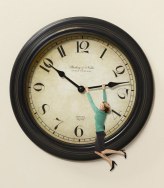
According to a recent and widely acclaimed behavioural study, one of the biggest killers of innovation in the corporate office is the effect known as “White Rabbit” disease. Once a business is infested with this potent virus, it quickly spreads, and is difficult to exterminate without the introduction of a brutal change management regime.

The “White Rabbit” disease gets its name from the fictional character in the book “Alice in Wonderland” (Lewis Carroll), where a large white rabbit is seen to be in a continual state of panic, whilst shouting the words “Oh dear! Oh dear! I shall be too late!”

Those employees exhibiting “White Rabbit” behaviour are easily identifiable. They will be the visibly stressed people rushing from meeting to meeting, always running late, and will be constantly letting you know just how busy they are with strong verbal flagellation sighs of self-importance.

If your organisation is deemed to have too many “White Rabbit” sufferers, and should an appropriate course of corrective action not be immediately implemented by a suitably qualified corporate physician, a stock market directive of absolute quarantine may be imposed. A short time later, a quick financial business vaporization will then prevail with irreversible effect.

But there is a simple and effective treatment that can be easily applied to those afflicted with the “White Rabbit” disease, and one which also acts as a long term inoculation for those that don’t yet exhibit any of the symptoms.

The treatment is called “time”. Not just any “time”, but “thinking time”, where the psychological stress and strain of those affected, who believe they have a need to rush in the corporate office, is eliminated from their daily ritual. The habitual application of “thinking time” leads to the development of a creative thought which tends to free the poor sufferer from all anxiety, which apparently has a direct causal link with the onset of “White Rabbit” disease.

Repeated applications of the treatment also appears to fortify the organization’s resistance to the affliction with lasting effect, as their employee’s ability to think creatively is reinforced, and in due course, may even lead to the encouraging signs of innovation.

So the answer is clear. When the first indications of “White Rabbit” disease become apparent, be swift with the copious application of “thinking time”, before it is too late!


Words Unspoken, But So Understood

ARTS010181

“Click” went the camera.

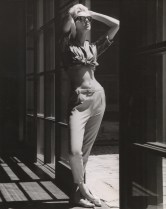
“That was a brilliant pose Janice! You looked fantastic with the bright light warming you as you stood in the doorway with your arms raised. Who would have believed that it’s the middle of winter here in Melbourne and it only stopped raining an hour ago”, said Henry Talbot (1960s Fashion Photographer*).

Janice laughed. “I hope you aren’t doing a close up as the large goose bumps on my arms would want a special credit in the photograph owing to their prominence!”

The photo was taken sometime between 1956 and 1961 and it had pride of place on the wall in my corporate office. The dated dialog between Janice and Henry was completely unknown to me; however, I just loved the look of the black and white photograph. Every time I saw Janice, I smiled as she provided me with a brief moment of inspiration that momentarily took me on a mental journey into a glamorous and unknown world that mingled with her past.

A thought then arose as I pondered her photograph.

Janice and Henry were in dialog when the image was taken; they were communicating and embellished the cultural mood of their time. The photograph was a snapshot in history that I, as the observer, brought to life in my mind approximately 60 years later. Other corporate colleagues visiting my office would also see Janice, yet their fabrication of her persona would indeed be different to mine.

So what if a photographer took an image of me sitting at my desk? How would observers view me in 60 years from now? Would they comment on my suit, my bow tie, my cuff links, or my corporate image?

No, I suspect none of these, but hopefully they would notice my smile. A smile that should be responding to a business culture that was innovative, creative and one that made me happy and content. Yes, a photograph does indeed tell a thousand words. The key is a want to listen.

Now for those HR Managers reading this blog post, take note. Why don’t you walk around your corporate office and surreptitiously shoot a candid, unprompted image of your employees. Look deep into the photograph and make sure that you analyse the true and honest feelings that your colleagues are portraying. Take a range of images over time and study the trend. The true answer will be in their smile.

I again looked up at the image of Janice and once again gave her a silent nod of appreciation. “Thanks Janice for your timeless and continual inspiration”.

Image: Fashion Illustration for Sportscraft, Model Janice Wakely, Photographer Henry Talbot

* http://www.ngv.vic.gov.au/ebooks/HenryTalbot/index.php?chapter=2

The Male V

6a00d8341c5b6153ef011570eacef6970b-300wi

What was the cause? The effect was indeed quite noticeable, and one that had been surreptitiously permeating the male physique for the past few years with minimal commentary from the more discerning female adult population who normally observe these things.

As I stood shamelessly in front of the hotel bathroom mirror whilst on a recent business trip with all but a white pristine bath towel encapsulating my lower half, I made a virtuous decision on behalf of corporate mankind to try and understand the origin of this visual perplexity. I looked at myself and realised that I, like many other men, was also not immune from this male condition.

Now before I proceed too far, you as an inquisitive reader might be wondering as to the potential side effects of this uniquely male malady, and more importantly, its impact on those that come into close male physical proximity. Firstly, relax, as the influence is positive and one that signals to the naked chest observer that the man beholden to this condition is highly innovative and a vigilant embellisher of a free thought.

The main visual clue is a sun-bleached v-shaped band of thick wavy chest hair that starts just below the male adult neck line and continues for a typical distance of about four inches in a downward direction. After extensive research utilising the detailed observation skills of many office based corporate female colleagues, a uniform and consistent visual theme started to emerge to which there can be no question, nor doubt of authenticity.

The chest follicular condition is believed to have first surfaced in the 1960s and 70s when many a business man elected to have a shirt dress code that was rather devoid of buttons. As the decades unfolded, men chose to portray a regressive and traditionally conservative closed shirt collar policy that supported a full neck length tie. However, over the past few years, men have discarded these formal fashion knotted links to the past and have gleefully accepted an open collared shirt prowess that has been readily approved by the business world as a sign confirming their creativity.

The consequence of this decisive fashion action has been exponential male chest hair freedom, a complete contrast to the historical times where they had been subjected to a barrage of restrictive shirt button protection and coverage. These empowered and unconstrained hairs are now able to reach their full bushy length potential and grow with unity in a v-shaped formation in solidarity with their DNA facial haired brothers.

So, should you, like me, no longer be a wearer of the business tie, may you flaunt your chest hairs in public with pride as you let all onlookers appreciate that you are doing your bit for the growth of innovation and creativity in the corporate office!

The Benefits of Man-Flu

Manflu2

In the Southern hemisphere, as the days now get colder, there is an all too familiar sound that is starting to be heard, that being; “arrrhhh chooo!” It is typically the unwelcome sign that signals the onset of the thinking man’s worst fear, that being the dreaded “man-flu”.

Yes, this condition is debilitating on the male form. All physical activity quickly grinds to a reluctant halt, accompanied by feeble pleas for female support and loving reassurance that the world as we know it will not end.

During this time, those afflicted with this thankfully curable diagnosis are forced to ponder life, the universe, and the Foxtel sports channel guide, whilst patiently recuperating in a large king-sized bed, or on a strategically positioned and well cushioned couch. We suffer in silence as we consume endless cups of hot coffee or tea, complete with the occasional snack of peanuts, chips and maybe a token lemon enriched vitamin supplement, as we blow our noses in between the TV advertising breaks.

However, as is typical with most “near-death” experiences, once the man-flu sufferer has triumphed over the worst part of this malady and can see that their short-term life prospects will actually be regained; they have time to reflect on the important things in their life. This “time of reflection”, known amongst males as “milking the best of the condition before the female knows that we are actually feeling better” is when our creativity and acting skills are maximised to new levels of innovation. Without this male innate skill that is passed secretly from father to son, our opportunity for “reflection” would be drastically cut short, as would our hold on the sacred TV remote control button.

Now for all you HR Managers reading this blog post please don’t be too quick in rejecting any requested sick leave applications where you now doubt the authenticity of the male requester. Why, because your company’s dedicated male employees have been cleverly utilizing their time at home to fine-tune and improve their imagination skills, all part of their “time of reflection”. So, just approve the application, rolls your eyes, and say, “typical”.

The Isle of Creativia

New-Building-Ideas-Lilypad-Floating-city-of-the-future

As you fly over the Pacific Ocean at 25,000 feet in the luxurious comfort of your First Class fully reclined leather seat number 1A, the furthest thing from your mind would be the existence of the small county of Creativia located far below. In the time taken for you to scoff your second mouthful of that exquisite, and most decadent, 1951 Penfolds Grange Hermitage, the air turbulence from your plane would have only just tenderly kissed the peaktop of Creativia’s highest mountain. But then again, how could you know that in 20 years from now, Darwin’s Theory of Evolution would prevail, and that you, and all your fellow business travellers that you typify, will then be quite literally extinct. Yes, an unplanned catastrophic business event will exterminate all those corporate organisations that are deemed not up to the required survival standard of innovation and creativity. The result will be the survival of the business fittest, and these individuals will only be the fortunate inhabitants of Creativia.

The origins of Creativia goes back to the early 1960s, when an unknown mutant variant of the human DNA, just happened to form simultaneously by a remarkable freak of nature in many leading industrial countries around the world. Those born with this undetectable and unique gene condition grew up with a distinctively different view of life, business and mankind’s role and place in this earthly environment. For these select individuals, “the glass was always full”, they saw things with a continually positive and optimistic perspective as everything they did was based on an underlying theme of innovation.

These individuals from a very early age immediately understood that they were different from the common populous, and as they grew older and more business savvy, they nonchalantly started to meet surreptitiously in hidden boutique coffee shops around the world. Here they repeatedly tried to quench their endless thirst for creative stimulation with high doses of caffeine in an attempt to satisfy their enduring innovation habits and urges. However, their individual ESP insights warned them of a greater impending creative doom that would soon engulf the business world leading to the complete obliteration of the corporate world as they, and as we, knew it. Like a homing pigeon on a lifelong mission of creative destiny, each of them were mysteriously led by some unknown personal and instinctive force to a small deserted and entirely hidden island, rich in natural resources and copious cash reserves. As the years progressed, these inhabitants waxed strong into a diverse and mighty culture of creative thought. Then, when the time was just right, they as pioneering Creative Ambassadors of Thought, journeyed from Creativia to seek out new and impoverished businesses to rectify the time consuming wrongs of many out-dated CEOs and corporate Executives.

—— 

Twenty years later, it did indeed happen. Looking back, it was a slow, potent, and highly lethal cultural virus that with time took hold and eventually killed the corporate world due to a lack of futuristic and insightful thinking. CEOs from all around the world together fell on their business swords and bleated their proclaimed selfishness in focussing on short-term financial goals and not the longer wellbeing of their corporate organisations. But alas, it was all too late. 

Long live Creativia! 

Dirt IS Good

muddy-woman

An office colleague of mine was trying to convey the attributes of infrequent showering as a benefit to the environment, and her body, after reading an article in a leading Australian newspaper*. My altruistic persona understood the associated advantages with water and soap conservation, and for that individual sacrifice I was indeed grateful. However, I must admit that I was struggling to find common agreement with the potential impact on her personal hygiene and that unique, and highly distinctive human odourfication.

That night, whilst driving home in my air-conditioned clean car cocooned from all external negative atmospheric influences, I thought objectively about my colleague, and I came to the conclusion that Dirt was actually a very good thing, particularly for the process of fostering innovation in the corporate office. No, I’m not suggesting for a moment that a dirty unwashed body should be encouraged, particularly as I am still a strong believer in the virtues of daily ablutions, but I am purporting the advantages of having a “dirty mind”, one that is openly shared and encouraged amongst all employees.

Now for all of you that do have a “dirty mind”, immediately stop, go no further with your thought processes!  When I use the term “dirt”, I mean; mud, soil or clay….yes, that Dirt.

In the corporate office, there are many ideas generated, some great, others, well, not so great. However, many of these hypothetically brilliant ideas experience a relatively short creative life that quickly evaporate before they can be progressed to a state of potential future commercial benefit.

Think of a plant that needs time to cultivate roots in dirt from which it obtains the necessary nutrients for growth. If it is left unprotected without the life giving benefits of soil, it soon withers and dies. Similarly, your thoughts require a “dirty mind” to take hold, grow and develop. Here the “dirty mind” is your business culture and it needs to be one that is rich in a variety of ideas that support these fragile seeds of creative thought. Should your business be lacking the “Dirt” and be more like an arid desert where endless restrictive procedures prevail, then innovation has no hope of developing.

Yes, Dirt is good and a “dirty mind” should indeed be encouraged.

* http://www.smh.com.au/lifestyle/beauty/how-often-should-we-shower-much-less-often-than-you-think-20150310-140487.html

The Knot of Personality

12597968695_e226edc60b_o

For those of you in HR that make a career out of personality profiling, you need look no further than but down. Yes, forget your Myers Briggs, DISC, and any other expensive testing regimes that you have been reluctantly using until now as the alternative solution is literally at your feet.

This surprisingly simple, and most definitely cost effective methodology, is based upon numerous years of extensive observation of employees in the corporate office. The test subjects encapsulated a broad cross section of age, sex, educational qualifications, professional experience and fashion.

The final clue to this masterly personality classification technique came to the writer whilst meticulously studying the feet of my colleagues during a rather tedious, and most non-inspiring, business seminar that allowed my mind to be free of all corporate constraints and limitations. Thankfully, it is a skill that I have perfected over numerous corporate presentations and meetings, all utilising the time graciously provided to me by my employer.

OK, enough introductory banter, you just want to know the details! So it’s time for full disclosure.

The key to your personality profile is in your shoelaces. No, do not scoff, as this is a serious study that will in some time in the distant future, by a university that is in desperate need of cash, be fully supported by a highly dubious research paper in an obscure academic publication.

Now for the shoelace facts:

  • The Common Knot (aka “around the tree”): these employees are your generalist and cover the majority of the people in your business. The loops are typically uneven which suggests they tend to not tolerate the status quo.
  • The Loopy Knot (aka “bunny ears”): these people have an open, airy personality and tend to have a career that never progresses, but rather circles backward and forward. These people are destined for a career in middle management.
  • The Knot (literally a knot, no loops): these employees are hard-nosed nutcases and should be quickly exited from the business.
  • No Knot: here we are talking employees that wear boots. Theory suggests that they are quite simple in nature as they failed to master the technique of tying their shoelaces when at kindergarten and may have other un-yet diagnosed psychological disorders.
  • Buckle: these employees are a minority and have that persona that makes them stand out in a crowd. They are frequently destined to become CEO/Executives.
  • Bare Feet: Usually an indication of a free spirited individual. These employees are typically found in the marketing department.

So next time you are in a business meeting sitting with some colleagues, let your eyes wander under the table and focus firmly on their feet. Their personalities will be most evident and readily understood. It’s that simple.

The Joy of Male Stubicular Freedom

shaving-advert (1)

It happens every morning, and is particularly accentuated following a long weekend, or an extended period of annual leave. It’s when men throughout the world have a good hard look at themselves in the mirror, sigh loudly with despair, and then initiate that reluctant deed of mass facial hair follicle removal. Alas, a few minutes later, a corporate looking face peers back at the observer as they prepare themselves for the look, and appearance, that complies to their traditional business standards of grooming acceptance.

Let’s stop for a moment and analyse just what’s actually going on here as this facial “stubicular” growing experience is not what it first seems to the onlooker, particularly for those that are female. No, it’s not an act of corporate rebellion, nor another demonstration of male laziness. It is a feeling that men of all ages immediately relate to, sacredly cherish, and have done so since the age of time when the first hair remarkably sprouted from their noble chin. Rather, it is an innate psychological behaviour that typifies the fundamental essence of being a man which is commonly unleashed when relaxing in a non-work environment.   

But, it is more than this, it is a unique masculine feeling that is directly proportional to a man’s sense of creativity and innovation. University studies of some yet to be published academic research, will undoubtedly affirm that when a man frees his mind to think, and to allow ideas to permeate unhindered, his facial hairs have a propensity to grow.

Any Marketing Managers, or HR Managers reading this blog post, please pay attention as the clue to the development of an innovation culture within your company has just been provided. Yes, you need to encourage your male employees to resist the urge to shave. They should be encouraged to grow moustaches, beards and portray long side-burns as “hair fuzz” does indeed equate to innovation. Any advocates of corporate safety will also applaud and support your hairy male decision as the days of facial razor cuts will soon be a unwelcomed sight from the past. So what are you waiting for? As that Nike® slogan says, “Just Do it” so you can quickly reap the furry rewards of creativity.

PS: And should your organization be blessed with menfolk that have a massive hairy chest, well, you are sitting on a copious and hugely under-utilized innovation resource just waiting to be unleashed from their business shirts!

If The Head Fits, Then Wear It

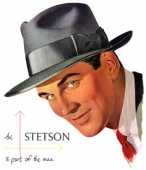
1950-mens-fedora-stetson-whippet

This afternoon I was standing nonchalantly at the corner of a busy road intersection painfully aware of the intense bright Australian sun beaming down on my hairless head with absolute ferocity. “Why was I not wearing a hat?” It was quite stupid really when I actually thought about, particularly when reminded by my delicate skinned head as it quickly transitioned to a pink coloured and progressively uncomfortable warm state.

Looking around at my fellow Melbourne city lunchtime walkers, I literally saw no hats adorning the head of any fashionable suit clad man, nor elegantly and spiffily dressed woman. The only hats observed seemed to be situated on the heads of the elderly, or those below the age of 20 in the shape of a mod-looking cap, complete with a market approved logo emblazoned just above its peak. In the years past, men and woman all wore hats that complemented and embellished their business attire, and which provided them with a distinctive look that was most dashing, sophisticated, and had that mark of business professionalism. So, why the change in our cultural hat appreciation? Was it due to the long, free flowing hairstyles of the sixties, seventies and eighties decades where the hair-boof factor made wearing a hat not socially acceptable, nor possible, owing to the excessive follicular volume?

One will never know, but the time is now ripe for a global corporate hat revolution!

Oui, Vive Le Chapeau!

My fellow corporate office compatriots, go on, don’t procrastinate any longer, take action, heed this call to your head and wear a hat!

I can hear your objections, one in particular, that being, what about the dreaded look of “hat hair”? Relax, all will be just fine, mainly as this newly acquired hair look will soon become a fashion statement that publicly notifies the world that you have elected to protect the longer term wellbeing of your head, and are now an accredited and chicly respected wearer of hats! Yes, you will be a modern trendsetter, and one that will soon be a stylish pioneer that will be ogled with extreme envy by the unfortunate hatless few.

Now, for any HR Managers reading this blog post, there is now one strategically important office furniture addition that you will quickly need to purchase to maintain employee morale, that being a hat stand so as to cope with the massive influx of hats!