The Chair of Accumulated Thought

Untitled

Imagine this…located in one of the most innovative corporate organizations, whose name I won’t mention as you all know the company, there is a particular chair located in a quiet room located in the north west corner of the building.

Now this chair is quite unassuming. It is a hazelnut coloured leather chair, that is well worn and has some deep indentations from a large number of bottoms residing for extended periods of time as they enjoyed the comfortable sitting experience.

The uniqueness of this chair is that each occupant leaves a thought impression behind them that is absorbed and read by the next and subsequent beneficiaries who have the good fortune to sit in it.

This chair, also known within this corporate company as the “chair of accumulated thought” is used to derive and develop new innovations related to products and processes.

So how does it work? Well, it’s a bit like “walking in someone else’s shoes”. Once you have true empathy, you are able to view issues from another person’s perspective and this new and stimulating knowledge can be used to provide you with a completely different insight into solving a particular issue you may be facing. The brilliance of the “chair of accumulated thought” is that the empathetic experiences compound upon each other thereby providing a complex and truly original solution to any problem that could not simply be solved alone by any individual.

Yes, you are right, the “chair of accumulated thought” does not actually exist. But, it could quite easily if we shared our experiences and thoughts openly and freely with each other when trying to solve a problem. In many situations, our own personal prejudices and self-doubts limit or hinder our ideas that tend to lead to a less than optimum solution being achieved.

So next time you are solving a complex problem, or trying to develop that spark of thought innovation, why not try to utilise the “chair of accumulated thought”. May I suggest you take it in turn to actually sit in a chair by yourself and write down your thoughts in a writing pad strategically placed on the arm of the chair. The next person who sits in the chair, then reads your thoughts of prose, quietly absorbs your thinking and then adds their ideas on the page under yours. This process continues until all your colleagues assigned to solve the problem have had the opportunity to sit and write in the chair. It would be rather interesting to read the words accumulated at the end? Who knows what creative thought solutions may permeate from the activity!!

Your Personometer Count

Jogging around the reservoir #1

There is a noticeable surge in the flurry of corporate feet at the moment as they focus on one thing, their step count! For those of you that don’t know what I’m talking about, it’s called the Global Corporate Challenge (GCC) where work teams from all around the world compete with each other to achieve the greatest number of steps.

The step measurement device, called a pedometer, is strategically attached to the individual’s waist and accurately measures the number of “up and down” hip movements of the wearer. During the GCC, you will observe many corporates constantly on the move. They will be jogging on the spot, suggesting that business meetings be held whilst walking in the park, they will visit the café for their coffee that is located furthest away from the office, they will find any excuse to be mobile, they just want to be on the move. I’ve even heard of some people going to the gym late in the evening and walking the treadmill for hours whilst watching TV to achieve that optimum pedometer reading! At the end of each day, their pedometer count is recorded and compared with their competition.

Now this got me thinking!!!

It is said that innovation is stimulated through interaction with other people where ideas are exchanged. This can be done via informal discussions, meetings or anything that involves a degree of social intercourse. The key objective is to talk to your work colleagues and to bounce different thoughts of each other.

Now what if we could utilise the GCC pedometer concept to measure the number of people interactions that an individual has had during the day? The measurement device could be called a “personometer”.

There could also be a “personometer scale” where an interaction is defined by the following:
1 Personometer count = Talking to someone you know
2 Personometer counts = Talking to someone who you have not met before (which will provide the greatest opportunity for new ideas)

There would also need to be a distance and time receptivity built into the personometer so it deduces the length of the social interaction and how friendly and beneficial the encounter was between the recipients.

At the end of the day, the “personometer” count would be automatically collected and summed for those people in each corporate office. The results could then be used to identify which corporate offices are the most social, and those that are rather boring and “stand-offish” in their people interaction nature. It would also identify those employees that are best suited in building people relationships.

I also have a suspicion that there would be a direct correlation between the personometer count and the number of innovations devised by employees located in the more social corporate offices?

In summary, may I suggest you just get out there and talk to people, get to know new colleagues and try and optimise your personal personometer interaction count! It could also be rather fun….

The Office Runner

Sherrin (201/365)

Equipped rather splendidly in my black sports shorts, bright fluorescent yellow T-shirt and spiffy football boots, I stand by the Australian Rules Football (AFL) coach awaiting my detailed instructions to personally deliver to the targeted players during the game. My esteemed and strategic role within the game is that of “Runner”. As the name suggests, I have the privileged position of being able to run out on to the football field during the game to motivate the players and to deliver words of encouragement and tactics that have a direct real-time influence on the outcome of the contest.

Besides demonstrating my extreme athletic prowess with which I sprint out to the players at top speed (however I must admit some less kind people have called me a “Meanderer”, rather than a “Runner”) to deliver the coaches instructions, I also need to have the skills of an actor and a mentor. Each instruction needs to be customised to meet the listening requirements of the various player recipients in order to achieve maximum receptivity and message understanding. Some players can accept a message that is bold and direct, other players need to be encouraged and wooed in order to fully absorb the details of the instructions, however some players just need a good verbal tirade of abuse.

The role of “Runner” in the corporate office got me thinking. Many businesses use a common form of communication that is designed to reach the largest number of employees as possible. This may be done via E-mails, Bulletins, Newsletters and other such mass distributions. The information take-up and understanding by the individual employee is in most cases rather poor, or rather confused. So why not have a number of cleverly trained Corporate Communication Runners (CCR) that frequent the office corridors?

The CCR would be dressed in a special corporate uniform. Many of you reading this blog post may be thinking runners, tracksuit pants and a T-shirt, but that’s a tad too boring for the CCR. Rather, I’m visualising the CCR dressed in a tight fitting bright body suit (pink, yellow or green) with the corporate logo branded on their back and a nice sounding bell attached to a belt hanging from their waist to announce their arrival as they leap through the office.

The CCR would be entrusted to take specific instructions from the CEO and then personally deliver them to the various key employees throughout the building to provide maximum message impact and acceptance.

However, there is an additional role for the CCR in that they would also convey messages, or employee mood back to the CEO so they fully understand the feeling within the organization.

Yes, these CCRs would be very busy! But the role of the CCR is a very important one within the corporate office, and one that I would suggest be considered somewhat more seriously than this blog post suggests?

Just a thought….

Hairovation

Kaela

So as to keep the gender balance politically correct with respect to innovation in the corporate office, I thought it was appropriate to focus on a topic that was targeted more at the professional woman. So this blog post is aimed at the lady readers of my blog.

No, I’m not going to talk about skirt length, stockings, shirts, bras, lipstick, shoes or perfume, in fact, I’m not even going near it, particularly as there might be a few HR managers perusing these words, and let’s be quite honest, my knowledge in this area is somewhat limited. But, what I will talk about is hair colour!

Women have the option to change hair colour depending on what mood and image they are trying to convey. It can be long, short, wavy, curled, spiked and even shaved, and yes, people in the corporate office do notice! Hair colour appearance seems to directly influence confidence and behaviour. If you feel good about yourself, well, this permeates into how you react with your colleagues and those you come into contact with from a business and personal perspective.

This got me thinking…what if we now expanded this hair creativity not just to woman, but also to men? Just imagine the possibilities!

I am one of those men who enjoys that ‘free from head hair’ appearance. Why shouldn’t I also explore various hairstyles to generate some innovative discussion in the corporate office? Why shouldn’t I wear a variety of hairpieces of differing length and colour? One day I could be a red head, the next day a longhaired blonde, or even adorn a couple of ponytails? I’m sure that it would be noticed and would lead to some interesting dialog, potentially even a compliment or two?

Let’s just not stop at hairpieces, why not consider eyebrows, beards or moustaches! I hear you say, why not expand the hair creativity also to woman? Well, absolutely, if woman also want to try a hairpiece, fake beard or moustache, well why not! I’m all for equal opportunity in the workplace!

The key is to make people think differently and to crack open the corporate mold of conservatism. I challenge you to give it a go in your office! Why not have a ‘free hair day’ on a Friday? Go on…..I dare you!!

The Panic Button

A new Button

I’d heard about this particular corporate office, but thought the rumours just couldn’t be true, afterall, nothing could be that bad! So with a certain feeling of uncertainty, I mustered up the required courage and walked with some trepidation through the entrance of the building to my scheduled appointment.

As I walked through the automatic opening and rather imposing glass doors each of which boldly portrayed the company’s famous insignia, I heard a quiet woosh sound, and sensed that a small quota of my innovation can been surreptitiously sucked out of the pores from a skin. A slight feeling of fear started to permeate through me!

I waited in the reception area for my host to arrive and noticed that the office was devoid of colour, all employees were dressed in dark ominous tones of corporate boringness and the walls were blank canvasses of white with the occasional random poster of business repetition. A drop of sweat now slowly meandered down from my forehead…this was not looking good!

After waiting about five minutes completely immersed in silence as no one appeared to laugh, smile or have any normal facial expression that had a glimmer of hope or inspiration, my host finally appeared.

My host was the CMO. He was dressed in a traditional dark suit, white shirt, rather bland yet expensive tie, black polished shoes and reeked of that rather common aftershave.

My internal innovation meter sensed impending doom and urgently started to seek an exit from this place of potential creative tyranny. I noticed a prominent button protected by thick glass on the wall that was fully coated in dust and cobwebs which read “break in case of innovation emergency!” This was indeed such a situation! I excused myself from my host, ran to the button, smashed the glass and eagerly pressed this button of hope.

What happened next….well that is a choice that all you who are reading this blog post can make! All of us have the choice to work in a corporate environment that is bleak, or one that inspires and cultivates innovation. If it is the former, then why not implement a culture of innovation change…it could be fun and quite stimulating for all concerned!

If you are in any doubt, may I suggest you place an ‘Innovation Panic Button” on your office wall and then quietly observe just how many employees try to press it? I think that you will be surprised at the number of people who desperately seek that innovation cultural change and the associated benefits that are derived from it!

Just a thought…..?

Shirt Wear – Guidelines for Corporate Creativity

Shirt

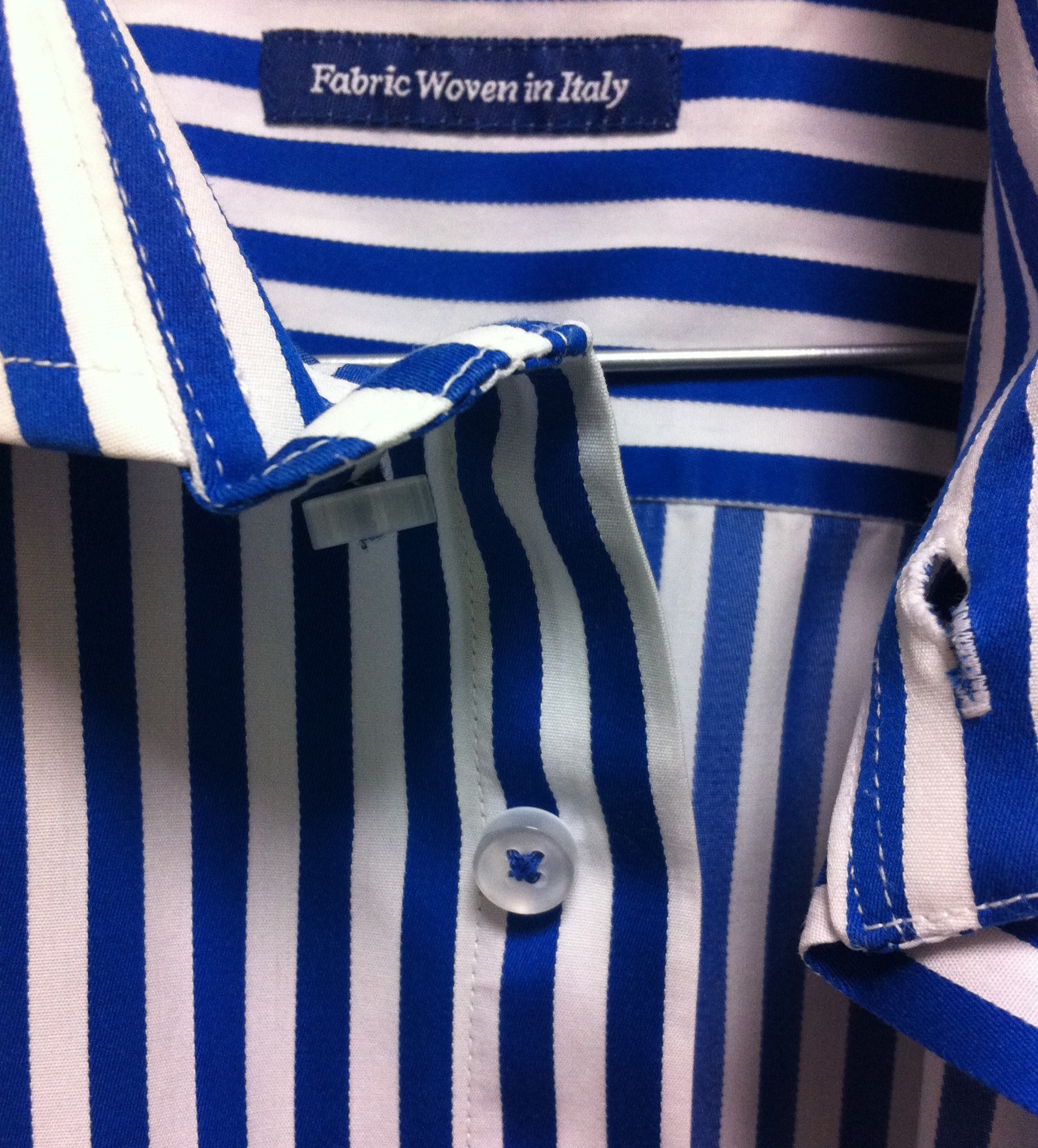
You know…the business shirt is quite an amazing source of innovation and creativity and has a unique and strategic place in the corporate office. However, many wearers do not recognise this fact, or its importance. So let’s explore this grand piece of clothing a little bit further.

The key shirt characteristics that define your shirt wearing creativity are:
• The colour
• The buttons
• The in/out tuck

Colour:
Most shirt wearers in your typical conservative corporate organisation tend to wear the stock standard white shirt. Need we say anymore, except, this probably explains why these companies are quite boring and lacking innovation!
When colour is introduced; now we are talking! These colourful shirt wearers tend to have that increased level of flamboyance and “oomph” that supports the generation of new ideas. Other areas for creative differentiation are the optional stripe or pattern.

Buttons:
The typical business shirt has seven buttons in the main frontal section, and a smaller button on the sleeves (assuming that this is a cufflink shirt).
My extensive research (based on extensive individual research I might add), is that the number of buttons done-up greatly influences the shirt wearers level of freedom which I assert has a direct correlation with creativity.
The optimum level of thought freedom appears to be attained with no buttons done up….yep that hairy chested high air-flow look! When all the buttons are done-up, “theory” states that creativity is proportionally reduced. Owing to HR T&Cs of acceptable dress in the corporate office, I would suggest the top two buttons being undone, if not completely removed to ensure that happy creative compromise with the official corporate guidelines.
Another option is to undo the small buttons on the shirtsleeves and roll your sleeves up, once again, a certain freedom of corporate constraint seems to prevail as a consequence.

In/Out Tuck:
This is indeed a very personal choice. Some people like to have their shirt tucked in, others like it out. However, when wearing a suit, having the shirt out does tend to make you look rather uncouth hedging towards that bogun looking classification. However, if it improves your ability to think with your shirt flapping around your bottom, well, each to their own!

Now, I haven’t explored the choice of hooks and eyes, or zips, as an alternative to buttons, but would welcome any constructive feedback from any readers of this blog post that might be beneficial to the argument being proposed above (which of course is all tongue in cheek!).

In conclusion, may I suggest that you view your business shirt as a key factor in the development of a culture of innovation in the corporate office.

You Took a RISK….Fantastic!!

TAKE RISKS

In one of my previous blog posts you will recall my recent attempt at roller skating (https://thinkingfuturethoughts.wordpress.com/2014/03/28/office-roller-skating-instructors/)

As I look back on that memory, I can vividly recall the difference in skating standard between myself (a hesitant, stumbling, novice) and that of my instructor (graceful, impressive, stunning…and yes…that rather magnificent short flappy skirt, not that I really noticed, well, maybe just a little….)

Both of us had the same type of roller skates, we were on the same skating rink, the same skating ambition not to fall over, but our skating performance skills were noticeably different! Why…well, it’s called experience. My skating experience was one lesson, her experience was extensive and it showed. But, her skating prowess didn’t happen quickly, it took many years of practice, learning, taking risks, and being prepared to occasionally fail and have that embarrassing moment of falling over and landing on her bottom.

In the corporate office, the prospect of failure isn’t really encouraged. The environment is very risk adverse, in fact, most of us are too scared to explore new ideas, particularly our managers, just in case they don’t work. It’s no wonder that innovation and creativity is stifled, or on the verge of becoming non-existent!

However, to build a corporate risk-taking environment that is effective, it needs to start at the top. A culture must develop that says…”it’s ok to fail..in fact, it’s ok to fail quite a few times…just keep working your innovative idea and eventually you will succeed and more importantly…learn”. Of course there are many caveats and T&Cs associated with this comment, but wouldn’t it be wonderful to work in an organization that encouraged you to take risks and stuff up occasionally along the way!?

Why doesn’t the CEO of your organization share with you some of their personal failures, and their learnings from those experiences? If they haven’t had any failures, does that mean they were too scared to take any risks, or did the organization not let them do so? If that’s the case, I suspect you might be working in rather a boring and conservative company so it might be time to get out before you also becoming branded with the concept that innovation lethargy is the norm and acceptable behavior!

Most companies have a corporate newsletter that is circulated internally to all employees highlighting various business successes that have occurred over the last few weeks or months. Why not include a section that highlights people in the business that had the courage to try something new, something innovative, and if it failed, get them to explain their learnings from the process. These people need to be encouraged and to be given public recognition. By doing this, others will also see that it’s ok to try something new and bold.

Why not add an innovation component into your employee’s performance goals for the year? Now this would create a vastly different mindset in the management structure as I suspect that most managers wouldn’t know where to start in this process? One option could be to provide all managers and employees with an “Innovation 101” type course that provides the basics in brainstorming and creativity techniques to make people think that little bit differently (PS: If you need a hand in doing this, let me know!)

The corporate office should be fun, exciting and have a culture that promotes innovation. Afterall, we spend most of our lives at work…so make it a place that you want to be at and more importantly….enjoy!

Coloured Ideas of Sex

Omphaloskepsis...

There is a saying that innovation occurs when ideas have sex. This might be fine for those free thinking happy go lucky ideas, but it is not acceptable behaviour in the corporate office! You will find quite a few policies and a vast array of T&Cs of employment covering this issue. It is just not the done thing!

But what if there was a way that the ideas of employees could actually interact with each other and ‘have sex’ in a non-physical way that kept the HR policy enforcers content?

So just how could this be achieved?

Just imagine if ideas could be linked to a set of corresponding colours? Employees could then generate a large number of thoughts which would initiate an array of colours that could be captured electronically.

The next step would be to provide a ‘comfortable and relaxed’ meeting place for these ideas to ‘get to know each other’, similar to a date. This might be achieved via the use of a shared public directory on the corporate intranet?

After some interaction, where the respective ideas would get to ‘know each other a little better’, some of the more progressive and risk adverse ideas might establish a mutual attraction which may encourage a closer and more intimate colourful relationship to develop?

With time, these electronic coloured ideas might just combine together to achieve a new and innovative thought creation?

Other ideas that may be a tad bashful or reserved, may observe the progressive nature and associated benefits of those less risk adverse ideas and just let their inhibitions go and strive for new heights in idea colour combination!

The electronic idea colours could also allow for global interaction between business divisions where traditional cultural and social differences may tend to limit interaction?

Taking the concept further, older ideas from previous employees could be mixed with new and current ideas to achieve the benefits derived from previous learnings and experiences.

Yes, it is just a colourful idea concept and I’m not saying that it has any real prospect in developing into corporate reality, but hopefully it has got you thinking that little but differently! The key is to let different ideas mix and combine with others to form something quite innovative and new in the corporate office.

That Rather Noticeable Tattoo

20140406-170424.jpg
This morning whilst lazing around the beachside pool, my gaze was momentarily disturbed from thoughts of slumber as I glanced a rather attractive tall woman slowly pulling herself out of the water. What caught my eye, besides her long straight auburn hair, was her unique and quite enchanting full length back tattoo that weaved from the middle of her waist up to her right shoulder. Once out of the pool, she steadied herself, gave me a smile, then plunged back into the pool with an artistic dive leaving a minimal splash and swam underwater for a few metres and then resurfaced.

Now this tattoo got me thinking…no, not about that particular woman in the pool, but about how people create their own individual traits that make them different and unique.

Being ‘different’ is not really promoted in the corporate office, rather, everyone is actually encouraged to look and act the same. We all wear the same corporate uniform comprising ties, suits, or tailored skirts. You just don’t see someone rolling into the office with their face painted, in surfing board shorts and bare chested, or a strapless dress showing off their impressive back tattoo!

This lack of dress code diversity I think really impacts and stifles creativity. What is the first thing you typically do when you get home from work? If you are like me…the suit, shirt, shoes and tie are immediately discarded and something more ‘comfortable’ is worn (or not worn)…and immediately my thought is more relaxed and free!

Many corporate organisations have free dress days on Fridays. Typically office morale appears to improve as a consequence. So, what about having random free dress days throughout the working week which alternates between various work teams, that way, a constant mix of corporate dress conservatism and creative free dress will permeate continually amongst employees. Why not try the concept in your corporate office, I would be interested in the feedback!

Now as a side thought, you may be asking..what happens with corporate creativity in nudist colonies where no clothing restrictions apply? Well, I’m leaving that topic well alone!!

That Aurafication Advantage

Businesswoman consulting a partner

I’m sure that many of you have walked into a room full of people that you don’t know and can immediately sense the atmosphere that is prevalent, whether that be positive or negative. Sometimes it can be seen in their body language, or their tone of voice, or just the way they stare at you when you interrupt the mood with that look of bewilderment, or relief that someone new and interesting has joined the group. Either way, it doesn’t take you long to know whether you should continue to walk in, or just back out graciously and say with that sincere and genuine voice, “sorry for the interruption, I think I may have the wrong room” as you lie most professionally through your teeth!

Let’s call this room atmosphere the ‘meeting aura’ or just ‘aura’ for short.
You can also experience this aura when you visit a city for the first time. I’m based in Melbourne and many visitors state that there is a unique ‘Mel-aura’ that is quickly identifiable as you traverse the city streets, similarly Sydney has its own ‘Syd-aura’, as do many other cities around the world.

Many corporate organisations have their own brand that is quite distinctive and readily noticeable when you enter their head office, or meet an employee that is a true believer of their business culture. So, what is it that creates this aura, or ‘corporate aurafication’ that is so illusive to many organisations!

To me, the key to successful ‘aurafication’ is being prepared to be different, but different in a positive and constructive way that encourages employees to want to be linked to the organisation. If their participation in the business is beneficial to them personally, then the process of ‘aurafication’ is well and truly on the way. If there is no prospect for personal growth, then the chance of a successful ‘aurafication’ will be quickly nullified and the business will become yet another one of those boring, and unimpressive companies of which there are far too many!

So in order for your company to have that well sought after aura that many employees strive to obtain, focus on creating your own unique corporate culture and thereby obtain that optimum ‘aurafication’! It might just be the start of that competitive advantage that your business is looking for at the moment?