Bow tie Leadership

Bow Tie

Should you be looking for a symbol of change in your corporate office? Well, look no further than a bow tie! Besides providing the wearer with some upper collar shirt pizzazz, this stylish and fashionable enhancement will set the custodian with a unique and highly noticeable position of business grandeur amongst your fellow work colleagues.

Let’s start with the basics. Firstly, forget your clip on bow tie, seriously, what’s the point! These are OK if you are 3 years old and don’t know any better and probably can’t tie your shoe laces either. However, if you are an adult, it must be a hand tied bow tie. Once you have mastered the tying procedure, a certain sense of personal achievement will have been attained, a skill that the wearer can most definitely list on their CV with pride and accomplishment.

In my office, I recently had the joy of adorning a bow tie for a 6 week period. I decided to wear this fashion statement to personally support a cultural change management program that had been initiated within my organization.

Now besides getting quite a few inquisitive looks from strangers I traveled with on public transport to and from the office (I still think it was bow tie envy), and from those I work with in the office, to me, the bow tie experience was quite profound and enlightening. So, what did I learn from a corporate leadership perspective that can be used in a change management program?

1. People noticed the bow tie (if you want to be a leader, you need to be noticed).

2. You can’t wear the same coloured bow tie each day (a leader needs to tailor the message for co-workers that can be readily understood, it can’t be a general communication).

3. The bow-tie was hand tied (it takes skill and some persistence to be a leader, the process needs to be practiced).

4. Bow-ties don’t suit everyone (some people like to follow…..and wear the traditional long length and rather boring and conservative tie, but then again, we wouldn’t want everyone wearing a bow tie!).

So, next time your organization is thinking of implementing a program of change, may I suggest you go and purchase a hand tied bow tie and start wearing it in the office. Yes, you will be noticed, you will feel different from the masses, but you will be making a fashion statement, and you will be a Leader!

Measuring Employee Happiness

The black color didn’t make the homecoming dress lose the sense of cute. Do you agree with me?

There is a question that has been puzzling me for a while now (well, at least a few minutes), and that is; “How should we measure real success in the corporate office?”

No, I’m not talking the traditional financial measurements such as profit, sales or share price, just to name a few. I’m referring to the more important measures of whether an organisation has a successful culture that promotes innovation and an employee mood of happiness.

There have been many a study which has tried to chart an individual’s mood, one of the more creative ones being the “Hemline Index”. “This theory suggests that hemlines on women’s dresses rise along with stock prices. In good economies, we get such results as miniskirts (as seen in the 1960s), or in poor economic times, as shown by the 1929 Wall Street Crash, hems can drop almost overnight.”
(Ref: http://en.wikipedia.org/wiki/Hemline_index#cite_ref-1)

Other such notable indexes also include items such as laxatives and deodorants! “During a recession, laxatives go up, because people are under tremendous stress, and holding themselves back,” said Shapiro, now chief executive of SAGE, a Chicago-based consulting firm. “During a boom, deodorant sales go up, because people are out dancing around.”
(Ref: http://www.nytimes.com/2008/10/19/business/worldbusiness/19iht-19lewin.17068071.html?pagewanted=all&_r=0)

Now as a corporate employee that understands the protocols of “acceptable behaviour in the workplace”, I would not even consider the application of the “Hemline Index”, the “Deodorant Index”, and I’m not even going near the “Laxative Index”, but there must be some other “acceptable” measures that can be used by the organisation to highlight their success in this area? This conundrum got me thinking!

What about the following potential mood measurements in the office:

1. The Wall Bounce Chart
A line could be painted on all office walls at a constant height position of say 5 feet. Theory (according to “someone”) suggests that when a person is happy, they tend to have a bounce in their walking step. Therefore the logical next step is to measure an employee’s “walk bounce” as they sojourn around the office corridors. The higher the bounce deviation from the 5 feet benchmark reference line, the happier the employees working in that office.

2. The Coloured Attire
According to the “someone” that discovered the walking bounce indicator, another indicator of employee happiness is the colour of their clothes. Those who habitually dress in sombre black or grey clothes (besides being residents of Melbourne) are typified as being quite conservative and less known to whoop it up in the corporate office. Whereas, those adorned with colour, well, they are exhibiting all the classic signs of success and a want to let the world know of their personal satisfaction and excitement.

3. The Organic Tea Bag
When an employee is stressed, the common drink of choice is coffee or tea. However, according again to that “someone”, another important measurement of happiness is the clutter observed around the organic tea bag jar located in the office communal kitchen. Happy employees are reported to drink more organic tea and they like to woft their tea bags around in the air with a gleeful flick prior to placing them in the bin. The result is a mixture of tea bag tags randomly tossed around the kitchen and the strange odour of combined chamomile, lemon, chai and green tea fumes.

I’m sure that you can think of many more mood measurement indexes that would complement the above three ideas.

So why don’t corporate organisations list these important indexes in their annual reports, or in the monthly newsletters? May I suggest that you lobby your GM of HR to get these indexes incorporated into your company’s cultural measures of employee success? Yes, it’s just a thought to make you think that little bit differently!

Hair Cut Frizz

Kathy (Frizzy Hair)

My friend spent many hours and dollars sitting in the hairdresser’s chair in the pursuit of that “just right look”. Her hair was washed, cut, coloured, styled and other things I have no idea about (my hairstyle has not required a visit to the barber for quite a few years) and the final result was “hair perfection”. She looked gorgeous, but more importantly, she felt fantastic and her mood exuded confidence and that killer professional personality of “look out world, don’t mess with me!”

But, on leaving the hairdresser, the heavens opened up and a massive downpour of heavy rain engulfed her magnificent locks of hair. The result, an unexpected frizzy hairdo, and one that no longer looked the same as it did a mere one minute ago.

Now my friend could have reacted two ways:

1. Complete emotional devastation with a flurry on large tears, cursing and screams of disappointment and anger.
2. A “WTF” attitude where she enjoyed the moment whilst it lasted, but now was wondering what benefits would be achieved from her completely different bohemian and rather artistic appearance?

In the corporate world, this experience typifies the influence of a “Change Management” program on the employee. In many instances, the “Change” is totally unexpected, has caught them off-guard and they had no desire to participate. The employee, like my friend, could respond in two ways; complete emotional devastation, or seize the change opportunity and move forward with a positive attitude.

The key is to have the latter, but to do this; the whole corporate organization needs to be fully aligned in the process. Those directly influenced by the “Change” need to be supported and nurtured so they receive consistent supportive signals of encouragement from their colleagues and management. For example, with the “frizzy hair look”, here the organization would need to promote and publicly value the skills associated with a bohemian and creative attitude. If the business still wanted the “pre-rained look”, then the employee would feel ostracised and may eventually leave the company as they perceived themselves as not fitting in to the required organizational culture.

There are many potential learnings for the HR Team from this “frizzy hair” analogy, the most important one being the environment the business establishes to accommodate and support those employees influenced by the “Change” that they have initiated. Frequently, employees are condemned for not coping with “Change”, but rather it is the fault of the organization for not fully anticipating their employee’s demands and needs as a result of the “Change”.

One final question for you to ponder a little bit further. For those of us with no hair, does this mean that we can cope with change easier than other employees?

Ideas that Think: “Idea-inks”

thinking.

“With so many great ideas out there, I know we will find the right one!”

I’m sure that many of you when doing a “braining storming” session have said this phrase to your colleagues in a desperate plea to find that truly innovative idea that will be the financial answer to all your company’s problems? However, in most occasions, I suspect you would have been disappointed with the result.

This got me thinking. What if we were to view “ideas”, rather than as a non-descript and transient thought, but as an idea with it’s own personal objectives and desires? Yes, I’m referring to “ideas that think”! Now this changes the game plan completely!

Let’s explore this concept further.

Firstly, let’s define these “ideas that think” which I will name “Idea-inks” for want of a better name.

Let’s assume that “Idea-inks” have their own unique and complex personality and they, like people, want to achieve self-actualization, just like in Maslow’s Needs Hierarchy. But they will also have basic survival desires to ensure their long-term ability to procreate. To do this, I can visualise “Idea-inks” wofting between corporate organizations trying to find the right environment that accommodates their requirements for psychological, safety, a sense of belonging, self esteem and that all important opportunity for innovation and creativity.

But what if your corporate culture is rather dull, boring and lacking the required inspiration for an “Idea-ink” to embed, establish roots and grow? If this sounds like your organization, then it’s not surprising that your brainstorming sessions lead to little, if any, new ideas being developed, after all, why should an “Idea-ink” want to live there, nor put the time into your company with little opportunity for potential long term self actualization prospects?

Corporate organizations need to “woo” the “Idea-inks” into your business. You need to make them feel welcome. But “Idea-inks” are not gullible, but rather insightful and quickly appreciate whether they are being sold something under false pretences.

If your business wants the most innovative ideas, then you want to target the most creative “Idea-inks”. Like all business transactions, if your corporate culture is poor, you will get the dud “Idea-inks”, if your work environment is continually dynamic and vibrant, you will be bombarded by a plethora of the most talented and inspiring “Idea-inks” fighting to maintain a presence in your office.

So the answer to getting a continual flow of the right business ideas into your corporate office is your culture and environment. Make sure you target the right “Idea-inks” for your company, and your creativity will be guaranteed!

Facial Metallic Transmission Opportunities

Can A Mask Of Light Hide The Darkness Inside?

I’ve always been intrigued with people who have a nose stud and one implanted centrally and prominently in their tongue. On seeing these facial adornments, I have typically asked the question why, and have politely probed the wearer for their rational. The response has been varied, but I now fully appreciate the vast array of perceived benefits from their perspective.

However, this got me thinking of another potential and innovative opportunity.

Why not utilise this metallic facial installation to provide improved frequency receptivity for radio and mobile phone signals? A non intrusive and well camouflaged earpiece could then be used to complement this aerial enhancing “bodily stud” network? Now just think of the additional signal enhancement if a belly button stud or other body region was also included into the receptivity network!

The only question that now springs to mind is the danger of heat. Should there be too much signal transmission occurring, could the bodily stud become too hot for the wearer to cope with during times of peak usage? Maybe the stud could turn a red colour when a certain temperature was reached thereby warning the wearer of the potential impending danger?

Just a thought, but something to think about next time you meet someone with a facial stud. I’m sure that this topic would be an ideal conversation starter!!

Ok LinkedIn, I have a cunning idea for you!

Closeup portrait of a group of business people laughing

I am one of those people that always remembers a face, but am shocking when it comes to recalling a name. When travelling around on business, I immediately identify someone I know, and then when it comes to that all important name greeting…yes, a pregnant pause of embarrassment commonly prevails!

I, like many people, have a vast network of LinkedIn contacts that covers a range of colleagues where I live, interstate and internationally. Now this is where you need to pay attention LinkedIn….!!

What if you modified your iPhone LinkedIn App to have a GPS map that alerted you to whether one of your network contacts was near you (say within 50 metres)! If they were, a message would then be sent to you with their name, photo, role and their company. If you wanted to meet them, you could ping them with an SMS. Now wouldn’t that be great for those name forgetters like myself!

Yes, I’m sure that some of you might also be thinking that this App could also be extended to Facebook, but that’s for another type of social interaction and a plethora of other opportunities (and associated problems) springs to mind with this one!

Now, LinkedIn or Facebook, if you are going to explore this one further, don’t forget where this brilliant idea originated!

It’s all about Passion!

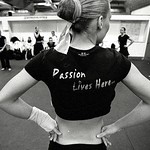
Passion Lives Here ...

That “P-word” is so obvious in some companies that when you walk into their corporate office foyer, you don’t need a dictionary to understand how to spell it, nor a thesaurus to interpret what it means, you can just sense and feel it. Yes, that “P-word” is “Passion”.

No, I’m not talking that form of “passion” where you see employees drooling over each other in lustful scenarios that may embarrass the observer. I’m referring to that enthusiastic and contagious behaviour that permeates within an organization that has that right mix of employee engagement and a personal and committed belief in the future growth of the business.

In the September 2014 edition of The Australian Financial Review “Boss” Magazine, there is an article that lists “The Best Places to Work”. As you read about each of these top 25 companies, the word “passion” is very apparent and is a consistent underlying theme in all of them.

So, how does one achieve “passion” in business? To me, it’s quite simple. Forget all your HR and other detailed analyses of employee engagement strategy pontification, let’s just focus on the basics.

According to the Free Dictionary (http://www.thefreedictionary.com/passion):
Passion: A powerful emotion, such as love, joy, hatred, or anger

The key in this definition are the words “powerful emotion”. When you are really passionate about someone, your have an intense and powerful desire to be with them, to see them, to have them continually in your life. The experience benefits you and you want more and more of the encounter. It is a bit like a drug that you want to continually consume.

Unfortunately, many employees don’t have any passion in their jobs and want to get out of the office as quickly as possible. So who is the blame for this passion abstinence? No, in the majority of cases it’s not the employee, but the employer.

Most corporate organizations have the best intentions in trying to motivate and inspire their employees. However, employees seem to have an inbuilt “Bollocks Meter” that measures whether the senior management team are sincere, walking the talk, or just going through the motions with yet another passing fad that will soon diminish with time.

Corporate passion can’t be bought. It needs to be lived and exemplified in all activities of the business. The passion crux is when employees want to be at work as they believe that it benefits their own well-being, those around them, and their customers. If the business is just transactional, then passion has minimal hope in succeeding.

Yes…..it’s all about the passion!

The Suit Trouser Length Creativity Index

ankledebate

Does the length of your suit trouser leg influence your creativity in the corporate office?

Yes, this is rather an unusual question! Personally, I must admit that the thought of it had never really crossed my mind until I had to kill two hours in the Virgin Lounge at Melbourne airport this morning as my plane was delayed owing to fog. When you have two hours to ponder the “real meaning” of corporate life, your mind does indeed explore the more important innovation correlations and the length, or lack thereof, of one gentleman’s suit trouser initiated this serious thesis of study.

As I slowly swallowed the remaining remnants of my long black coffee, I noticed a man in his late fifties sojourn past me. My stare was not focused on his slow walking style, nor his olive tweed suit, nor his impressive bald head (of which I am a fellow supporter), no, the deciding attribute was that the bottom of his trousers were about one inch above the top of his black shoes thereby making his distinctive green socks rather prevalent to the eye. My gaze then started to methodically search the Virgin Lounge looking to see if this was a one off, or the start of a common dress code with which I was not partaking.

To my amusement, I noticed a variety of trouser lengths prevailing. Some were too long and were gently kissing the carpet on which they walked. There was a range of trouser lengths that just touched the bottom of the heel, but the majority were about half an inch above the accepted level as deemed by corporate fashion correctness.

So how does this all relate to creativity? Well, I believe that there is a direct correlation! Let’s consider the following “facts”.

If the trouser length is too high, the wearer of the trouser has the option to display their socks to the passing world. These socks can be brightly coloured, patterned or even non-existent. Alternatively, the wearer could also go with the full naked ankle look (commonly termed the “commando ankle”).

If the trouser length is too low, those observers that the trouser wearer is walking past don’t have the opportunity to wonder at the endless array of potential sock possibilities. In this instance, it is quite common for the black boring nondescript sock to be worn. Yes, these people are your typical non-creative types.

The other and less known benefit with high trouser length is the “health improvement” derived from air current woft up the trouser leg that facilitates a perceived freedom of thought. Those that frequent the wearing of a kilt on a breezy day would know exactly what I’m talking about!

So my hypothesis, which I would be honoured if some bright PhD student elects to explore further in the not too distant future (that I’m sure would also be written up in the Harvard Business Review), is that your trouser length is a simple and direct measure of your creativity in the corporate office. So, make sure you wear your trouser cuffs high and maximise the derived benefit of creativity!

That Virgin Airline Safety Announcement

Things You Notice

As I was sitting in my allocated seat in my now rather too frequent weekly Virgin flight from Melbourne to Sydney, I vaguely heard the all too familiar safety demonstration which was telling me what to do in an emergency. I, like many other frequent flyers had become rather blasé to this important message. The announcement was one that I should pay attention to, but when you have heard it so many times, the competing options of sleeping, reading a book, or examining the lipstick colour being worn by the air hostess just seems to take precedence! (By the way, yes the lipstick colour does change, the wearer apparently has the option to tailor their own lip colouring depending on what mood they are in on that day…just in case you were wondering…and yes, I did ask!)

This got me thinking. Most of us in the corporate office have a daily routine that changes quite infrequently, if at all. We tend to arrive at work at the same time, park our cars in the same allocated spot, start the day with that all too familiar long black, take a banana from the corporate fruit basket to be eaten later, and then arc up our computers as we take a big sigh in preparation as we work our way through the torrent of new emails in our inbox. Sound familiar?

So why not utilize the safety announcement protocols that are used by the airlines to deliver a message to motivate all employees at the start of the day with the right mind set? Well, with a few tailored variations of course!!

No, I’m not suggesting that the leadership team wear red lipstick, just like the Virgin air hostesses and parade around the office in an attempt to rev up the employees, but it would certainly be a unique and different spectacle that would indeed be noticed.

Instead, like on the plane, let’s focus on the office PA systems that are typically only used for practice emergency drills where that all too familiar ‘whoop, whoop’ sounds permeates through the building just when you are about to skull that freshly purchased coffee, or start that all important phone call.

So why can’t we use that corporate PA system slightly differently? Why couldn’t the CEO deliver a morning motivational message that is full of wit, anecdotes and other words of perceived cleverness? This would of course test the inspirational personality characteristics of the CEO, but this is a simple, yet creative task, that they should be able to do without even having to blink!

Other thoughts for the PA message could include; some boppy dance music (maybe The Eurythmics ‘Sweet Dreams are made of this’), a chapter read from a thought provoking book, some karaoke that all employees join in with, some voice impressions…the key is to have something different. Why not use the PA system at random times of the day to minimize employee complacency? Instead of the PA system, why not utilize the corporate spruiker concept where the CEO walks around the office corridors with a megaphone blasting out innovative words of motivation? I’m sure that you can think of many more ideas that break the boring corporate mold of minimal motivation!

So maybe next time you are sitting on the plane you might now listen to the safety announcement with a slightly different perspective? If not, well, make sure you have a good sleep instead!

The Concierge of Greet

Boutique

The weather was miserable, it was cold, wet and the strong chilly wind was blowing my bright coloured scarf in a flapping flurry around my hairless freezing head. As I pushed open the hotel’s wooden heavy door with some degree of anticipation, I was immediately met with a warm gust of the most pleasurable smelling air that caught me by surprise. I quickly stopped in my tracks and enjoyed this delightful air woft that was relished and absorbed most happily by my frozen face.

Once inside the hotel lobby, my senses were pounced upon by a multitude of the most captivating furniture, décor and sounds of guests highly chuffed to be relaxing in the numerous comfortable leather chairs whilst scoffing a warming beverage or sampling some nibbles. As I walked to the concierge, I was greeted in a sincere, genuine and hearty manner and was offered a hot tea in a simply charming and quite appealing glass.

I hadn’t even checked into the hotel yet, but I felt right at home.

So why is it that when we step inside a corporate reception area for the first time, we typically feel like an unwelcome and hostile intruder? This is particularly the case for those unmanned reception areas where your visitor has to navigate a phone directory and then engage a lonely and rather sterile phone to try and seek the attention of the person they came to visit.

This got me thinking……

The Door to Your Office:
Why not have an impressive and inspiring wooden door (forget those automatic glass ones that open when an ant meanders on to the sensor) that has a large knocker or brass bell located on it that visitors just want to use as it just builds a high degree of anticipation, and of course fun via its application?

The Greet Concierge:
Why not have a corporate concierge who gleefully greets visitors as they arrive in your office foyer? If is it cold and wet, they relieve the visitor of their coat and umbrella and offer them a scented, warm and viscous tea and seat them in a chair with an inbuilt bottom warmer, or if it is cold, they partake of a nice chilled and flavoursome ice drink whilst sitting under a strategically placed air conditioner.

The Waiting Activity:
Many a visitor can get rather bored and fed up waiting in the reception area for longer than required periods of time. This is where the use of a corporate billiard table should be used that is adorned with billiard balls branded with the corporate logo. For those less skilled in the way of sticks and balls, then why not have a corporate dartboard in which they can relieve potential waiting frustration by hurling a pointy dart rather forcefully.

Reading Material:
Forget newspapers and the corporate magazine, why not have a vast array of books, comics and some DIY manuals (eg gardening or home renovations) that provide a level of interest and engagement. Should they not finish their selected reading material prior to the commencement of their business meeting, then why not have a lending library format that allows your visitor to borrow the item?

The Bed of Leisure
Sometimes it’s rather tough waiting for a meeting when your visitor may have travelled some distance to get to your office that could have necessitated the use of an early morning flight or long car journey. So why not have a corporate bed of leisure that they can occupy (by themselves of course) to provide them with that additional level of recuperation prior to their meeting?

I’m sure that you can think of additional thoughts of corporate creativity that can make your valued visitor feel much more welcome and at home when frequenting your corporate abode. So why not incorporate some of these activities into your corporate reception area?

The goal is to provide your corporate office with that competitive advantage that yields your organization with that level of uniqueness that makes your customers, suppliers, employees and investors want to engage with you, why, because your business inspires them!