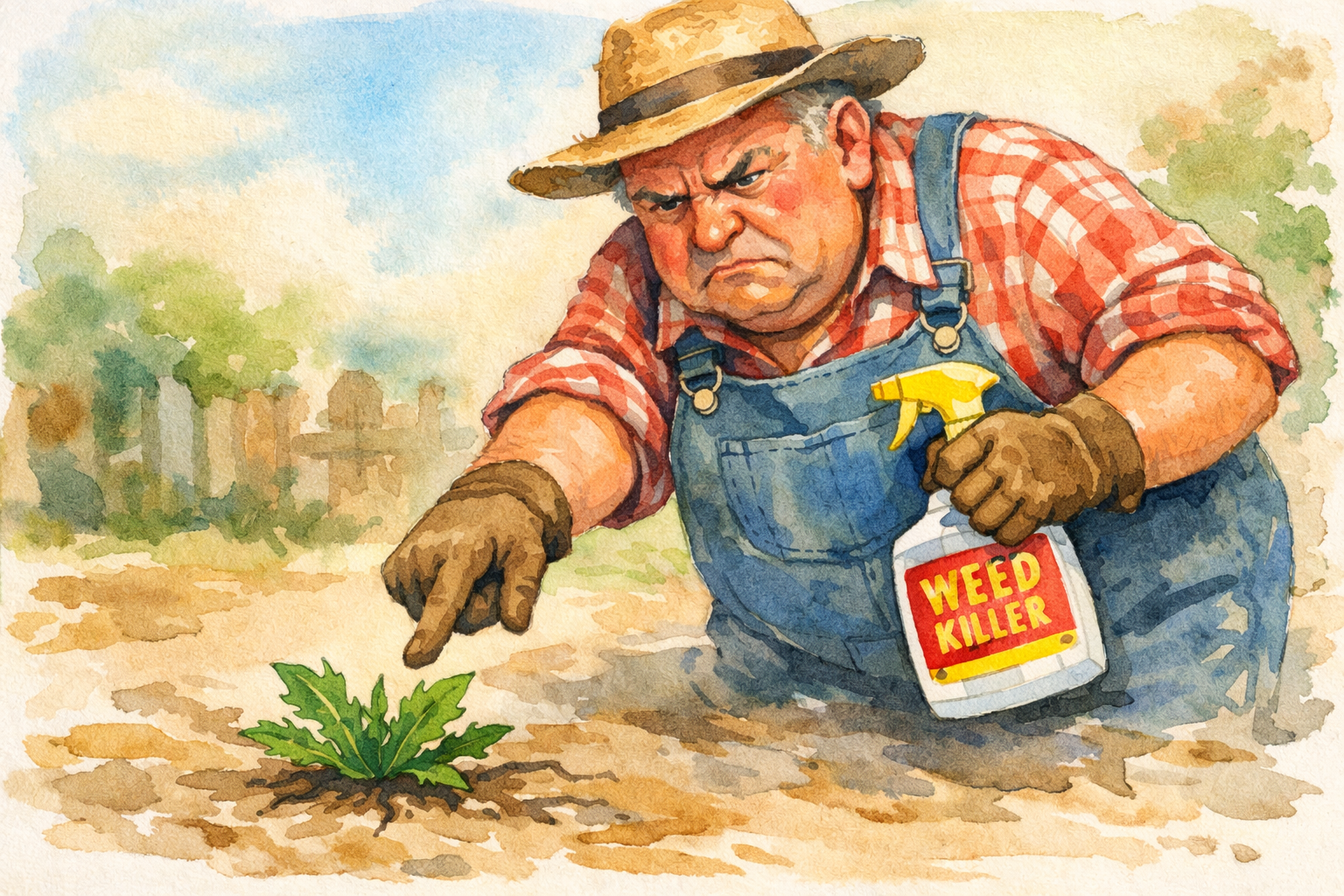
The Office Snoutster

The Office Snoutster is an annoying individual that can unfortunately be seen in many organizations. They are commonly found in senior government or corporate roles following many years of successful snoutsting.

So, how do you recognize a Snoutster?
These individuals, be they men or women, are quite cunning and have an ability to hide their snoutster skills from most of their friends and work colleagues. However, there are some common behavioural clues that usually gives them away.

Manipulative: They are extremely manipulative, lazy and prefer to rely on others to do their work for them rather than seeing the need to get their own hands dirty.
Hunter Leeches: They can quickly target a strategic person that will assist them in progressing their own personal career objectives. Once identified, they hang around them like a leech, put their hungry teeth into them, and then suck like hell for their own wellbeing until their usefulness is no longer required. They then seek out a new sucking target and repeat the process.
Clothing: They will dress to deliberately seek praise and approval from any person that may provide potential leech nourishment.

Why the term Snoutster?
Consider the traits of an overweight pig that joyfully uses their nose to smell out an opportunity, then sticks it in with gusto leaving a monumental mess for others to clean up.

How does one become a Snoutster?
Most Snoutsters typically have had a favoured upbringing where they are repeatedly spoilt and receive ongoing praise from their parents, relatives and friends without them having to make an effort, thereby feeding their ‘leecherous’ cravings for personal fulfilment and ongoing sustenance. Once accustomed to a decadent no-work lifestyle, they quickly realize that the shrewd use of their snout is the only way for them to survive in the office, and in their other life endeavours.

Can the Snoutster be removed from your office?
Yes, but only when their manager finally recognizes that the Office Snoutster adds no recognizable financial value, and that they are also a massive toxic emotional drain on their direct reports and other employees. The required solution is a quick termination and speedy exit from the office.

So should you know of there being a Snoutster in your office, quickly root them out and blunt their oinking snout cravings before they create immeasurable damage to your organisation and your colleagues.

Trends – Fact or Fiction?

Let’s start by considering two well-known quotations; “Knowledge is Power” (Sir Francis Bacon), and “Thinking maketh it so” (William Shakespeare).

Many of us in our private and business lives like to keep up to date with the latest trends, be they social, economic or just for fun. We, as curious individuals, like to know the key drivers that are influencing the now, and what may happen in the future.

We typically use this knowledge to make strategic decisions, to feel part of the crowd, or perhaps to simply equip ourselves with riveting dinner table conversation content to impress and stimulate our guests and friends. So yes, our awareness of trends does indeed potentially give us command over many things and people.

But what if this knowledge, derived from our understanding and belief of a trend is based on fiction? To put it bluntly, the author fabricated the trend, and then communicated it widely through various specifically selected channels, such as social media where their unassuming followers accepted it as fact without any reason for concern or doubt? Would their belief make this trend real, particularly if many believed it so?

Just look at how various individuals or organizations (private or political) disseminate information to a target audience for their own personal gains. Many a politician, in the past and today, have done so with great success. Unfortunately, it was only with hindsight that the trend was identified as fictional folly.

Many information seekers now look to artificial intelligent (A.I.) search engines (ChatGPT, Copilot, Grok, etc) for their insights and recommendations to various trends instead of using human intellect and analysis. The A.I. output being readily accepted as fact with minimal interrogation or suspicion.  

So how do we filter the fact from the fiction before we make them so?

The answer being a combination of independent quantitative and qualitative analysis based on the collective experience of many people who collaborate, discuss, interrogate and challenge what they observe, read and understand. Yes, it takes time, but it will hopefully uncover the fiction from the fact.

However, some people happily accept the fiction and will gleefully follow the false trend like a ‘lemming that is about to fall off a cliff’. Unfortunately, it is these gullible individuals that are commonly the target of the unscrupulous.

There are many trends emerging and currently in operation today. May I suggest that we relook at the two quotations mentioned at the beginning? Maybe they should read as ‘Knowledge could be Power and We decide whether to make it so”?

Is it time for an ‘Age Coup?’

Age. It’s a complex thing, the importance of which seems to change frequently depending on where you are in your life.

It is said that age is just a number; so why in the Western world do we commonly characterise everyone according to their year of birth? Sure, there are many sound, well researched legal and practical aspects that both should and need to be adhered to, but why is age such an important factor in the workforce?

When you are at Primary School, those who you knew in High School seemed very worldly and sophisticated. You saw your parents as old and out of touch with the worldly and social needs of your own generation, not to mention your grandparents, who fell into the absolutely ancient classification.

But consider how your age perspectives changed when you yourself entered the workforce for the first time. All of a sudden you saw your parents and others with an increased number of years under their belts as wise and possessing a valued experience, and some you even gave esteemed oracle status.

In the business world, people in their early twenties are typically deemed to be naïve and lack the requisite knowledge, whereas people in their sixties or seventies are seen as being ready for retirement and quickly put out to the vast unemployment pasture.

I believe it’s high time for a long overdue ’age coup‘ where an individual’s mindset and willingness to learn and/or mentor those around them should be the main criteria, instead of how old they are on their employment contract.

To accomplish this, we need to redefine the term ‘age’ and replace it with a combination of a willingness to learn and to share experiences, regardless of whether obtained in the workplace, or via life’s complex journey.

However, to do this there needs to be a mindset change within the corporate world, particularly with in HR where age is commonly seen as just a start or finish date of employment, not a potential indication of longer-term value.

Yes, it’s time for an ‘age coup’ as there are many willing participants keen, able and wanting to join the revolution.

A new career with noise

I’m learning the trumpet.

These few innocent words create a dreaded audible fear in your family, neighbours and those that live in your street. Why, apparently it as something to do with the noise, which is unpredictable, loud and makes a cow’s mooing sound more attractive to the listeners ears.

Yes, I will make mistakes, and I do sound a tad awful, but I am told that with practice, persistence and a willingness to learn from my errors, I should improve. However, time will be the judge, as will my wife’s patience and honesty.

Recently my role was made redundant after many years of service which was totally unexpected. The rational, an organizational restructure. The result, unemployment.

One could wallow and say “why me”, but then again, it’s just like learning the trumpet. The first step is to decide that it’s time to try something new and to make the most of this different and unknown life opportunity. Not everyone may decide that a musical instrument is the next move, some may seek a new career path, play golf, lawn bowls, travel, retire or go part-time. Me, I’m yet to decide, maybe I will do all of these activities, however, I suspect that being a concert trumpet player may be slightly out of my immediate reach?

But I do have the objective to make some hullabaloo, and to have fun doing it and to learn a new life skill, regardless of how unpleasant it may be in the short term.

Some may say that age could be a barrier, but I view it differently. I just see experience and a knowledge that can mentor and train those with less years in the corporate world, just like my trumpet teacher that is crafting a new skill in my personal repertoire.

Yes, I’m going to make a raucous commotion, one that can be heard and distinctly recognized as my unique and innovative persona, and maybe get a tiny bit better at the trumpet along the way….

The Corporate Chalice

Every Grand Final winning player knows that unforgettable feeling as they lift up high the Premiership Cup signifying a lifetime achievement of sporting success. An injured player quickly forgets the pain and suffering they may have experienced in the game, or during the season, once their hands eagerly embrace the coveted item. One could say, it is analogous to a religious experience where all wounds and maladies are quickly forgotten.

The Premiership player carries the memory of this glorious event with them for the rest of their lives and they are similarly revered and immortalized by their sporting club fans, family and friends. Their legend status also accompanies them into their business and private life wherever they may go throughout the sporting globe.

Now let’s liken this Premiership Cup to the revered Holy Grail, or Golden Chalice, a cup that brings to the cup holder life changing powers.

Many a sporting club supporter that has the joyous opportunity to view their team’s winning cup, even if it’s locked away in a protective glass cabinet, is wooed by the powerful winning aura that adds a sense of pride, enjoyment and loyalty to the beholder. A team with a plethora of cups on display is deemed to be more powerful and impressive than their competition, and the copious silverware stache facilitates, motivates and maintains supporter club loyalty.

So why is it that most businesses have no such display that entices and stimulates employee commitment to the organization via its corporate achievements and victories? There are typically no such physical cups or chalices, or analogous symbols to improve and facilitate morale. Unfortunately business success is commonly celebrated by a few senior managers with little spoils of triumph passed on to the lower-level troops who may have been key in achieving the fruitful outcome.

So, if you are a business leader reading this blog post, what is your Holy Grail? How will you celebrate and share it with your employees when you obtain it? Do you have one or more cups that you can put on display to inspire current and future employees that demonstrate a longer-term legacy of achievement? Go on, let all employees drink from the cup as the taste will be beneficial to all, and will most definitely not be forgotten.

The Retirement Rebirth

The year is 2125 and I have now been in cryogenic retirement for the past 100 years. I vividly recall my last day in the corporate office when my career became literally frozen in time.

As my mind starts the thawing process, I wonder what awaits me as I re-enter the workforce. The first question that puzzles me is, why now? Yes, I have been “on ice” for the past century, and for what reason should I be awoken from my forced corporate sabbatical slumber?

I awake to see a room full of excited business people in casual clothing gesticulating around me as my corporate consciousness quickly regains my innate faculties. They gleefully welcome me into their relaxed business world with sighs of relief and wonderment.

I look intently at their faces with puzzlement and seek an answer to my question.

Over the following day, I learn their predicament.

The Goldfish:
These employees have the attention span of a goldfish. Owing to the memory dilution influences of prolonged social media, they cannot concentrate for a period longer than 3 minutes. They all wear name tags as their interpersonal recognition is essentially non-existent which makes teamwork an impossibility.

Strategic Analysis:
Their reliance on artificial intelligence (AI) has eroded all their skills of analysis and intuition. They cannot think for themselves and have become slaves to avatar personas.

Hygiene:
As they don’t need to frequent the corporate office, they work from home, and don’t see the need for personal grooming as their work life experiences are completely virtual.

So why was I awoken?

Apparently, my name was found in a time capsule buried in an old building that was made redundant in the year 2025. The same year in which I left my employer and commenced my period of forced retirement hibernation. The finder of this archaeological treasure glanced through all the archives that highlighted how workers in the past thought for themselves, were innovative and creative. It was reported that those of yesteryear apparently relied on our experience, our knowledge and used technology to complement our reasoning and logic, instead of being beholden to it.

A search commenced and I was unearthed and brought into the present (my future).

I looked around the room and immediately thought, it was time to restart my corporate life once more. As the saying goes, “everything old is new again”, and I was ready.

That Magic Pill of Innovation

Is there such a thing as a magic innovation pill that when swallowed, thoughts of innovation just blossom instantaneously in your mind?

The answer is, if only!

However, many organisations do believe in mystical wonders when they create the role of Chief Innovation Officer. Yes, once brought to life in the corporate organisation chart, this creatively anointed individual is expected to whip up all sorts of innovative wonders to the immediate benefit of the shareholders and those deemed less wise.

The question then is how?

The answer is simple when understood, and it all revolves around the ingredients used to manufacture that magic innovation pill in your organisation. There are 5 key ingredients, and if one is left out deliberately, or by mistake, the efficacy of the pill will take the form of a placebo which may seem to work in the short term, but failure will ultimately prevail with doomed longevity.

The first ingredient is called “Employee Diversity”. If you haven’t got this additive, well, just stop now and give up and go to the pub for a long lunch. Innovation needs employees who differ in thought processes, background, culture and beliefs in order to develop a plethora of creative ideas that deliberately push the organisation’s status quo and understanding.

You then need to add a good measure of a “Creative Work Environment”. There are many ways to do this, the key approach is to encourage and facilitate many idea interactions where an innovative chain reaction can start and quickly develop without restriction. If you get the occasional bang or loud explosion along the way, even better as this signals progress!

Next is the ingredient from the bottle labelled “Communication”. When added, you may see copious amounts of smoke quickly rising from the mixing bowl. Note, this is good and should be immediately communicated throughout the whole organisation so those not involved in the process know that there is nothing to be afraid of, or concerned about, and don’t call the Fire Brigade to quickly extinguish the innovative catalytic reaction from progressing.

You then need to add a few large drops of “Courage” which may leave a bitter taste in the mouth of the CEO, who may spit it out should they not be accustomed to the flavour. Courage is required to let the innovation process bubble away without interference, and to provide the requisite time for all the ingredients to adequately mix and blend into a homogeneous idea.

The final and most important ingredient that must permeate throughout the entire concoction is that called “Fun”. Without it, any hope of success is doomed to fail and a sticky, tasteless mess will linger in the organisation for years resulting in all references of the word innovation being quickly purged from the corporate recipe book pages.

So, should your business be blessed with the role of the Chief Innovation Officer, the first question to ask is, “can they cook”? if the answer is no, it’s time to invest in some takeaway!

Why Be a Moth?

Stop and look everywhere around you and you will observe the effects of a new sociological condition that is quickly influencing the world’s population. The malady is readily seen on individuals of all ages, regardless of their sex, and seems to have a higher concentration in cities where mobile connectivity is at its optimum receptivity. For those that reside in remote geographical locations, its influence appears to be minimal, or hardly ever seen with any noticeable detrimental consequences to the individual.

The condition has been likened to the behaviour of a moth, where the unwary insect is instinctively attracted to any bright light where its eyes are total fixated, upon which the mesmerising spell cannot be easily broken.

The culprit of this unfortunate condition has now been identified, and after numerous independent investigations one can unreservedly state that the source is the mobile phone.

Yes, the mobile phone. When this small handheld item is switched off, or is lacking electronic battery stimulation, many of its owners become quickly unsettled, lack focus, become irritable, seek inspiration, and eagerly await its rejuvenation.

Many of these mobile phone owners need the bright light permeating off their screens in order to function effectively. You will see them wandering the streets with their heads stooped down hovering intently over one of their hands angled to obtain the optimum screen viewing. The routine also applies when seated, or when trying to go to sleep in the evening.

Like a moth, many of these phone users have become so absorbed in the activities on their phone that they have walked into parked cars, become completely disorientated, or sadly killed owing to their single eyed focus.

The problem is also unfortunately seen in business, much to the detriment of productivity where the worker constantly picks up their phone looking for any sign of engagement.

Now why is this moth behaviour not observed in remote areas? The answer is simple. The mobile phone has no receptivity so there is no unwelcome distraction to illuminate and divert the eyes of the user. Remarkedly, studies of people living in these areas were found to have less detrimental psychological problems, in fact, they seemed to be better balanced and happier than their populated city counterparts.

So what does this mean for the well being of society? The answer is simple. Do you want to be a moth that regularly gets its wings singed by travelling too close to a spellbinding beam of light? Or do you want to be in control of your own life flight without the crutch of a mobile phone that continually distracts your way forward?

The choice is yours.  

To be, or not to be, that is the Question?

It’s a visual predicament that many a novice, regardless of their age and sex, has embarrassedly faced when travelling on business.

In some European countries where public nudity prevails without the slightest battening of an eyelid, the question is, what is the acceptable norm?

After a long and tiring business flight to attend a meeting or conference, many a weary traveller will seek out a relaxing sauna at the hotel in preparation for the following busy day ahead. This may seem like a harmless activity, but many questions await those that place their hand naively on the warm condensate hotel sauna door ready to enter.

Before the door is surreptitiously opened, the question of sauna attire immediately springs to mind, that being, have I made the right choice?

Should one be wearing a towel encompassing your naked body, or should the user be equipped in a modesty covering bathing suit? A quandary of potentially awkward scenarios now prevails based on your decision.

You enter the sauna and observe that all the occupants are naked and comfortably sprawled in a very nonchalant manner without any attempt of body concealment.

Scenario 1: No Bathing Suit
Here your response is simple, walk in, take a suitable seating position and casually remove your towel. You are now claiming your role in this microcosm of European society. The key for this new found social acceptance is to act like you do this on a regular basis and are comfortable in your own, and the nudity of others.

Scenario 2: Bathing Suit
This is where things may get awkward. What do you do? Do you leave your towel tightly wrapped around your body with the intent of not showing those naked individuals in the hot and misty room that you are clothed underneath? Do you remove the towel and sit down fully clad in your bathing suit thereby exercising your right not to be naked? Or do you quietly disrobe and join in the unified and accepted state of communal nudity?

Obviously, the choice is indeed yours.

However, another question now prevails. Where does one look? I will let the reader respond to this question.

Note: This situation occurred to the author on a business trip. My response to the above scenarios and the other questions asked will remain private. But, it was interesting to meet many of the sauna occupants at the conference “officially” the following day…

Office Fretification

There is a viral condition called “Office Fretification” (otherwise known as as OfficeFret) that is sweeping the corporate world globally. I’m sure many of you have seen it and are aware of the severe negative influence it can have on others, but didn’t know it had a name, or indeed a cure.

It’s frequently observed in employees who have a psychological intolerance that flares up as soon as they’re asked to leave the comfort of their snug home abode and return to the office to work. 

The origin of this devastating malady was COVID-19 when some employees gleefully packed up their desks and became accustomed to a blissful life of working from home for long periods of time. Gone were the days of actually conversing to a real person, or having to be transparent as to their work activities. At home they could hide behind their video conferencing avatar, be busy doing their own personal machinations, like cooking, walking the dog, or having a quiet snooze. 

But alas, all that changed once the COVID-19 vaccinations started to negate the reason for their newly cherished home lifestyle and they were requested to return to the office. Upon hearing this instruction, this is when the condition of OfficeFret starts to become most evident.

The OfficeFret symptoms are easily identified:

  1. “I don’t feel well, – I need to take sick leave”. It’s remarkable how easily a medical certificate materialises to validate the claim?
  2. “It’s too noisy in the office – I need quiet to think”. Funny that with so many empty desks in the office, not one of them could be used?
  3. “I have to get my car serviced, or a fridge needs to be delivered – so I need to work from home all day”. 

As the name suggests, the employee starts to fret and begins to implement a diversionary tactic to maintain their working from home bliss.

So how does an one treat an employee suffering with OfficeFret you may ask?

No medical script is required; rather it comes in the form of a termination letter. The sufferer of this malady then has a choice, they can come into the office, or stay out permanently where they can continue with the lifestyle they have become accustomed to, but minus the salary. 

Enough is enough.