The Retirement Rebirth

The year is 2125 and I have now been in cryogenic retirement for the past 100 years. I vividly recall my last day in the corporate office when my career became literally frozen in time.

As my mind starts the thawing process, I wonder what awaits me as I re-enter the workforce. The first question that puzzles me is, why now? Yes, I have been “on ice” for the past century, and for what reason should I be awoken from my forced corporate sabbatical slumber?

I awake to see a room full of excited business people in casual clothing gesticulating around me as my corporate consciousness quickly regains my innate faculties. They gleefully welcome me into their relaxed business world with sighs of relief and wonderment.

I look intently at their faces with puzzlement and seek an answer to my question.

Over the following day, I learn their predicament.

The Goldfish:
These employees have the attention span of a goldfish. Owing to the memory dilution influences of prolonged social media, they cannot concentrate for a period longer than 3 minutes. They all wear name tags as their interpersonal recognition is essentially non-existent which makes teamwork an impossibility.

Strategic Analysis:
Their reliance on artificial intelligence (AI) has eroded all their skills of analysis and intuition. They cannot think for themselves and have become slaves to avatar personas.

Hygiene:
As they don’t need to frequent the corporate office, they work from home, and don’t see the need for personal grooming as their work life experiences are completely virtual.

So why was I awoken?

Apparently, my name was found in a time capsule buried in an old building that was made redundant in the year 2025. The same year in which I left my employer and commenced my period of forced retirement hibernation. The finder of this archaeological treasure glanced through all the archives that highlighted how workers in the past thought for themselves, were innovative and creative. It was reported that those of yesteryear apparently relied on our experience, our knowledge and used technology to complement our reasoning and logic, instead of being beholden to it.

A search commenced and I was unearthed and brought into the present (my future).

I looked around the room and immediately thought, it was time to restart my corporate life once more. As the saying goes, “everything old is new again”, and I was ready.

That Magic Pill of Innovation

Is there such a thing as a magic innovation pill that when swallowed, thoughts of innovation just blossom instantaneously in your mind?

The answer is, if only!

However, many organisations do believe in mystical wonders when they create the role of Chief Innovation Officer. Yes, once brought to life in the corporate organisation chart, this creatively anointed individual is expected to whip up all sorts of innovative wonders to the immediate benefit of the shareholders and those deemed less wise.

The question then is how?

The answer is simple when understood, and it all revolves around the ingredients used to manufacture that magic innovation pill in your organisation. There are 5 key ingredients, and if one is left out deliberately, or by mistake, the efficacy of the pill will take the form of a placebo which may seem to work in the short term, but failure will ultimately prevail with doomed longevity.

The first ingredient is called “Employee Diversity”. If you haven’t got this additive, well, just stop now and give up and go to the pub for a long lunch. Innovation needs employees who differ in thought processes, background, culture and beliefs in order to develop a plethora of creative ideas that deliberately push the organisation’s status quo and understanding.

You then need to add a good measure of a “Creative Work Environment”. There are many ways to do this, the key approach is to encourage and facilitate many idea interactions where an innovative chain reaction can start and quickly develop without restriction. If you get the occasional bang or loud explosion along the way, even better as this signals progress!

Next is the ingredient from the bottle labelled “Communication”. When added, you may see copious amounts of smoke quickly rising from the mixing bowl. Note, this is good and should be immediately communicated throughout the whole organisation so those not involved in the process know that there is nothing to be afraid of, or concerned about, and don’t call the Fire Brigade to quickly extinguish the innovative catalytic reaction from progressing.

You then need to add a few large drops of “Courage” which may leave a bitter taste in the mouth of the CEO, who may spit it out should they not be accustomed to the flavour. Courage is required to let the innovation process bubble away without interference, and to provide the requisite time for all the ingredients to adequately mix and blend into a homogeneous idea.

The final and most important ingredient that must permeate throughout the entire concoction is that called “Fun”. Without it, any hope of success is doomed to fail and a sticky, tasteless mess will linger in the organisation for years resulting in all references of the word innovation being quickly purged from the corporate recipe book pages.

So, should your business be blessed with the role of the Chief Innovation Officer, the first question to ask is, “can they cook”? if the answer is no, it’s time to invest in some takeaway!

2035 Business Graduation Address

It is a great honour to be looking at you all as I sit in your individual home offices virtually via hologram. For those of you that made an effort to tidy your work-spaces, wear the non-standard tracky pants and have a business-like appearance, I applaud you for trying something different and unusual.

Please note that I have turned off the odour link in this presentation. The woft of coffee from some of your living abodes is indeed most enticing, but there was a rather distinct and a tad offensive smell originating from one of you so for the sake of all those participating, you will no longer be able to access this function in the hologram conference setting.

Today is your day, so enjoy it.

As you now enter the corporate workforce where you will be asked to work at least a 15 hour week (two days in the old business language), make sure you do dedicate some time in your busy work-life schedule for actual work. I know it’s a big ask, but your employer will expect nothing less.

By comparison, when I was in your shoes (for those of you that don’t wear any, it’s a metaphor), my employer actually insisted that we work in a physical office, sitting next to real people for five nominated days per week, these being Monday to Friday. We also arrived and departed at the same time each day. I know this concept is truly foreign to you all, but there were some learnings to this rather archaic practice that you might find interesting and beneficial as you commence your business careers armed with your digital graduation certificates.

1. Working in an Office

To many off you, this will be a concept that you have only read about, or watched in old movies, but it did occur. Employees really did cohabitate in buildings for prescribed hours in the working day. There were many benefits, the main one being physical interaction where you could communicate with a co-worker, not in a virtual sense, but in real life.
Meeting rooms had four physical walls, a roof and a floor. Those encapsulated in the room entered and departed via a door. You saw the whole person, they could not be muted, or turn off their camera. Once located in the room, you had to focus on the nominated activity, you couldn’t pretend to be there, or nominate a stand-in avatar of yourself, you had to actually concentrate and participate on the meeting agenda.

2. Travelling to and from the Office

Employees literally did travel to the office. The choice of travel was left entirely to the individual, it was not mandated. This could be done via car, public transport, pedal power, or other forms of transportation. The only requisite was that you arrived and left work at a nominated time each day. By doing this, your work colleagues had the optimum opportunity for engagement.

3. Interstate and Overseas

Yes, those working on business did truly leave the office and travel to see customers, colleagues or develop and progress new relationships. In the olden days, we enjoyed face-to-face interaction, particularly when meeting someone for the first time.
The main mode of travel used was the aeroplane. There was even a section on the aircraft called “Business Class” that catered for the needs of those travelling on business, not pleasure.

4. Business Attire

This you will most likely find unbelievable, but we dressed up each day when we attended the office. There was such a thing called “corporate attire” which was typically a jacket, shirt and trousers, women occasionally wore a skirt or a dress. Now and then, men would even wear a tie, which was an expensive piece of cloth wrapped around the collar of the shirt.
Why would we do this? A good question, as I see many of you squirming in your casual clothes. It was done out of respect for your colleagues, where you tried to make them feel valued and important. It also differentiated business from home and assisted in putting your mind into work-mode.
Nowadays, you can do this by simply changing your avatar, but the concept most likely originated in the days of yesteryear when we all worked in the office.


But enough of the past. Your time is now. Please make the most of it.

But I do have one additional thought for you to keep and ponder. Don’t forget the historical benefits of working in an actual office because one day, although highly improbable, there may be a power or battery failure, which would result in no virtual engagement of any kind. Should this occur, you would have to actually talk to a work colleague in a physical and real work setting! So please be prepared for this unlikely, but potentially possible eventuality, you just never know, do you?

The Modern Business Card that Lingers

When many of us first started our professional working careers, the first item that we were provided with that showed our unique place in the corporate ladder was our own personalised business card. This compact rectangular shaped card was gleefully handed out and exchanged with many a new and prospective business recipient when meeting them for the first time. It contained all our contact details and could be used for work, or even for some private and more secretive after hour’s purposes.

As our working careers progressed, we collected and exchanged numerous quantities of these items which had to be continually updated as our personal details changed or became superseded.

But what about the present? Alas, the days of the business card are indeed finite and the act of giving and receiving is quickly becoming an obsolete process of the past. Nowadays, we use our smart phones or computers to store a person’s name and contact details electronically, complete with a stunning photograph, or even a creative avatar.

However, for those of us who are innovative and seek to leave a lasting impression when you meet a new and potential friend for the first time, there is a calling card that allows you to mark your presence with a lingering duration, even when you have departed the room.

Yes, you can have your own special signature, one that readily identifies you in any work or social environment, and one that morphs into various olfactory forms depending on what mood or activity you are doing.  

Both women and men of yesterday used to dab and spray it on various parts of their bodies and it was commonly known as perfume, eau de toilette, cologne, aftershave, and some even called strange names such as “Brut 33” or “Old Spice”.  

When a woman, or man, wore these artfully fabricated odorous liquids and entered or passed you in a room, you immediately knew it. There was no need for the use of a business card as their presence was noticed and appreciated. With frequent interaction, the wearer quickly became recognised by their scent, and appreciation and respect followed accordingly.

So for all you seekers of progression in all that you do, the solution is simple. Go to your department store and purchase a small bottle of a fragrance that matches your personality. Splash it on with abundance, and let your smell be your business card and you will not be forgotten.  

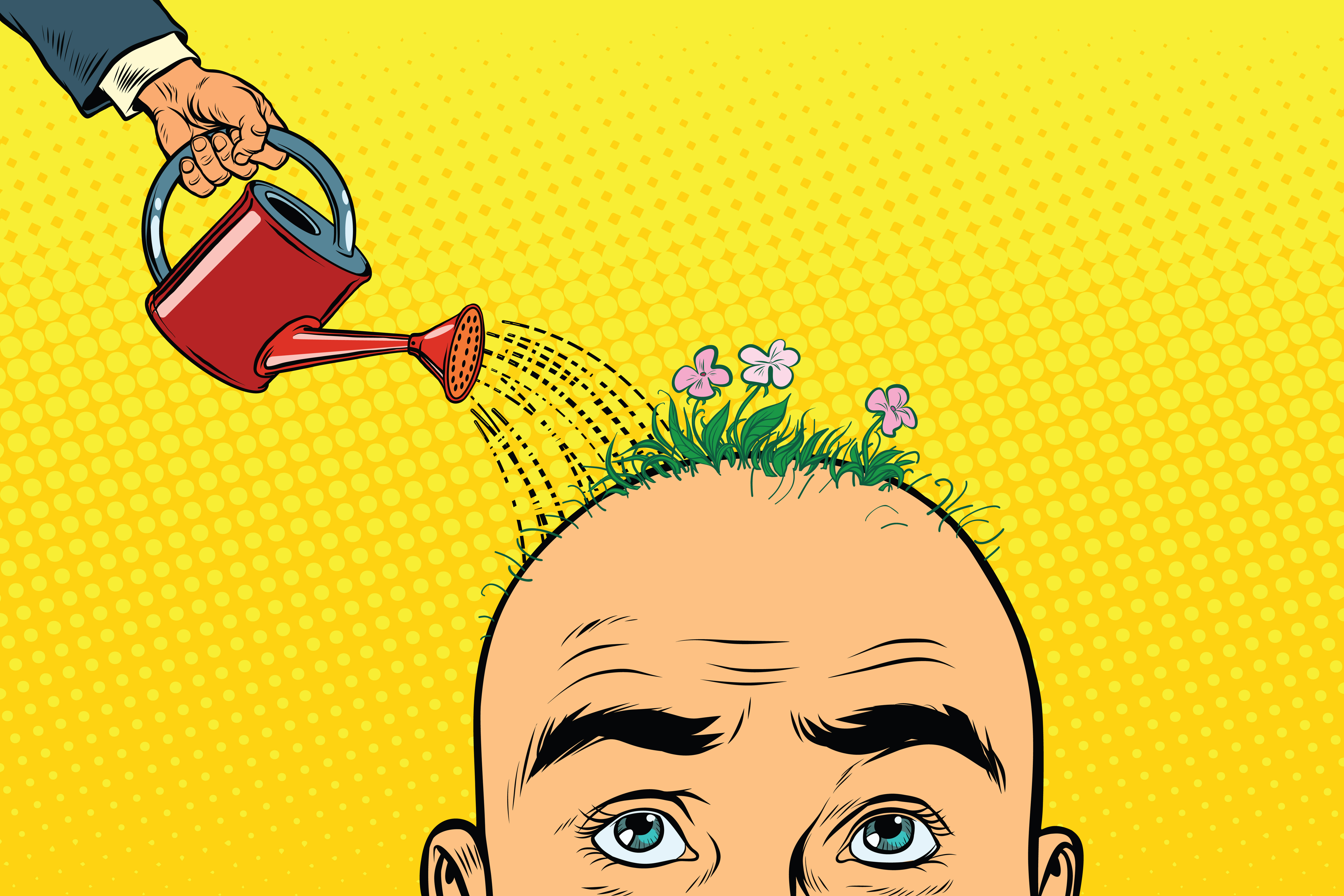
The Male COVID Head-Garden

For any creative men reading this blog post that have been forced into yet another COVID-19 lockdown, you may have run out of innovative ideas to keep yourself fully occupied whilst you are homebound.

Yes, all men are different, but as all families know, particularly those of the female persuasion, men need to have a different project for each COVID-19 home confinement, and one that entertains them for at least 24 hours in the day, otherwise, they go stir crazy!

Relax, and use your male head as therein lies the answer that you desperately seek, the solution being, to grow your own individual “head-garden”.

Like any garden, a head-garden needs to be planned, cultivated and requires continual maintenance in order to ensure an optimum hair foliage outcome. The follicle growth resides deep within the incumbent DNA structure of every man, and uniquely flourishes with their varying levels of male testosterone in a variety of potent fertiliser concentrations. The result being that no male head-garden is ever the same.  

Now to get started, your need a plan, as your head-garden won’t happen overnight, but it will happen, as any hairy man will attest.

Most men’s heads are blessed with a full range of potential garden plots as hairs sprout forth from a plethora of locations, that being on top of the head, face, eyebrows, ears and nostrils. Some hair plots do struggle if the testosterone levels are too high, but other man areas seem to compensate in order to maintain the desired follicle equilibrium.

The planning decisions are quite simple and are easily ploughed via the use of a sharp razor, or its lack of application where hairs can frequently grow wild. Once the geometric head-garden has been agreed, the man just needs to let nature take its course as the hairs will quickly and effortlessly propagate. Over the torturous days of lockdown, the hairs will bud out and take the intended form, just as man desired.

However, men can assist their head garden growth via the strategic application of numerous moisturisers, conditioners and shampoos, so as to encourage strong follicular growth. Personal scents and tonics can also be splashed onto any hairless exposed facial areas to add bespoke features to the head-garden personalisation.

Alas, with all COVID-19 lockdowns, they do eventually come to an end. At this point, the man now has to make a decision prior to his long awaited return to the corporate office, that being to keep the head-garden, or to slash and weed it. This is a tough man choice as he would have nurtured his head-garden with love and respect over the time of home incarceration.

The recommended solution is to take a head-garden photo, and to then enter it into your local council garden club competition for posterity. But don’t let your work colleagues see it, as each male head-garden is strictly for your own lockdown enjoyment, and men can get a tad too jealous.  

Who killed innovation in your office?

Ckuedo

The mystery needs to be solved. Who killed innovation in your office?

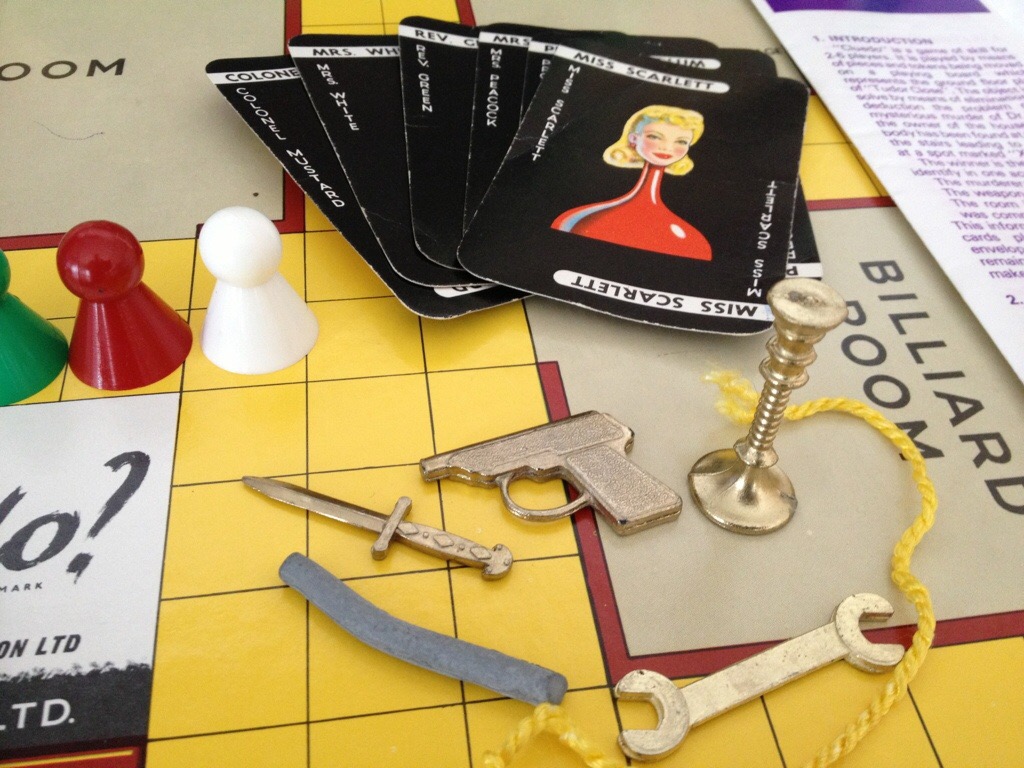
The answer to this question has been baffling those in the know for years, but thankfully the game called Cluedo (aka as Clue in North America) provides any worthy innovation sleuth with the requisite key to solving this corporate whodunit.

For those who have played Cluedo, you will immediately recall that it involves the solving of a murder via the careful and repetitive questioning of your five fellow players, in the ten rooms they may have occupied, armed with the six weapons potentially used by the killer.

The killer is known to you, you just need to utilise the clues provided to identify them.

The Players (6):

  • Miss Scarlett (a person known for their cunningness, aka Sales)
  • Reverend Green (a person of the people, aka HR)
  • Colonel Mustard (a dapper individual, aka Marketing)
  • Professor Plum (known as the thinker, aka Technology)
  • Mrs Peacock (a person with dignity, aka Production)
  • Mrs White (known to be easily frazzled, aka Quality)

The Rooms (10):

  • Kitchen (a place where many sharp implements are located and hidden)
  • Elevator (a place of employee containment)
  • Bathroom (an unlimited source of water, paper and locked cubicles)
  • Office (a desk with many sharp corners)
  • Stationery Cabinet (a source of tape and other sticky items)
  • Meeting Room (contains projectors with high intensity lights and microphones ideal for interrogation)
  • Foyer (marbles floors on which any blood spills can be easily wiped)
  • Reception (individual security checks and photo identification)
  • CEO office (vast stocks of exotic beverages and other hidden stimulants)
  • Ideation Room (many soft beanbags and colourful crayons)

The Weapons (6):

  • Pen (an easily concealed pointy item)
  • Mug (contains hot liquid)
  • Biscuits (can stimulate excessive self pudgification)
  • Powerpoint Clicker (can be hurtled with high velocity)
  • Computer (can be short circuited to initiate the blue screen of doom)
  • Boring employee (can talk you to death)

The game now begins. You ask questions. Your work colleagues respond with the truth, or perhaps a white lie, but with dogmatic persistence, you all eventually come to the logical conclusion as to the identity of the innovation killer.

The room used by the killer may change, also the weapon and their identify from game to game. But, there is one constant variable that typifies all murderers of innovation. That variable is fear. Yes, fear to try different experiences, meet new people, or to fail when experimenting with a new concept. Should you encounter fear in your organisation, then confront it, call in your Innovation Audit Team to root it out before it contaminates and slowly kills any spark of creativity. Cluedo is indeed just a game, however, don’t let the character portrayed as fear loose in any part of your organisation as morbidity and decay will eventually prevail, and nobody wants that, do they?


The Corporate Cubby House

foster-partners-trailer-video-tpl-cc-us-20190213_16x9

Should you be the Chief Innovation Officer (CIO) of a large corporate organisation that has been tasked with the development of an innovation culture that is truly unique, and one that actually works, then just sit back in your comfortable, expensive leather desk chair as you already know the answer.

The solution is indeed simple. Just go back in time to when you were an adventurous, carefree and potentially naive eight year old who made a decision with your closest friends to build a cubby house.

In case the number of years from when you were eight has become slightly diminished with age, time, and tad too much requisite social sobriety, let me summarize the process that you may have followed.

The Plan
No, you did not have sufficient pocket money to engage a global consultancy organisation to make a vast array of recommendations for you, there were definitely no Powerpoint presentations, nor large committees, you and your mates just decided to do it.

The Selection Criteria
You looked upwards and identified the best tree that could provide you with sufficient height that your dog, little sister or brother, parents, and enemies could not physically assail without personal difficulty.  In CIO speak, these individuals could be classified as the competition.

Resources
This was your initial demonstration of innovation. At first glance, you had nothing, but with a bit of foraging through your parent’s workshops, gardens and potentially those of your neighbors (the term stealing never came into your vocabulary when you were eight), you had all that you required.

Construction
Yes, there was risk, there was failure, and some cuts and bruises, but with persistence you managed to build a structure way up high in the branches that met your immediate needs.

Evolution
As the cubby house fell apart with the passing of days, or as your group of trusted compatriots expanded in number, you found yourselves continually experimenting with new ideas, some driven by necessity (as the rain poured through an unsealed roof). However, the key is to remember how your innovation and creativity could never be extinguished, nor limited in any way, as there was always a solution to any problem.

Status Quo
Once the Cubby House had been in operation for a prescribed period of time (normally dictated by the end of the school holidays), you didn’t rest on your laurels, but you and your mates sought out other new and exciting challenges. You utilized your experience to build bigger and better structures, after all, you were eight, going on nine, and you had many ideas, and much mischief to make!
Now back to you, the CIO.

The solution: Just release those long standing corporate shackles of conservatism and visualize you at the age of eight, and all the innovation that you, and your organisation will ever need will be revealed.

It just feels so Good!

3wheel110v2op

It just feels so good! Yes, it’s that glorious sensation you experience when eagerly opening that pristine door for the very first time as your nose is gleefully engulfed with those joyous automotive wofts associated with that new car interior. The exciting mood continues as you place your eagerly awaiting bottom into that virgin seat with the knowledge that you are indeed the first. You run your hands in a circular motion, anticlockwise, then clockwise, as you gingerly grip the steering wheel with each of your probing fingers where you slowly discover every notch and groove. Out on the road, you smile with snug satisfaction as all parts of the car work in harmonious unison as you carefully navigate the surrounding traffic with a self-imposed mode of cautious stealth. The feeling lasts for an unmeasured while, and then without notice, unfortunately, stops. You have now reached the stage of habitual blaséness where that initial feeling of excitement has regrettably diminished into nothingness. It’s now just a car.

Many an innovative organisation initially commence their operations with that “new car feeling”, but alas, over time, and particularly with success, that blasé nonchalant state gradually permeates throughout the structure leading to creative stagnation. So, what’s the solution?

Think of that car again, but this time focus on all the scheduled, and the occasional unplanned maintenance that is required to keep it humming in a state of perpetual driving bliss. This can take the form of mechanical, structural or aesthetic adjustments, all are required, and need ongoing investment, otherwise it ends up doomed on the scrap heap soon to be forgotten.

Innovation needs ongoing investment to stimulate and maintain the creative machinations of the business. All departments working in the organisation need to finely tuned, continually aligned, and supplemented with that combustible spark of ideation, otherwise it will slowly come to a resistant state of undesirable lethargy. However, sometimes an organisation needs to trade in the old ways of doing business and upgrade to a newer and more inspirational model. If so, don’t be scared to let your employees experience that wonderful new car smell, particularly as some of the newer ones may have never savoured that joy, and those longer serving ones, well, they may need a strong nasal refresher!

So if you want to maintain that ongoing pleasant innovation woft in your business, make sure you keep it well maintained and stimulated, otherwise, you might as well get a horse and get used to a slower, and rather more odorous form of reduced creativity.

Releasing Your Corporate Yogi

Business woman meditating outdoor over building background

There’s an emerging group of corporate innovators that are now inhabiting many a secluded office where they quickly pull down the blinds for privacy, lower the light intensity to achieve the optimum glow, add some enchanting music, and then nonchalantly roll out their rubber mats. Yes, they are doing yoga.

They arrive with minimal fuss, and happily disregard the usual business communicational banter as they set about preparing their eager minds for just the right emotional zone. Once in the requisite position, their yogi commences a routine with the objective of freeing their hampered corporate thoughts and bodies to allow the mindful process of true innovation to occur.

Now, for those of you new to the yoga experience, the following observations will help with your innovative assimilation.

The Yogi:
There is an instructor leading the class who will inspire your mind, and hopefully your body, to try new positions you never thought possible. They typically have a physique that has attained a state of perfect elasticity, which may yield a reflective look of total bewilderment on your face as to whether your desk bound tight body is slightly capable.

The Rubber Mat:
The rubber mat is an item that provides you with your own private yoga territory on the floor. But be warned, if you are thinking that there is sufficient cushioning to facilitate a state of comfortable slumber, you are indeed mistaken. Its purpose is to provide adequate grip, some basic hard surface relief, but more importantly to signify that you are a true believer of the yoga experience and have given your physical and mental consent to yourself, and those around you.

The Poses:
You will hear many phrases that make sense once you are in the position, such as “the downward facing dog”. However, should you be a novice, may I suggest that you look at the more experienced members in the group as this will provide a more obvious insight, as your “dog” may appear more like a “mouse”.

The Clothes:
Personal modesty is important as you will stretch your body into positions where certain body parts may unintentionally pop out. But as the lighting in the room is quite low, it is unlikely that anyone will see, so relax, except for maybe the Yogi who will quickly hide their smirk in order to avoid mutual embarrassment. As such, make sure that you wear clothes that maintain your respected level of corporate decency.

Once fully immersed in the complete yoga experience, your body will extend into numerous positions of the previous unknown, and with the right breathing, any pain that may initially be experienced will quickly turn to mindful pleasure. It is through this process that you, and your fellow work colleagues, will achieve the desired state of innovative nirvana.

So, should you be wanting to open your mind to allow a new vision of innovation in, the answer is simple. Do yoga, and all will be mindfully revealed.

Getting the Right Corporate pH Balance

fishbowlbpuk

Understanding a corporate culture is a fishy thing. Just observe any aquarium long enough and you will know exactly what I mean as it all happens in the wet area.

Should a fish habitat not be under control, besides the associated unpleasant odour, there are many other signs signalling that some urgent correction is required.

With all fish, they have the joy of utilising every part of their environment for daily living. In the water they eat, play, mate and happily swim in their own personal discharge without the slightest care for themselves, or consideration for those around them. Now left unhindered, their watery abode soon changes colour and a fine deposit of unsavoury living quickly coats the glass walls, vegetation and sandy undergrowth. In time, many fish will unfortunately perish as they yearn for a new and stimulating environment.

To avoid this disastrous occurrence, the aquarium owner has many measuring devices available to them, such as pH, in order to avoid such a regrettable calamity. For those of the HR persuasion, this is analogous to the office motivational survey that is done with unfortunate irregularity.

There are also many types of fish that correlate closely with the personality profiles of those in the corporate office. There are the bottom feeders that happily delve down to the depths of the tank where they make a comfortable living from the discarded offerings from those working diligently above them. There are the sharks that dart about in an aggressive manner looking for any opportunity to be top fish. Little fish also nimbly manoeuvre the unfrequented water corridors in search of discrete jobs that need to be accomplished with strategic gusto.

Now should a new fish enter the aquarium, you will see them quickly adopt the unusual state of motionless as the try to surreptitiously acclimatise to the foreign water temperature before swiftly swimming off to a hiding location where they can determine who’s who in the eating order.

Now the key life-giving ingredient that all aquarium species must have is oxygen, as without it, their watery home rapidly turns into an unsavoury swamp. In the corporate office, this oxygenated requirement is known as innovation.

So, for all the HR Managers reading this blog post, you now know what you need to do to ensure that your office happily bubbles with continual employee enthusiasm. Yes, you need to repeatedly measure the corporate motivational pH and make any requisite cultural adjustments in order to achieve the right balance. Innovation is also a must, as without it, your employees will become lifeless and disengaged. By following these simple methods of fish hygiene, you can then sit back and admire your watery handiwork, as it will all percolate away just swimmingly.